Loading…
The ASE is delighted to be hosting its’ 2027 Annual Conference at the University of Northampton from 7th to 9th January.


Audience: 11-14 clear filter
Thursday, January 7
 

08:45 GMT

CLEAPSS hands-on workshop drop-in
Thursday January 7, 2027 08:45 - 09:40 GMT
A chance to gets hands-on, and try out some of the latest CLEAPSS practicals.  

Pop in, ask a question, chat with the CLEAPSS advisors!

For queries, please email [email protected]
Speakers
avatar for Matt Endean

Matt Endean

Deputy Director, CLEAPSS
Matt Endean is the Deputy Director of CLEAPSS, an advisory service supporting practical science and technology in schools in the UK. A former teacher, he specializes in health and safety, risk assessment, and laboratory design. Matt plays a pivotal role in developing guidance and... Read More →
Sponsors
avatar for CLEAPSS

CLEAPSS

Founded in 1963, CLEAPSS supports safe, engaging, and innovative practical activities in science (as well as design & technology and art & design). We provide schools and college staff with expert advice, training, resources, and trusted guidance. Providing staff with access to CLEAPSS... Read More →
Thursday January 7, 2027 08:45 - 09:40 GMT
LH017 (Learning Hub Ground Floor)

08:45 GMT

What do I need to do to be ready for biology curriculum 2028?
Thursday January 7, 2027 08:45 - 09:40 GMT
Join the team working with the Department for Education to develop the reformed Science Programmes of Study in England and GCSEs subject content as we outline the priorities and evidence underpinning the drafting process. This session focuses on Biology at KS3 and KS4 plus transition from KS2 and KS1.

Please note the other sessions in the conference programme, on KS1 and KS2, and on chemistry and physics at KS3 and KS4.
Speakers
avatar for Marianne Cutler

Marianne Cutler

Director of Curriculum Innovation, Association for Science Education
avatar for Lauren McLeod

Lauren McLeod

Head of Education Policy, Royal Society of Biology
Lauren joined the Royal Society of Biology as Head of Education Policy in July 2017. Previously she has worked on gender projects, including Opening Doors, and higher education projects as part of the education team at the Institute of Physics, and as a science teacher in North L... Read More →
Sponsors
avatar for SEPA

SEPA

The Science Education Policy Alliance (SEPA) brings together the Association for Science Education, Institute of Physics, Royal Society, Royal Society of Biology and Royal Society of Chemistry to coordinate and collaborate on science education policy, with Professor Dame Athene Donald... Read More →
Thursday January 7, 2027 08:45 - 09:40 GMT
LH322 (Learning Hub Level 3)
  11-19

08:45 GMT

Why did they leave? Exploring the reasons physics teachers left teaching
Thursday January 7, 2027 08:45 - 09:40 GMT
There continues to be a physics teacher recruit and retention crisis across the nations of the UK.  
There is little point in governments investing heavily in teacher recruitment if qualified teachers then leave the profession in large numbers.

With this in mind, Mark Whalley and Stuart Farmer have conducted research in both England and Scotland into identifying the reasons why physics teachers have recently left the profession. In this session, these reasons will be explored and comparisons made between the situations in Scotland and England, which factors are in common and which are different in the two nations where there has been an increasing divergence in educational policy in the last two decades. How do factors such as accountability and performativity, administrative workload, pupil behaviour, relationships with colleagues, and career progression routes impact on teacher wellbeing and their decisions to stay or leave teaching?
Speakers
avatar for Stuart Farmer

Stuart Farmer

Learning and Skills Manager, IOP and Perimeter Institute
I was a teacher of physics in Scotland for over 30 years before becoming the Scottish Education Manager for IOP in February 2019. Throughout this time I have been active in curriculum and assessment development and providing professional learning for teachers. I am a former Chair... Read More →
avatar for Mark Whalley

Mark Whalley

Senior Lecturer in Education, University of Chester
I'm a senior lecturer in Educational Leadership at the University of Chester. My main teaching covers Professional Learning and Change Leadership but I also tutor across the MA Educational Leadership programme. My principal research interest is in teacher retention and by focusing... Read More →
Thursday January 7, 2027 08:45 - 09:40 GMT
LH321 (Learning Hub Level 3)

08:45 GMT

(Pearson): Practical science models that schools can actually deliver
Thursday January 7, 2027 08:45 - 09:40 GMT
This collaborative session invites teachers and leaders to reflect on practical science models that are realistic, workable and educationally valuable. It will explore how practical assessment and practical learning can be designed in ways that support classroom delivery, gather meaningful feedback and balance ambition with the operational realities schools face.

Participants will also explore what makes practical science both educationally valuable and operationally manageable; to surface the barriers schools face in delivering practical science well; and to discuss models that could improve consistency, feasibility and learner experience. Participants will leave with a set of practical design considerations, examples of alternative delivery models and prompts for reviewing practical science in their own context.
Speakers
avatar for Shauna O'Brien

Shauna O'Brien

Head of Science, Pearson

PP

Poppy Pan

Lead Specialist - Science, Pearson

Thursday January 7, 2027 08:45 - 09:40 GMT
LH125 (Learning Hub Level 1)

08:45 GMT

Under the microscope: What science teachers really think about the New Curriculum
Thursday January 7, 2027 08:45 - 09:40 GMT
This session will unpack the biggest trends shaping science teaching right now, including how teachers are reacting to the changes to the national curriculum, and what it all means for anyone just starting out in the profession.

Teacher Tapp surveys over 10,000 teachers every day, giving us a unique, real-time picture of what's changing in science classrooms, from practical work and curriculum shifts to workload and AI adoption.


Speakers
GH

Grainne Hallahan

Head of Community, Teacher Tapp

Thursday January 7, 2027 08:45 - 09:40 GMT
LH323 (Learning Hub Level 3)

09:55 GMT

CLEAPSS hands-on workshop drop-in
Thursday January 7, 2027 09:55 - 10:50 GMT
A chance to gets hands-on, and try out some of the latest CLEAPSS practicals.  

Pop in, ask a question, chat with the CLEAPSS advisors!

For queries, please email [email protected]
Speakers
avatar for Matt Endean

Matt Endean

Deputy Director, CLEAPSS
Matt Endean is the Deputy Director of CLEAPSS, an advisory service supporting practical science and technology in schools in the UK. A former teacher, he specializes in health and safety, risk assessment, and laboratory design. Matt plays a pivotal role in developing guidance and... Read More →
Sponsors
avatar for CLEAPSS

CLEAPSS

Founded in 1963, CLEAPSS supports safe, engaging, and innovative practical activities in science (as well as design & technology and art & design). We provide schools and college staff with expert advice, training, resources, and trusted guidance. Providing staff with access to CLEAPSS... Read More →
Thursday January 7, 2027 09:55 - 10:50 GMT
LH017 (Learning Hub Ground Floor)

09:55 GMT

Harnessing the power of biology teaching to inspire students
Thursday January 7, 2027 09:55 - 10:50 GMT
Biology teaching, from global biomes to the regulation of metabolism, has the power to inspire students about the natural world. Since the publication of The Economics of Biodiversity: The Dasgupta Review (2021) and the National Security Assessment on global ecosystems (2026) there is a strong argument for biology teaching having a duty to inspire students and play a role in creating a society fit for the challenges humanity faces.

This session will explore what we can do as members of the biology education community to instil a lifelong love of life in our students. Themes will include inter-relationships between topics, the wonder of biology, scientific thinking skills, and connection to the biology around us.

You will leave with ideas that you can use when planning lessons, developing teaching resources, organising schemes of work, or when influencing the national curriculum and exam specifications.

Session Outcomes:
•Apply at least one new idea to their own lesson planning, resource development or curriculum influence.
•Identify ways to bring wonder, curiosity and real world relevance into everyday lessons or resources.
•Explain why inspiring biology teaching matters for students and society.

Please feel free to attend the sponsored tea/coffee available for Biology educators available after this session on Learning Hub Level 2 foyer outside of rooms 231.
Speakers
avatar for Dan Jenkins

Dan Jenkins

Head of Gatsby Plant Education Programme, Science and Plants for Schools (SAPS)
Dan is Head of the Gatsby Plant Science Education Programme and directs the Science and Plants for Schools project. For over 10 years Dan has developed practicals and resources for SAPS and is a dab hand at getting any plant to behave in the school lab. Dan’s background in plant... Read More →
avatar for Chris Graham

Chris Graham

Sustainability Lead and Teacher of Biology, Hills Road Sixth Form College / SAPS
I am the Sustainability Lead, a teacher of OCR's Level 3 Certificate in Sustainability, and a Biology teacher at Hills Road Sixth Form College as well as the visiting teacher at Science and Plants for Schools (SAPS). I have over 20 years experience as a teacher and have been leading... Read More →
Exhibitors
avatar for Science & Plants for Schools (SAPS)

Science & Plants for Schools (SAPS)

Science and Plants for School (SAPS)
Science & Plants for Schools (SAPS) creates opportunities for teachers, technicians and students to find out more about plants and to become more interested in plant science.

We know that good teachers and technicians can bring plant science alive and we want to help them. We are doing this by working with curriculum developers, producing useful teaching resources, enabling teachers to share ideas through our website, and encouraging plant scientists to... Read More →
Thursday January 7, 2027 09:55 - 10:50 GMT
LH324 (Learning Hub Level 3 lab-type space)

09:55 GMT

Making physics concepts stick through narrative, models and analogies
Thursday January 7, 2027 09:55 - 10:50 GMT

Physics is full of abstract ideas. For many students, these concepts can feel remote and inaccessible. Narrative and analogy offer powerful ways to bridge that gap.

This interactive session will explore how storytelling, models, and analogies can transform the teaching of physics. We will look at classic examples such as the “rope” model of current electricity or the “dice roll” analogy for nuclear decay alongside original classroom tested narratives I have developed. We will discuss how these approaches benefit student learning, from reducing misconceptions to increasing engagement.

We will also consider the limitations of analogies, how encouraging students to recognise where a model breaks down can be beneficial to understanding. Given time, there will be an opportunity for participants to share their own analogies and reflect on how narrative can enrich their teaching practice as well as how AI can play a role in this style of teaching.

Outcomes: By the end of the session, participants will be able to:
•Identify effective uses of narrative, storytelling, models, and analogies in physics teaching.
•Apply at least two new analogies or narratives in their own lessons.
•Evaluate the strengths and limitations of analogies to avoid reinforcing misconceptions.
•Develop strategies to make abstract concepts more memorable and engaging for students aged 11–18.

Background: Over 30 years of teaching physics to students aged 11–18, I have found that physics concepts - from Newton’s laws to nuclear decay - often become more accessible when framed through narrative or analogy. My classroom practice has involved developing stories and models that resonate with learners, drawing on both established teaching analogies and my own creations. These approaches have consistently helped students connect new ideas to prior knowledge, making difficult concepts memorable and meaningful.
Speakers
avatar for Nicholas Hulbert

Nicholas Hulbert

Head of Physics, Tanglin Trust School

Thursday January 7, 2027 09:55 - 10:50 GMT
LH321 (Learning Hub Level 3)

09:55 GMT

Keynote: Disciplinary oracy in the science classroom
Thursday January 7, 2027 09:55 - 10:50 GMT
Oracy is set to have a renewed emphasis in the revised National Curriculum, but what is the opportunity for oracy in the science classroom? In this keynote, Amy Gaunt will explore what it means to learn to and through talk in science, supporting students to develop their disciplinary knowledge and understanding while also learning to speak, listen and communicate like scientists.

Through discussion and practical activities, delegates will experience oracy in action and consider the opportunities for creating authentic and meaningful contexts for talk across their own science classrooms and departments.
Speakers
avatar for Amy Gaunt

Amy Gaunt

Amy Gaunt is Director of Education at Voice 21, the national oracy charity which exists to increase access to high-quality oracy education.

She is co-author of Create an Oracy Curriculum (2026) and Transform Teaching and Learning through Talk: the Oracy Imperative (2019... Read More →
Thursday January 7, 2027 09:55 - 10:50 GMT
LH013 & LH014 (Learning Hub Ground Floor)

10:50 GMT

Biology educators tea/coffee and muffins (sponsored by Miss Estruch Teach & Tell)
Thursday January 7, 2027 10:50 - 11:15 GMT
If your focus is teaching or supporting biology lessons, come along for a networking session with complimentary tea/coffee and a muffin, to discuss how Miss Estruch Teach & Tell can support your practice!
Sponsors
avatar for Miss Estruch Teach & Tell

Miss Estruch Teach & Tell

Miss Estruch Teach & Tell
Miss Estruch Teach & Tell is the proud sponsor of the Biology Education Research Programme (BERG) on Thursday of Conference, 

'Teach & Tell is run by Miss Estruch (Katie Estruch), a biology teacher since 2009 and former Head of Department, now helping teachers get their most valu... Read More →
Thursday January 7, 2027 10:50 - 11:15 GMT
Learning Hub Level 2 landing space outside rooms LH227-230

10:50 GMT

Physics and tea with the IOP
Thursday January 7, 2027 10:50 - 11:15 GMT
We'd love to talk about physics education and how we can help you, your school or your MAT - and we've got treats. Join the IOP team to tell us what's going well and what you think we should be doing to support the profession.
Speakers
avatar for Eleanor Wylie

Eleanor Wylie

Professional Support Coach, Institute of Physics

IH

Ian Horsewell

Professional Community and Retention Strategic Lead, Institute of Physics
Sponsors
avatar for Institute of Physics (IOP)

Institute of Physics (IOP)

The Institute of Physics (IOP) is the professional body and learned society for physics in the UK and Ireland, with an active role in promoting co-operation in physics around the world. We strive to make physics accessible to people from all backgrounds.  

Come along and visit an

... Read More →
Thursday January 7, 2027 10:50 - 11:15 GMT
Learning Hub Level 3 landing space (outside 344-347)

11:15 GMT

(AQA): From curiosity to confidence: Securing practical progression from KS3-KS5
Thursday January 7, 2027 11:15 - 12:10 GMT
This CPD session explores how science teachers can effectively plan for and support strong progression in practical work from KS3 through to KS5. Moving beyond isolated experiments, the session focuses on how practical skills develop over time, building from curiosity and engagement in KS3 to confidence, independence, and precision at A-Level. Teachers will consider how to sequence practical experiences, reinforce key skills, and ensure students are well-prepared for the increasing demands of assessed practical work. The session emphasises the importance of coherence and continuity in developing scientifically skilled and confident learners.

By the end of this session, participants will be able to:
> Identify the key components of effective practical progression from KS3 to KS5.
> Recognise gaps and inconsistencies in students’ practical skills development.
> Apply strategies to support a coherent and purposeful approach to practical work across the curriculum.

The session will explore what effective practical progression looks like across the secondary phase, using examples to highlight how skills can be built and revisited over time. Teachers will engage in activities to map practical skills, analyse current practice, and identify opportunities to strengthen progression. Through discussion and practical approaches, participants will develop strategies to ensure students move from early curiosity to confident, capable practical scientists by the end of KS5.
Speakers
avatar for Lisa Mooney

Lisa Mooney

Subject Support Manager - Science, AQA

avatar for Frank Lowor

Frank Lowor

Subject Support Manager - Science, AQA
Frank is a highly experienced educator and assessment specialist with over two decades of service in science education. He has held leadership roles including Head of Science and Head of Vocational Science, teaching GCSE and A-level sciences across multiple schools. Currently serving... Read More →
Sponsors
avatar for AQA

AQA

Proudly partnering the ASE for their 2027 Annual Conference.

Since 1903, we’ve been rewarding achievement by designing and delivering fair and inclusive assessment. We do this because we believe that quality assessment is an essential ingredient for a good education. We’re the most chosen exam board in England and we set and mark the papers

... Read More →

Thursday January 7, 2027 11:15 - 12:10 GMT
LH321 (Learning Hub Level 3)
  11-19

11:15 GMT

(IRIS) From enrichment to entitlement: teaching research and innovation at secondary school
Thursday January 7, 2027 11:15 - 12:10 GMT
Curriculum debate across the four nations keeps returning to one question. What is science education for? The answers point towards young people who can ask a good question, weigh evidence and contribute something new. Yet working scientifically is often reduced to practical technique, and the disciplinary knowledge behind real research goes untaught. Where research does appear it is usually optional, so the students who would gain most are least likely to meet it.

The Institute for Research in Schools (IRIS) has worked with over 10,000 students to carry out research. Getting Started with Research is what teachers told us they need to support research and innovation in schools.

What you get: Getting Started with Research is a free lesson programme for students, fully resourced and ready to teach. Lesson plans, slides, worksheets and a knowledge progression map. It builds a shared model of the research cycle, then teaches how researchers find and judge evidence, how curiosity becomes a testable question, who does research, and how students plan an enquiry of their own.

It is designed the way you already plan. Outcomes first, knowledge specified lesson by lesson, misconceptions named, retrieval and modelling built in, reading age controlled. It strengthens working scientifically rather than competing with it, and it maps to the curriculum in all four nations.

Aims and outcomes - In this session we will:

> show why research and innovation are better taught explicitly than left to chance

> walk through the lesson sequence and the knowledge each lesson builds

> show how it fits existing schemes of work, progression pathways and the enrichment you already run

Delegates will leave able to identify where research knowledge is currently assumed rather than taught in their own curriculum, and with free access to the full programme. Time is protected for questions.
Speakers
avatar for Georgina Lott

Georgina Lott

Head of Education Innovation, Institute for Research in Schools (IRIS)

KM

Kelly Murfet

Education Innovation Lead, Institute for Research in Schools (IRIS)
https://www.linkedin.com/in/kelly-murfet-8a9065348/
Sponsors
avatar for Institute for Research in Schools (IRIS)

Institute for Research in Schools (IRIS)

The Institute for Research in Schools
Our mission is to change the culture in UK education so that every young person experiences real research.

We do this by:Providing opportunities for young people to carry out research projects and share their findings with the worldEmpowering... Read More →
Thursday January 7, 2027 11:15 - 12:10 GMT
LH323 (Learning Hub Level 3)

11:15 GMT

Challenges of the primary to secondary maths transition.....parallels for science?
Thursday January 7, 2027 11:15 - 12:10 GMT
This session explores research by Axion Maths on the transition from primary to secondary school which can make or break a pupil's attitudes towards maths and school, and EEF research on whether setting is better than mixed ability classes, and prompts discussion questions on whether there are parallels for secondary science.

This session is supported by a Department for Education funded initiative, led by Mathematics in Education and Industry (MEI), in partnership with ASE as part of the Advanced Maths Support Programme (AMSP).
Speakers
avatar for Marianne Cutler

Marianne Cutler

Director of Curriculum Innovation, Association for Science Education
DT

David Thomas OBE

CEO, AxioM Maths

JH

Jeremy Hodgen

Professor of Mathematics Education, University of Nottingham
Professor of Mathematics Education
Emeritus Professor of Mathematics Education, UCL
Visiting Professor, Norwegian University of Science and Technology (NTNU)
Associate Director: Policy and Impact
Observatory for Mathematical Education
JS

Jen Shearman

Chief Learning Officer, MEI

Thursday January 7, 2027 11:15 - 12:10 GMT
LH013 & LH014 (Learning Hub Ground Floor)
  11-19

11:15 GMT

CLEAPSS hands-on workshop drop-in
Thursday January 7, 2027 11:15 - 12:10 GMT
A chance to gets hands-on, and try out some of the latest CLEAPSS practicals.  

Pop in, ask a question, chat with the CLEAPSS advisors!

For queries, please email [email protected]
Speakers
avatar for Matt Endean

Matt Endean

Deputy Director, CLEAPSS
Matt Endean is the Deputy Director of CLEAPSS, an advisory service supporting practical science and technology in schools in the UK. A former teacher, he specializes in health and safety, risk assessment, and laboratory design. Matt plays a pivotal role in developing guidance and... Read More →
Sponsors
avatar for CLEAPSS

CLEAPSS

Founded in 1963, CLEAPSS supports safe, engaging, and innovative practical activities in science (as well as design & technology and art & design). We provide schools and college staff with expert advice, training, resources, and trusted guidance. Providing staff with access to CLEAPSS... Read More →
Thursday January 7, 2027 11:15 - 12:10 GMT
LH017 (Learning Hub Ground Floor)

11:15 GMT

A novel way of teaching inheritance to students using forensic science.
Thursday January 7, 2027 11:15 - 12:10 GMT
The aim of this session is to demonstrate novel techniques for teaching Primary and Secondary students about inheritance, in the context of Forensic Science and real life applications to solving crimes.

The workshop is based on research being conducted by scientists at the Earlham Institute. One of the problems faced by forensic scientists is accurately analysing data which contains DNA from more than one person.

For example, if someone has been stabbed, there will be epithelial/blood cells from the suspect on the knife. However, if a victim has bled, these cells will be outnumbered by cells from the victim. This makes analysis difficult. Researchers are using a cell sorting machine to collect individual cells from the evidence. The students will have a go at this and compare the results, to existing analysis techniques.

The workshop starts with the crime - “Murder at the Boutique Hotel” (Secondary), “Pizza Thief at the Boutique Hotel” (Primary). Initially, they must think about where the evidence will be at the crime scene. We talk about cells, organs, and organ systems and where cells are in the body. We think about where the suspect will have touched as they move through the hotel, “Every contact leaves a trace”. I have a Lego model of the Hotel and crime scene. Students must add crime markers to indicate where we are most likely to find DNA evidence.

I demonstrate how DNA is extracted from the samples. I show the students the cell sorting machine the scientists use, then they use my mini cell sorters, to manually separate blood and epithelial cells. The suspect epithelial cells they collect glow in UV light. The students place these in their dark rooms to see how many epithelial cells are from the suspect. We then move on to the analysis.

The students are shown a DNA profile. I explain to them how the DNA profile is generated. To understand it they learn about microsatellites, which have different repeat numbers. We use a simple demonstration of a sentence, “The Cat Sat on the Mat,” to show this. I then demonstrate why for each part of the DNA on the DNA profile there are two numbers. One is inherited from Mum, the other from Dad. I use baubles and limbo poles to explain this! This is the section that teachers will really love. It is a great visual way of getting children to see exactly how genetic information is inherited.

Another set of poles is used to demonstrate what happens currently when we analyse a mixed DNA profile (DNA from two people). We talk about homozygote and heterozygotes, and how we use this information to analyse the data.
Students compare their data, with data from the Research Scientists new technique. The students can see how this new technique could revolutionise analysis of mixed DNA profiles! We identify which student is the murderer/thief and they are arrested.

The outcome is that teachers will have a tool box of practical demonstrations they can use to teach students about inheritance in way that they can understand, engage with and understand the importance of what they are learning in application to real life science.
Speakers
avatar for Mandy Hartley

Mandy Hartley

Science Educator, The Little Story Telling Company

Thursday January 7, 2027 11:15 - 12:10 GMT
LH124 (Learning Hub Level 1)

11:15 GMT

AI use in Trainees and Early Career Teachers
Thursday January 7, 2027 11:15 - 12:10 GMT

This session will explore how AI is influencing trainee and early career teachers beyond practical use, focusing on professional identity development in a changing educational landscape.

You will hear findings from research into how trainee teachers are currently using AI to support planning, learning, reflection, and professional practice, alongside key themes around confidence, dependency, authenticity, and perceptions of expertise.

The session will then examine how AI may shape identity development during the transition from training into independent practice, raising questions around autonomy, judgement, professional voice, and the evolving role of the teacher.

The final part of the lecture will introduce the next phase of research focusing on ECTs, exploring identity development in the early years of teaching and launching a wider survey to gather insight into lived experiences of AI use in practice.


Outcomes:
Following this session, participants will hopefully be able to:

* Recognise key patterns in how trainee teachers engage with AI.
* Critically consider how AI may shape professional identity and autonomy.
* Reflect on implications for teacher education, mentoring, and induction.
* Identify emerging challenges around authenticity, confidence, and dependency.
* Engage with research-informed discussion around AI and identity development.
* Consider how AI use may influence teachers beyond efficiency and workload.

This session is grounded in research conducted at the University of Warwick exploring how trainee teachers are engaging with AI and how this intersects with their developing professional identity. As AI becomes increasingly embedded in educational practice, it raises important questions not only about workload and efficiency, but about how emerging teachers construct confidence, autonomy, expertise, and authenticity.

The project has explored how trainee teachers use AI for planning, idea generation, academic support, and reflective practice, alongside wider considerations around ethics, professional boundaries, and dependency. This work has led to a broader interest in how AI may continue to shape identity formation beyond initial teacher training. What the research has shown is that trainees are using AI, and the project is investigating what this means for both ITE and schools going forward.

The next phase of this research expands to newly practising teachers, examining how Early Career Teachers navigate AI use while developing identity, confidence, and professional agency in their early years of practice and we hope to promote this phase at the ASE Conference.
Speakers
JL

Jonty Leese

Associate Professor and Head of International PGCE Programmes, University of Warwick

avatar for Joanna Pellereau

Joanna Pellereau

PGCE Course Science Lead, Warwick University Centre for Teacher Education
Having been a physics teacher and Head of Department for over a decade, I am now Physics PGCE lead and a teaching fellow at the Centre for Teacher Education at the University of Warwick. I also take on freelance work and have supported OUP with the Kerboodle resources for the new... Read More →
Thursday January 7, 2027 11:15 - 12:10 GMT
LH324 (Learning Hub Level 3 lab-type space)

11:15 GMT

Explore how to tackle climate change using science and global perspectives
Thursday January 7, 2027 11:15 - 12:10 GMT
This session aims to inspire and equip teachers to think beyond the science curriculum to integrate ways of knowing from science with those from other disciplines, which include philosophy, ethics and worldviews to tackle the challenge of climate change.  This supports the intention of the recent curriculum and assessment review, which aims to help learners understand that global challenges, both social and environmental require attention to scientific knowledge and cultural skills.  

I have taken this approach because as a science teacher of 20 years I realised we give children the scientific skills to tackle problems, but most challenges they will face are not ones that science alone can solve. I now work at the Faraday Institute for Science and Religion, a Cambridge based research and educational institute, where we take the approach that integrating ways of knowing from science with those that consider worldviews, philosophy, ethics helps respond to big questions in a more holistic manner enabling a more effective response. Using this approach, I developed this classroom resource on climate change to help children understand why not everyone is doing everything they can to combat it, as I have taught so many children the science of climate change and they don’t then understand why everyone is not doing everything they can to combat it. It draws on ideas from journals like national geographic and discussion with colleagues.

It will explore the nature of science, through a presentation helping teachers consider the power of science with their learners, but also the limits of science; like those of instruments, timelines, complex systems and the human element and how other ways of knowing, like those from RE, which considers world views, can be helpful for tackling our big questions, like climate change. It will then review the classroom resource on climate change and this will lead into a discussion of the opportunities and challenges of this approach.

It will give you ideas and resources to help learners to consider how an individual's world view can be more important in motivating them to act or not act in response to climate change than being presented with the science and how to respond to this constructively. This will help you manage topics that can open discussions that can be emotive and challenging, encouraging you to embrace this aspect of science learning and develop wider skills in your students; It will help learners to develop oracy and debating skills. It is suitable for learners from all phases, but specifically those at KS2 and 3, covering key parts of the curriculum, but will also appeal to teachers supporting students in extracurricular activities, like science debating clubs.
Speakers
avatar for Cathy Priest

Cathy Priest

Training Lead of the Youth and Schools Team, Faraday Institute for Science and Religion
I taught secondary school science for 20 years in the UK and abroad and led KS4, Biology and Physics departments.  I now work at the Faraday Institute for Science and Religion as the training lead in the youth and schools' team, developing and delivering CPD for in service and trainee... Read More →
Thursday January 7, 2027 11:15 - 12:10 GMT
LH113 (Learning Hub Level 1)

12:25 GMT

CLEAPSS hands-on workshop drop-in
Thursday January 7, 2027 12:25 - 13:20 GMT
A chance to gets hands-on, and try out some of the latest CLEAPSS practicals.  

Pop in, ask a question, chat with the CLEAPSS advisors!

For queries please email [email protected]
Speakers
avatar for Matt Endean

Matt Endean

Deputy Director, CLEAPSS
Matt Endean is the Deputy Director of CLEAPSS, an advisory service supporting practical science and technology in schools in the UK. A former teacher, he specializes in health and safety, risk assessment, and laboratory design. Matt plays a pivotal role in developing guidance and... Read More →
Sponsors
avatar for CLEAPSS

CLEAPSS

Founded in 1963, CLEAPSS supports safe, engaging, and innovative practical activities in science (as well as design & technology and art & design). We provide schools and college staff with expert advice, training, resources, and trusted guidance. Providing staff with access to CLEAPSS... Read More →
Thursday January 7, 2027 12:25 - 13:20 GMT
LH017 (Learning Hub Ground Floor)

12:25 GMT

Sequencing for Success: Building Scientific Writing Over Time
Thursday January 7, 2027 12:25 - 13:20 GMT
Scientific writing is a core disciplinary skill, yet many students struggle to express their understanding clearly and accurately. This session focuses on how departments can build writing successfully over time, rather than addressing it reactively at GCSE.

Participants will explore how careful curriculum sequencing ensures that students develop the knowledge, vocabulary, and structures needed before being asked to write extended responses. The session will consider how writing can be built progressively, moving from oral rehearsal to structured written outcomes.

A central focus will be the role of oracy. Delegates will examine how structured talk, including the use of sentence stems, purposeful questioning, and guided discussion, supports students to clarify their thinking and practise disciplinary language before writing. The importance of consistent routines across a department will be emphasised to ensure coherence for students.

The session will also explore how scaffolds can be used effectively within modelling. Rather than being treated as standalone supports, tools such as writing frames, exemplars, and success criteria will be examined as part of an explicit teaching process. Participants will consider how these scaffolds can be introduced, modelled, and gradually removed to support independence without reducing challenge.

Throughout, there will be a strong emphasis on aligning approaches across Key Stage 3 and Key Stage 4 to ensure that students are prepared for the demands of GCSE.

Outcomes
By the end of the session, participants will be able to:
•Explain how scientific writing can be developed progressively through curriculum sequencing
•Identify effective strategies for embedding oracy to support disciplinary writing
•Use scaffolds purposefully within modelling to support students’ written responses
•Recognise how to build consistency in approaches to writing across a department
•Take practical next steps to improve students’ confidence and accuracy in scientific writing

Background: In my current role, I work with a wide range of schools, often in areas of high deprivation, where scientific writing is frequently identified as a key barrier to success at Key Stage 4. A common challenge is that writing is addressed too late, rather than being deliberately developed across Key Stage 3.
I have developed and delivered CPD on scientific writing through Ark Curriculum Plus, working with partner schools to embed disciplinary literacy within science curricula. This builds on over ten years of classroom experience teaching science in diverse contexts. My approach draws on this work with departments, supporting both leaders and teachers to align curriculum sequencing, pedagogy, and assessment to improve students’ written responses.
Speakers
RL

Rosie Lloyd

Senior Delivery Manager, Ark Curriculum Plus
Thursday January 7, 2027 12:25 - 13:20 GMT
LH322 (Learning Hub Level 3)

12:25 GMT

Honorary and Professional Members lunch (invitation only)
Thursday January 7, 2027 12:25 - 13:20 GMT
This professional registration lunch (by invitation only) is for those Honorary ASE members and member-science teachers and technicians who have gained professional registration or Chartership: CSciTeach, RSci or RSciTech, all of whom are invited to join Lynn Ladbrook, the ASE's CEO along with the Chair Trio for the Association.

New Honorary members will also be announced. Honorary Membership is the ASE's highest honour and is awarded to those individuals that have made outstanding contributions to the work of the ASE in at least two of the following areas:
National affairs of the Association
Regional affairs of the Association
Science education in general (at a national or international level)
Speakers
avatar for Lynn Ladbrook

Lynn Ladbrook

Chief Executive, Association for Science Education
EP

Emily Perry

Professor of Education, Manchester Metropolitan University
avatar for Claire Seeley (MA CSciTeach)

Claire Seeley (MA CSciTeach)

Primary Science Education Consultant / Co-Chair of the ASE
Claire Seeley has been a teacher for over thirty years in a wide variety of contexts including both inner city and rural schools England. Claire is also a Primary Science Consultant, providing both continuing professional development and initial teacher training.  She has a passion... Read More →
avatar for Natasha Serret

Natasha Serret

Associate Professor of Science Education, Nottingham Trent University
I started my professional career as a classroom teacher and science lead in a London primary school. I was and remain passionate about classroom learning that promotes a scientific mindset alongside the development of an understanding of key scientific concepts.  This professional... Read More →
avatar for Marianne Cutler

Marianne Cutler

Director of Curriculum Innovation, Association for Science Education
avatar for David Allen

David Allen

Associate Professor Learning and Teaching / Outgoing Chair of the ASE 25/26, University of Hertfordshire & Creative Primary Science Education Consultancy
I worked in primary schools for over twenty years as a classteacher, senior leader and Deputy Headteacher. I taught across Key stages 1, 2 and 3 in UK and in Spain. During this time I developed a passion for science, art and design, improvised drama, assessment for learning, creativity... Read More →
avatar for Rob Butler

Rob Butler

Registrar, Association for Science Education
I'm a Chartered Science teacher, the registrar and Project Officer for the ASE (running the Keeping Science Practical project).
I'm a senior professional development leader for the Science Learning Partnership network and I help the Science Council promote their professional registers. I'm an ex-special school senior leader, an ex-science teacher and an OUP author. I jointly run the ASE's Inclusive Science Educati... Read More →
Thursday January 7, 2027 12:25 - 13:20 GMT
Leathersellers Hide (Learning Hub Level 4)

12:25 GMT

Patterns in the Solar System
Thursday January 7, 2027 12:25 - 13:20 GMT
Science is a powerful process that gives structure to our innate ability to find patterns in the world around us.

Patterns observed by Galileo only make sense if our model for the solar system is Sun-centred.

Come explore the Patterns in the Solar System, Perimeter Institute’s newest free classroom resource. Engage in activities to explore Galileo’s observations, identify patterns, and think scientifically.
Speakers
avatar for Alan Denton

Alan Denton

Physics coach, Perimeter Institute

avatar for Stuart Farmer

Stuart Farmer

Learning and Skills Manager, IOP and Perimeter Institute
I was a teacher of physics in Scotland for over 30 years before becoming the Scottish Education Manager for IOP in February 2019. Throughout this time I have been active in curriculum and assessment development and providing professional learning for teachers. I am a former Chair... Read More →
Thursday January 7, 2027 12:25 - 13:20 GMT
LH125 (Learning Hub Level 1)

13:35 GMT

(STEM Learning) Subject Knowledge for Physics Teaching (SKPT - a taster session for bringing physics to life in the classroom
Thursday January 7, 2027 13:35 - 14:30 GMT
Subject Knowledge for Physics Teaching (SKPT) courses are delivered by The Ogden Trust in partnership with STEM Learning and are fully funded by the Department for Education, to provide free physics professional development for teachers teaching physics outside their specialism.

Delivered by an expert practitioner in a supportive learning community, teachers build their competence and confidence to bring physics to life in the classroom.

The programme is delivered in a range of formats that best meet the needs and requirements of schools and teachers.

Pop into this taster session to find out more about how this course could enhance your science teaching career pathway to teach physics as an additional specialism.
Speakers
EC

Elizabeth Calvert

SKPT Programme Manager (Science and STEM Engagement Lead), STEM Learning UK

Thursday January 7, 2027 13:35 - 14:30 GMT
LH125 (Learning Hub Level 1)

13:35 GMT

A gender/sex debate in biology
Thursday January 7, 2027 13:35 - 14:30 GMT
Aims:
- To create a safe space for debate where people can explore their own understanding of gender/sex
- To deconstruct some ideas about classification systems and essentialism.

Objectives:
- To be able to answer the question “What is a woman?”
- To be able to answer pupils’ questions about gender/sex more confidently
- To be able to name and explain several examples of organisms that are outside of the gender/sex binary

In this workshop I will create a space where we are able to debate about gender and sex, we will be looking for the grey areas and discovering how and why things are not always as binary as they seem. Using my gender studies background I will share with you some philosophical ideas about gender/sex and oppression. We will explore how queer nature can be, and share exceptions to the sexual binaries in humans, and many other organisms.
Speakers
HS

Helen Stamp (she/her)

Freelance educator specialised in gender/sexuality diversity and feminisms
As a teenager, I was drawn to gender/women's studies as an option for my undergraduate degree, but as I was not sure about the career options, I chose a "safer" degree in Biology and Education. After 11 years as a biology teacher, I was lucky enough to be able to return to university... Read More →
Thursday January 7, 2027 13:35 - 14:30 GMT
LH321 (Learning Hub Level 3)

13:35 GMT

Bringing STEM careers into secondary science lessons
Thursday January 7, 2027 13:35 - 14:30 GMT
The Gatsby Benchmarks of Good Careers Guidance highlight the importance of linking curriculum learning to careers, yet many teachers face the challenge of fitting meaningful careers education into an already crowded curriculum.
The Scientists Making a Difference book and supporting teaching resources have been created by the Gatsby Charitable Foundation, Imperial College London and What on Earth! Books to help schools address this challenge quickly and easily.

The book features 47 diverse scientists working across a wide range of STEM careers, alongside a comprehensive teacher resource pack. Designed for use with students aged 11–16, the resources provide curriculum-linked activities that enable teachers to embed STEM careers into existing science lessons with minimal planning required.
All UK state-funded secondary schools received free copies of the book and teacher resource pack in September 2026. You can also access a digital copy of the teaching resources at www.scientists-making-a-difference.com.
This practical session will introduce attendees to the Scientists Making a Difference resources and demonstrate how they can be used within existing schemes of work. Covering varied lesson activities, worksheets, presentations and curriculum mapping documents, the session will walk you through how the resources can not only help schools in achieving the Gatsby Benchmarks of Good Careers Guidance, but also inspire students through contemporary examples of scientists who’ve undertaken a variety of career pathways.
Attendees will leave with:
  • a clear understanding of how to access and use the Scientists Making a Difference resources, to integrate STEM careers education into science lessons.
  • Increased confidence in supporting careers education through the curriculum.
There will be opportunities for discussion and questions throughout the session, and attendees will all receive a hard copy of the teacher guide to support implementation within their own schools.

The session is underpinned by the evidence base that informed the Gatsby Benchmarks of Good Careers Guidance, particularly Benchmark 4: Linking Curriculum Learning to Careers. Research has highlighted the importance of helping young people understand the relevance of curriculum subjects to future education and employment pathways. Scientists Making a Difference has been created by the Gatsby Charitable Foundation, Imperial College London and What on Earth! publishing to provide practical, curriculum-linked resources that support schools in embedding STEM careers within secondary science teaching.

Speakers
avatar for Jennifer Marchant CSciTeach

Jennifer Marchant CSciTeach

Teacher and STEM Writer, What On Earth Books

Sponsors
avatar for Scientists Making a Difference

Scientists Making a Difference

Scientists Making a Difference is a book and set of educational resources, including videos, a teachers’ guide and worksheets, designed to inspire pupils aged 11–16 to explore the many routes into science careers.
Created by Gatsby Charitable Foundation, Imperial College Londo... Read More →
Thursday January 7, 2027 13:35 - 14:30 GMT
LH324 (Learning Hub Level 3 lab-type space)

13:35 GMT

CLEAPSS hands-on workshop drop-in
Thursday January 7, 2027 13:35 - 14:30 GMT
A chance to gets hands-on, and try out some of the latest CLEAPSS practicals.  

Pop in, ask a question, chat with the CLEAPSS advisors!

For queries please email [email protected]
Speakers
avatar for Matt Endean

Matt Endean

Deputy Director, CLEAPSS
Matt Endean is the Deputy Director of CLEAPSS, an advisory service supporting practical science and technology in schools in the UK. A former teacher, he specializes in health and safety, risk assessment, and laboratory design. Matt plays a pivotal role in developing guidance and... Read More →
Sponsors
avatar for CLEAPSS

CLEAPSS

Founded in 1963, CLEAPSS supports safe, engaging, and innovative practical activities in science (as well as design & technology and art & design). We provide schools and college staff with expert advice, training, resources, and trusted guidance. Providing staff with access to CLEAPSS... Read More →
Thursday January 7, 2027 13:35 - 14:30 GMT
LH017 (Learning Hub Ground Floor)

13:35 GMT

Designing inclusive science pedagogy for every child to achieve and thrive
Thursday January 7, 2027 13:35 - 14:30 GMT
This session invites you to rethink what inclusion looks like in science classrooms.

With increasing expectations that every child will achieve and thrive, teachers are navigating a complex challenge: how to meet diverse needs without lowering expectations or adding unsustainable workload. In science, this is intensified by the demands of the subject—specialist vocabulary, abstract ideas, and practical enquiry.
Rather than focusing on intervention after difficulty arises, it introduces a model of inclusion by design, where potential barriers are anticipated and addressed during planning. Drawing on principles from Universal Design for Learning (UDL) and SEND-informed practice, the session will show how small, intentional choices in teaching can widen access to scientific thinking.

We will explore how to:
•design lessons that support engagement, understanding and participation for all learners
•shift from ‘doing’ science to thinking scientifically
•broaden what counts as evidence of learning

Along the way, we will consider some critical questions:
•Who gets to feel like a scientist in our classrooms?
•Which aspects of our teaching unintentionally create barriers?
•And what might it mean to design differently?

This session is lecture-style but will include brief reflection points to connect ideas to your own practice. By the end of the session, participants will be able to:
•Identify common cognitive, linguistic and participation barriers within science lessons
•Explain the principles of an anticipatory, UDL-informed approach to inclusive pedagogy
•Analyse their own teaching or curriculum materials in terms of access, engagement and expression
•Apply at least one practical strategy (e.g. multi-modal representation, structured participation, flexible outcomes) to redesign a science activity
•Critically reflect on how current practices may privilege particular learners and how this could be adapted
Speakers
KB

Katy Bloom

Associate Professor ITE & Science Lead, York St John University

Thursday January 7, 2027 13:35 - 14:30 GMT
LH322 (Learning Hub Level 3)

13:35 GMT

Do AfL practices provide feedback for teachers and guidance for learners?
Thursday January 7, 2027 13:35 - 14:30 GMT
This talk and discussion is a tribute to Professor Paul Black, whose pioneering work in classroom assessment practices for around 40 years transformed the way that assessment is used to help children learn.

While most teachers are aware of Assessment for Learning, many do not know its origins and the reasons why and how formative assessment has become more valued and recognised in promoting learning. This talk goes back to the seminal paper and the studies that Paul Black and Dylan Wiliam considered in their review of formative assessment that they published in 1998. It will look at studies  done by the King's team from 1999- 2026 by considering vignettes  of classroom practice and snippets of classroom interactions, so that you can understand some of the reasons project teachers began to change their classroom assessment practices. It will then challenge the audience to think about the classroom assessment they do,or they support others in doing, and explore how assessment has shaped and focused their teaching and impacted on the ways that children learn.

Paul Black passed away peacefully on May 16th 2026, leaving a profound legacy in science education and assessment; his impact has been phenomenal and continues to influence teachers of all phases and at all stages of their career.
Speakers
avatar for Chris Harrison

Chris Harrison

Professor of Science Education, King’s College London
Researcher keen to work at classroom level. Teacher educator. Research interest: Assessment and especially Assessment for Learning. Inquiry in science/experimental science. Professional Learning and practice-based evidence. Big, big ASE enthusiast!!
Thursday January 7, 2027 13:35 - 14:30 GMT
LH013 & LH014 (Learning Hub Ground Floor)

13:35 GMT

Harnessing game based learning in science
Thursday January 7, 2027 13:35 - 14:30 GMT
Game-Based Learning (GBL) offers powerful opportunities to enhance engagement, motivation, and conceptual understanding in science education. As science educators seek approaches that support curiosity, resilience, and active participation, well-designed learning games—both digital and non-digital—can create meaningful contexts in which students explore scientific ideas through investigation, collaboration, and problem-solving. This session explores how game-based approaches can be integrated thoughtfully into science teaching to support disciplinary knowledge, scientific practices, and inclusive classroom participation.

Rather than treating games as rewards or add-ons, the session focuses on using game-based strategies as structured learning experiences that align with curriculum goals and support progression in scientific understanding. Participants will explore how game mechanics such as challenge, narrative, feedback, role-play, and iteration can be used to strengthen students’ reasoning, modelling, and evidence-based thinking. Examples will include classroom-ready activities that support topics such as ecosystems, forces, energy, particle models, and scientific enquiry skills across primary and secondary settings.

A key emphasis of the session is the role of games in supporting inquiry-based science learning. Game environments naturally encourage experimentation, hypothesis testing, and revision of ideas—processes that mirror authentic scientific practice. Participants will consider how carefully designed gameplay can help learners explore complex systems, visualize abstract concepts, and develop persistence when working through challenging ideas. These approaches help students move beyond memorization towards deeper conceptual understanding.

The session will also highlight how game-based learning can support inclusion and participation. Games can provide alternative entry points into science for learners who may not respond as positively to traditional instructional formats. Collaborative gameplay can encourage discussion, peer explanation, and shared reasoning, helping to build confidence and scientific identity among a wider range of students. Examples will demonstrate how low-cost and accessible game strategies can be adapted for diverse classroom contexts without requiring specialist technology.
Assessment is another important focus. Participants will explore how teachers can use gameplay to gather evidence of student thinking through observation, dialogue, and reflective activities embedded within game experiences. Approaches will be shared for designing purposeful learning games that make students’ reasoning visible while maintaining high expectations for scientific accuracy and rigor. These strategies support formative assessment while promoting engagement and curiosity.

Importantly, the session will address how teachers can select or adapt games in ways that maintain strong pedagogical purpose. Participants will consider how to evaluate whether a game supports conceptual learning rather than distraction, and how gameplay can be integrated within sequences of lessons rather than used in isolation. Practical frameworks will help teachers identify opportunities where game-based approaches can enhance—not replace—effective science teaching.

This interactive session is suitable for educators across primary and secondary phases who are interested in expanding their teaching repertoire through evidence-informed and classroom-ready strategies. Through discussion, shared examples, and collaborative reflection, participants will leave with practical ideas they can adapt immediately to support engaging, rigorous, and inclusive science learning through game-based approaches.
Speakers
avatar for Ed Walsh

Ed Walsh

Science Education Consultant, Ed Walsh Consulting
An author and CPD presenter, I was a teacher for 20 years, 12 of them as team leader.  I then worked as a consultant, supporting teachers and science teams, training teachers and developing curriculum materials.  I am now a Series Editor for Collins, CPD Trainer for AQA and Development... Read More →
TS

Tammie Schrader

Science Education Consultant, Oakesdale School District/Hagan Foundation

Thursday January 7, 2027 13:35 - 14:30 GMT
LH344 (Learning Hub Level 3 lab-type space)

14:30 GMT

Inside nature: Transforming zoo post‑mortems into powerful biology Education
Thursday January 7, 2027 14:30 - 15:40 GMT

Ever wondered how to bring real-world science into your classroom in a meaningful and engaging way? This session introduces Inside Nature, a free resource developed by ZSL that transforms real animal post-mortems into curriculum-linked learning experiences.

You’ll gain insight into the full journey—from veterinary investigation to classroom resource—including the scientific, ethical, and creative decisions involved. Through examples and discussion, we’ll explore how authentic science can enhance engagement, deepen understanding, and make abstract concepts tangible for students.
Whether you’re looking to enrich your curriculum, improve practical engagement, or connect students with real scientific careers, this session will provide inspiration and ready-to-use ideas.

Outcomes: By the end of this session, participants will be able to:
Explain how authentic scientific practices can be adapted into curriculum-aligned resources
Identify effective strategies for using real-world science to enhance student engagement and understanding
Evaluate the use of multimedia approaches (e.g. dissection footage, animation) in supporting learning
Plan how to incorporate similar approaches or resources into their own teaching context

Background: At ZSL, every animal that dies in our care undergoes a post-mortem (necropsy) conducted by specialist veterinary pathologists. These examinations contribute to animal welfare, global research, and the advancement of veterinary knowledge.

Recognising that many secondary schools face barriers to accessing real-world science experiences, ZSL’s Conservation Education team developed Inside Nature. This project bridges classroom learning and authentic scientific practice by transforming real post-mortems into curriculum-linked resources. Drawing on collaboration between educators, scientists, and creative teams, the project translates complex, sensitive material into impactful, accessible teaching tools
Speakers
RM

Robyn Meehan

Senior Learning Officer, Zoological Society of London

Thursday January 7, 2027 14:30 - 15:40 GMT
LH323 (Learning Hub Level 3)
  11-19

14:45 GMT

CLEAPSS hands-on workshop drop-in
Thursday January 7, 2027 14:45 - 15:40 GMT
A chance to gets hands-on, and try out some of the latest CLEAPSS practicals.  

Pop in, ask a question, chat with the CLEAPSS advisors!

For queries please email [email protected]
Speakers
avatar for Matt Endean

Matt Endean

Deputy Director, CLEAPSS
Matt Endean is the Deputy Director of CLEAPSS, an advisory service supporting practical science and technology in schools in the UK. A former teacher, he specializes in health and safety, risk assessment, and laboratory design. Matt plays a pivotal role in developing guidance and... Read More →
Sponsors
avatar for CLEAPSS

CLEAPSS

Founded in 1963, CLEAPSS supports safe, engaging, and innovative practical activities in science (as well as design & technology and art & design). We provide schools and college staff with expert advice, training, resources, and trusted guidance. Providing staff with access to CLEAPSS... Read More →
Thursday January 7, 2027 14:45 - 15:40 GMT
LH017 (Learning Hub Ground Floor)

14:45 GMT

Climate change solutions in secondary physics, chemistry and biology
Thursday January 7, 2027 14:45 - 15:40 GMT
The CAR and Shadow CAR reports both highlighted the importance of teaching not just about the causes and impacts of global warming, but also the solutions. Climate change solutions cover both mitigation (reducing the amount of warming) and adaptation to the impacts of the warming. Teaching about solutions links well to green careers, demonstrates the relevance of core curriculum science to real-world issues and can reduce climate anxiety.

In this talk, we will explore a wide range of technological and nature-based solutions to climate change which have clear links to 11-16 biology, chemistry and physics. In particular, we will promote a synoptic teaching approach - climate change is a multi-disciplinary problem that requires a multi-disciplinary approach to both learning and solutions. Systems thinking is key, as the climate system spans school science topics and disciplines, and can be enabled through an awareness of topic sequencing.

We will explore a broad range of solutions, including but not limited to Direct Air Capture, enhanced chemical weathering, the carbon cycle impacts of protecting sea-otters, whales and elephants,  using physics to cool urban areas, as well as exploring why air conditioning is a maladaptation to climate change and tree planting may be a panacea.
Speakers
avatar for Ellie Pinches

Ellie Pinches

Education Officer, Royal Meteorological Society

Thursday January 7, 2027 14:45 - 15:40 GMT
LH322 (Learning Hub Level 3)

14:45 GMT

How student‑led questions and feedback support learning and self-regulation
Thursday January 7, 2027 14:45 - 15:40 GMT
This session will explore:
• Teachers and students’ perceptions on the effectiveness of student-led questioning and feedback in engaging students in science.
• Share a more effective model of classroom discourse and how it has enhanced teaching and learning in the science classroom.
• Provide participants opportunities to share ideas and knowledge on pedagogical approaches to authentic assessments and opportunities for collaboration.

To address the underlying concerns regarding students’ learning in science, a more responsive teaching approach and assessments are relevant. This must be student-led to promote self-regulation, feedback, identify areas of weaknesses and support peers in the process (Chen & Chang, 2022). This can be facilitated through a constructivist learning environment where students can collaboratively share knowledge and ideas whilst making meaning from different concepts (EEF, 2024), with added benefits of reducing cognitive load.

This presentation will:
• Share how we trained students to use taxonomy of learning to create questions for their peers through modelling and locating these question types within their epistemological framework for learning (Elby & Hammer, 2010).
• Discuss how the OSLA (2012) model was used to assess and grade students’ presentations and implications on learning.
• Highlight teachers’ roles as facilitators of learning and reviewers of epistemological resources and framing (Elby & Hammer, 2010).
• Discuss how problem-based learning (PBL) was used to develop problems and scenarios used in the study, and how this promoted pedagogy and students’ learning.

By attending the session, participants can learn from the approach to this study as discussed above and would be able to contribute other areas not mentioned, share knowledge and network with others for future research collaboration.

Background information: Working with various secondary schools and teachers has enabled me to provide different types of support ranging from research to pedagogy and linking theory to practice. This presentation is inspired by research conducted in a secondary school with science teachers and their students. At the time, the school was concerned about students’ lack of interests in science and poor outcomes from GCSEs. This became an opportunity for me to conduct research and find possible means to improve teaching and learning at the school. I was familiar with the school due to insider knowledge in the science department and from working with the science teachers. The school was in one of London’s deprived Boroughs where achievements is below the national average and fewer students move on to post-16 let alone studying science subjects at A’ levels and BTEC.
Speakers
AM

Ade Magaji

Associate Professor, University of Greenwich (Education and Centre for Thinking and Learning)

Thursday January 7, 2027 14:45 - 15:40 GMT
LH115 (Learning Hub Level 1)

14:45 GMT

How to use CASE pedagogy to improve student understanding of the control of variables in science investigations
Thursday January 7, 2027 14:45 - 15:40 GMT
Are your students struggling to reliably control variables in their science investigations? In this session, we will explore how the first five lessons of the CASE pedagogy can transform how your students approach fair testing and multivariable problems. You will be introduced to the 5 pillars of CASE; Concrete Preparation, Cognitive Conflict, Social Construction, Metacognition, and Bridging.

Rather than just teaching the "rules" of investigations, you will learn how to facilitate metacognitive dialogue that forces students to reconstruct their own understanding. We will also showcase the "CASE for Teachers" online course. Using real classroom transcripts from the course workbook, you will practice evaluating student cognitive levels (from early concrete to late formal) to inform your questioning strategies.

Aims:
Share pedagogical approaches: Introduce the 5 pillars of Cognitive Acceleration through Science Education (CASE) to help bridge the cognitive readiness and demand gap.

Solve recurring classroom problems: Provide specific strategies from the first five CASE lessons to help students master the control of variables in investigations.

Improve student thinking through dialogue: Disseminate methods for using classroom dialogue transcripts to accurately evaluate and strategically elevate student cognitive levels.

Showcase a new resource: Launch the "CASE for Teachers" online course by demonstrating its interactive workbook and video simulations.

Background: Research indicates a significant gap between the high formal cognitive demands of the science curriculum—which requires abstract reasoning like controlling variables—and the actual developmental readiness of early secondary students. Many students naturally struggle to isolate variables to ensure a "fair test." Drawing on the proven CASE intervention, this session explores how shifting our pedagogy towards five constructivist pillars can systematically upgrade student thinking from concrete observations to formal scientific reasoning.
Speakers
avatar for Alex Black

Alex Black

Council Member, Lets Think Forum
Thursday January 7, 2027 14:45 - 15:40 GMT
LH344 (Learning Hub Level 3 lab-type space)

14:45 GMT

Planning for dialogue and learning through action: lessons from Tonga
Thursday January 7, 2027 14:45 - 15:40 GMT
This workshop draws on our experience of co-writing the primary science curriculum, teacher guides, pupil books and designing teacher training in the Kingdom of Tonga, a Pacific island nation with a rich culture that is vulnerable to climate change.  

In this workshop we will also draw on the expertise of the science educators in Tonga, whose voices will be included by video recording. The work was funded by The World Bank as part of  larger collaboration between Tonga’s Ministry for Education and Training and The Curriculum Foundation.

In this engaging workshop combining activity and dialogue we will:
> Explain the internationally used 5E framework for active learning and how it is supported by educational neuroscience
> Explore alternatives to screen-led teaching and how we can support oracy - developing scientific vocabulary and dialogue
> Expand perspectives by sharing what we have learned about curriculum design and pedagogy through co–designing primary science curriculum and pedagogy for the Kingdom of Tonga: a Pacific island nation with a culture of humility, humour and ‘talanoa’ (dialogue).
> Invite the audience to reflect on how these insights might inform their own teaching.

Participants will leave the session with:
> A framework for progressive planning
> Ideas for developing oracy
> An enriched view of science education in a global world
> Questions about the potential for pupil books as an alternative to screens

Kendra is best known for researching primary science education, currently drawing together educational neuroscience with research in science education and dialogic talk. Philippa is a highly regarded writer of science learning and teaching materials, with considerable experience of leading change internationally. Both are experienced at leading teacher professional development.
Speakers
avatar for Philippa Gardom-Hulme

Philippa Gardom-Hulme

Science Education Writer, Trainer and Consultant, The Curriculum Foundation
Philippa has written a wide variety of school science resources, including Activate and Complete Lower Secondary Chemistry for Oxford University Press. She has created innovative activities bringing contemporary science into the classroom for ASE, the European Union, Practical Ac... Read More →
avatar for Kendra McMahon

Kendra McMahon

Professor in Science Education, The Curriculum Foundation & Bath Spa University
Thursday January 7, 2027 14:45 - 15:40 GMT
LH113 (Learning Hub Level 1)

14:45 GMT

Presidential Address: We need to talk about equity: Dilemmas, threats and possibilities for science education
Thursday January 7, 2027 14:45 - 15:40 GMT
2026 saw issues of equity, diversity and inclusion thrust violently into the academic and educational spotlight. EDI has been the subject of intense, polarised and painful debate across national and international media, with events that have shaken the academic world to devastating effect.
This presidential address explores the motive of what it means to talk/ speak about equity within science education. It engages with a range of discursive challenges relating to equity issues, spanning resistance to equity through the accusation that “you can’t say anything these days”, to the practical dilemmas that STEM educators may encounter, such as not knowing ‘what you can or can’t say’, through to issues of ‘voice’ and injustice and whose voices are valued, recognised or marginalised and excluded within STEM learning spaces.
The presentation concludes with some possibilities for supporting greater equity, justice and inclusion in and through science education and how educators might speak more justly and productively about equity issues.

Speakers
avatar for Professor Louise Archer OBE

Professor Louise Archer OBE

ASE President / Karl Mannheim Chair of Sociology of Education, UCL Institute of Education
I am currently the Karl Mannheim Professor of Sociology of Education at UCL IOE (2017-) and co-chair of the Sociology Activity Group (with Jessica Ringrose). Previously I was Professor of Sociology of Education at King's College London, where I was also the Director of the Centre... Read More →
Thursday January 7, 2027 14:45 - 15:40 GMT
LH013 & LH014 (Learning Hub Ground Floor)

15:40 GMT

Chair Chat
Thursday January 7, 2027 15:40 - 16:10 GMT
Our dedicated Chair Trio invite you to drop-in to the “Chair-Chat” sessions on one of the days of Annual Conference 2027. The Chair is a vital role to the ASE, and the elected Chair provides an authoritative voice for the thousands of members that the ASE supports, along with those working within the wider science education community. Those elected remain part of our Chair Trio for 3 years.

Got a question? Ever wondered about what goes on behind the scenes? Ever thought about getting involved in Committee activities? Are you wanting to know more about Professional Registration or writing an article in one of the ASE journals? First time attending our flagship Conference?

If this is your first ASE Conference, then please come along and say Hello.

We look forward to hearing your questions and will endeavour to answer them or point you in a selection of possible right directions!
Speakers
avatar for David Allen

David Allen

Associate Professor Learning and Teaching / Outgoing Chair of the ASE 25/26, University of Hertfordshire & Creative Primary Science Education Consultancy
I worked in primary schools for over twenty years as a classteacher, senior leader and Deputy Headteacher. I taught across Key stages 1, 2 and 3 in UK and in Spain. During this time I developed a passion for science, art and design, improvised drama, assessment for learning, creativity... Read More →
avatar for Claire Seeley (MA CSciTeach)

Claire Seeley (MA CSciTeach)

Primary Science Education Consultant / Co-Chair of the ASE
Claire Seeley has been a teacher for over thirty years in a wide variety of contexts including both inner city and rural schools England. Claire is also a Primary Science Consultant, providing both continuing professional development and initial teacher training.  She has a passion... Read More →
avatar for Natasha Serret

Natasha Serret

Associate Professor of Science Education, Nottingham Trent University
I started my professional career as a classroom teacher and science lead in a London primary school. I was and remain passionate about classroom learning that promotes a scientific mindset alongside the development of an understanding of key scientific concepts.  This professional... Read More →
EP

Emily Perry

Professor of Education, Manchester Metropolitan University
Thursday January 7, 2027 15:40 - 16:10 GMT
Learning Hub Level 2 landing space outside rooms LH227-230

15:40 GMT

Meet the ASE Teacher Developers Committee
Thursday January 7, 2027 15:40 - 16:10 GMT
ASE Teacher Developers' supports those whose roles include:

> The design, coordination and facilitation of professional development , mentoring and coaching, whether in school, schools groups or external
> Subject and departmental leadership

If this is you, come along to the "Meet the ASE Teacher Developers Committee" during Thursday afternoon tea break of Annual Conference 2027. We'll share upcoming activities led by the committee and talk about the ways you can get involved. We are keen to hear your views about how the ASE Teacher Developers group can support you and your colleagues.

We look forward to listening to your questions and will endeavour to answer them!
Speakers
KB

Katy Bloom

Associate Professor ITE & Science Lead, York St John University

Thursday January 7, 2027 15:40 - 16:10 GMT
LH322 (Learning Hub Level 3)

16:10 GMT

(Educake) Encouraging independent revision at A-level with Hitchin School Girls
Thursday January 7, 2027 16:10 - 17:05 GMT
This session will include input from Hitchin School Girls who will give insights and practical tips on how to encourage independent revision for students.

There will be lots of visuals in this practical session with some discussions in smaller groups.
Thursday January 7, 2027 16:10 - 17:05 GMT
LH323 (Learning Hub Level 3)

16:10 GMT

CLEAPSS hands-on workshop drop-in
Thursday January 7, 2027 16:10 - 17:05 GMT
A chance to gets hands-on, and try out some of the latest CLEAPSS practicals.  

Pop in, ask a question, chat with the CLEAPSS advisors!

For queries, please email [email protected]
Speakers
avatar for Matt Endean

Matt Endean

Deputy Director, CLEAPSS
Matt Endean is the Deputy Director of CLEAPSS, an advisory service supporting practical science and technology in schools in the UK. A former teacher, he specializes in health and safety, risk assessment, and laboratory design. Matt plays a pivotal role in developing guidance and... Read More →
Sponsors
avatar for CLEAPSS

CLEAPSS

Founded in 1963, CLEAPSS supports safe, engaging, and innovative practical activities in science (as well as design & technology and art & design). We provide schools and college staff with expert advice, training, resources, and trusted guidance. Providing staff with access to CLEAPSS... Read More →
Thursday January 7, 2027 16:10 - 17:05 GMT
LH017 (Learning Hub Ground Floor)

16:10 GMT

Departmental improvement journeys in practical science
Thursday January 7, 2027 16:10 - 17:05 GMT
The recent curriculum review recognised the importance of good quality purposeful practical science. In this workshop we will share the journeys of some of the schools on our Keeping Science Practical project - hear from the schools how they consistently improved practical provision in their own schools (and the impacts of these changes).
Speakers
avatar for Rob Butler

Rob Butler

Registrar, Association for Science Education
I'm a Chartered Science teacher, the registrar and Project Officer for the ASE (running the Keeping Science Practical project).
I'm a senior professional development leader for the Science Learning Partnership network and I help the Science Council promote their professional registers. I'm an ex-special school senior leader, an ex-science teacher and an OUP author. I jointly run the ASE's Inclusive Science Educati... Read More →
Thursday January 7, 2027 16:10 - 17:05 GMT
LH324 (Learning Hub Level 3 lab-type space)

16:10 GMT

They pass exams - but can’t think: fixing “doing science”
Thursday January 7, 2027 16:10 - 17:05 GMT
Students can often produce correct answers in science - yet struggle when asked to explain, justify, or apply their thinking.

This session explores why this happens, and what teachers can do about it.

Participants will begin by examining real examples of student responses that achieve marks but reveal limited understanding. From this, we will identify key barriers, including over-reliance on recall, weak disciplinary language, and limited experience of constructing explanations.

The session will then focus on practical strategies that have been tested in the classroom, including:

Explicitly modelling how to “think like a scientist”
Teaching students how to build explanations, not just recognise them
Using scaffolds that are deliberately faded to promote independence
Designing questions that reveal and develop thinking, not just check answers

Participants will actively apply these approaches by improving a weak student response and adapting a task for their own context.

The session prioritises clarity, realism, and immediate classroom application. By the end of the session, participants will be able to:

Recognise when students are succeeding without understanding
Diagnose specific weaknesses in students’ scientific thinking
Implement structured approaches to improve explanations and reasoning
Adapt existing tasks to better develop disciplinary thinking
Speakers
avatar for Emma Swift

Emma Swift

Vice Principal, Alvaston Moor Academy

Thursday January 7, 2027 16:10 - 17:05 GMT
LH322 (Learning Hub Level 3)

16:10 GMT

BERG: Cultivating curiosity: high-quality plant science education for all
Thursday January 7, 2027 16:10 - 17:05 GMT
In this interactive session, participants will be invited to join a community of experienced educators with plant-based interests, but the session will cater for all levels of experience and expertise. Participants will, for example, have the opportunity to review creative and inspiring plant practicals to engage their classes with plant science and learn about current best pedagogy for the classroom. Participants will also have the opportunity to get involved in an emerging plant science education community to join up secondary and higher education.

The 50-minute session divided as follows

0-40 minutes – 4 x Lightning presentations by multiple presenters sharing good practice, organisations and resources for researchers and educators to take away, use, develop and adapt in their own teaching. Attendees will have the opportunity and be encouraged to record questions from these sessions for a Q& A and plenary at the end. Participants will be divided into groups to discuss and share good practice and their views on what is needed to advance the teaching of plants in schools including areas such as specific support and resources needed plus areas for future research. These will be fed back and captured on a Padlet and will be used to identify barriers to plant science education in the classroom and guide future research and solutions. This will provide the means to advance plant science education considering educator feedback.

Outcomes: After attending, participants will be able to:

> Utilise and share current best practice, research and resources in plant science education
> Identify and access key plant science education organisations and projects
> Join, or be able to refer to, a community of other educators interested in plant science
> Co-create recommendations to inform future research and support

This session will be run by the BERG Plant Science Education Working group. The group, set up in March 2025, comprises of a diverse range of educators, researchers and representatives of plant-related organisations. We recognise the fundamental need to share positive plant teaching practices, shape learning opportunities, and research to improve plant science education in general.
Speakers
AN

Anna Newman-Griffis

Durham University, Assistant Professor in Biosciences
HO

Haruko Okamoto

Associate Professor in Biochemistry, University of Sussex

Sponsors
avatar for Miss Estruch Teach & Tell

Miss Estruch Teach & Tell

Miss Estruch Teach & Tell
Miss Estruch Teach & Tell is the proud sponsor of the Biology Education Research Programme (BERG) on Thursday of Conference, 

'Teach & Tell is run by Miss Estruch (Katie Estruch), a biology teacher since 2009 and former Head of Department, now helping teachers get their most valu... Read More →
Thursday January 7, 2027 16:10 - 17:05 GMT
LH231 (Learning Hub Level 2)

16:10 GMT

Click, create, captivate: Use video media to engage and challenge learning
Thursday January 7, 2027 16:10 - 17:05 GMT
Aims:
•Learn about a range of free digital platforms that can be used to create video content
•Understand how the use of video content can transform learning, as shown by the PIC/RAT model
•Learn how to create their own videos or templates to scaffold tasks for pupils
From TikTok to Teams calls, many platforms offer video editing software features for free, therefore creating video content has never been easier.

‘If you truly understand something, you can teach it to others’
Getting pupils to make their own videos gives every learner a voice and develops a variety of additional transferable skills, ranging from literacy and oracy to collaboration and digital skills.

Join Dr Ben Scott as he showcases examples of pupil’s work that demonstrate their understanding of science ranging from digital lab report videos, creating models of atomic concepts and revision videos. These tasks engage and challenge learners to be more creative in how they express their understanding. Apart from showcasing some of his favourite go to tools, he will also demonstrate how he uses rubrics to design and mark these types of assessments.

Outcomes:
-Be more confident about harnessing video editing software in their own classrooms
-Be able to design rubrics to create and mark their own pupil video assignments
-Record their own videos to help support their own lessons and learners

Since Covid, Ben has been passionate about the use of technology in teaching and found many digital tools remained in his classroom when he returned to face-to-face teaching. This led to him becoming a digital research and development coordinator as part of the Teaching and Learning school team. Ben has been selected as a UK Adobe Innovator for the last two years, recognised for his creativity in science teaching. He is also a founding member of the National PedTech Partnership, a UK focus group of digital thought leaders who are developing a pedagogy first, technology second approach within their school institutions. Using a variety of digital tools, he continues to implement innovative ways to challenge pupil’s learning, through engaging and creative means, to assess their knowledge and understanding. Creating YouTube style video content has been particularly powerful.
Speakers
avatar for Benjamin Scott

Benjamin Scott

Science Teacher, Dr Challoner's High School
Thursday January 7, 2027 16:10 - 17:05 GMT
LH127 (Learning Hub Level 1)

16:10 GMT

Supporting students’ epistemological science beliefs in STEM education
Thursday January 7, 2027 16:10 - 17:05 GMT
My aim with this session is to:
• raise awareness of students’ epistemological beliefs;
• discuss how these beliefs influence students’ participation and engagement; and
• illustrate how these beliefs can be supported towards a more sophisticated understanding through STEM educational practices.

Recent studies in Denmark have shown that students in many cases associate acquisition of scientific knowledge with passive memorization of facts and scientific concepts. I will address the challenges arising from this research and introduce a framework for understanding the concept of epistemological beliefs. This will be used to highlight the findings of a case study I conducted in an eighth-grade physics class in Denmark.

My hope is that the participants will gain a more complex understanding of students’ conception of scientific knowledge and of what we’re teaching the students about science besides the concepts, methods and practices. This will enable the participants to identify indicators of epistemological beliefs among their own students and to discuss initiatives to support more sophisticated beliefs about knowledge, knowing and learning in their own classrooms.

I completed my master’s thesis on this subject at the University of Copenhagen, where I recently finished my master’s degree in STEM education. I investigated this topic through research into academic literature and a case study in a lower secondary school class, where I conducted observations in a STEM physics course and did three semi-structured interviews with six students.
Speakers
avatar for Mads Kofod

Mads Kofod

Master's Graduate (STEM Education), University of Copenhagen
Thursday January 7, 2027 16:10 - 17:05 GMT
LH344 (Learning Hub Level 3 lab-type space)

16:10 GMT

PANEL: Subject Leaders - Leading through challenge and change
Thursday January 7, 2027 16:10 - 17:25 GMT

This panel discussion is for all Secondary Science Leaders; experienced, new to and aspiring. Come along and hear from colleagues working at the chalk face who will share their insights into some of the key challenges facing schools and leaders. There will be plenty of opportunity for you to share and discuss the many challenges of leading in Science.

As well as discussing your own successes and challenges, topics are also likely to include:

> Recruitment and retention
> developing your team - planning and leading CPD
> Supporting non-specialists and non-scientists
> Leading curriculum change
> The road ahead for science leadership
Speakers
avatar for Martin Reece

Martin Reece

Science Education Consultant

Thursday January 7, 2027 16:10 - 17:25 GMT
Creative Hub Atrium Level 1
  11-19

17:30 GMT

ASE Reception
Thursday January 7, 2027 17:30 - 19:30 GMT
The ASE Reception (formerly known as the Members Reception) is an open event for everyone, whether you are an ASE Member or not - it's an opportunity to say hello and network with others after an inspirational first day at Conference. Join us for a glass of bubbly to celebrate the ASE!

The ASE Books of the Year winners will also be announced, as well as the CASTME awardees. We look forward to welcoming everyone on Thursday evening of 2027.

Special Service Awards will also be announced.

Everyone is invited to have their first drink, compliments of the ASE. A PAYG will remain open for the evening until 21.30 for continued networking and socialising.

The Alexander Award: The Alexander prize is awarded annually, to a woman or group that includes women who has made a significant contribution to the scientific, technological, engineering or mathematical (STEM) education of girls or women, in situations of scarce resources.

It is granted in memory of Sir Norman Alexander, a physicist who held various roles in Nigeria, Ghana, Mauritius, Botswana, Lesotho and Swazliand. Sir Norman was married first to Elizabeth Alexander a pioneering scientist herself who carried out research in radar, geology, and tropical soils and then, after her death to Constance Geary, chief women education officer in Northern Nigeria. Mary Alexander, Sir Norman's daughter established the award in Sir Norman’s name, for women and girls in recognition of the pioneering working carried out by his wives and daughter.

CASTME Awards:  CASTME’s mission is to raise the general level of STEM education in commonwealth countries and beyond. They support and promote education at all levels, working in partnership with schools, colleges, civil society organisations and industry across the world. Their awards scheme recognises innovation, awareness raising, and sustainability across science education.


Speakers
avatar for David Allen

David Allen

Associate Professor Learning and Teaching / Outgoing Chair of the ASE 25/26, University of Hertfordshire & Creative Primary Science Education Consultancy
I worked in primary schools for over twenty years as a classteacher, senior leader and Deputy Headteacher. I taught across Key stages 1, 2 and 3 in UK and in Spain. During this time I developed a passion for science, art and design, improvised drama, assessment for learning, creativity... Read More →
avatar for Claire Seeley (MA CSciTeach)

Claire Seeley (MA CSciTeach)

Primary Science Education Consultant / Co-Chair of the ASE
Claire Seeley has been a teacher for over thirty years in a wide variety of contexts including both inner city and rural schools England. Claire is also a Primary Science Consultant, providing both continuing professional development and initial teacher training.  She has a passion... Read More →
avatar for Lynn Ladbrook

Lynn Ladbrook

Chief Executive, Association for Science Education
avatar for Natasha Serret

Natasha Serret

Associate Professor of Science Education, Nottingham Trent University
I started my professional career as a classroom teacher and science lead in a London primary school. I was and remain passionate about classroom learning that promotes a scientific mindset alongside the development of an understanding of key scientific concepts.  This professional... Read More →
EP

Emily Perry

Professor of Education, Manchester Metropolitan University
Thursday January 7, 2027 17:30 - 19:30 GMT
Leathersellers Hide (Learning Hub Level 4)
 
Friday, January 8
 

08:45 GMT

(OUP) Critical and scientific thinking in the age of AI
Friday January 8, 2027 08:45 - 09:40 GMT
Science teachers are increasingly working with students who encounter AI-generated information every day, both inside and outside school. From chatbot explanations to AI-generated revision materials and scientific imagery, young people are already navigating a world where information can appear authoritative while containing inaccuracies, misconceptions or fabricated content. This session argues that AI literacy belongs within science education because scientific thinking provides one of the strongest frameworks for evaluating AI-generated information critically and responsibly.

This interactive workshop will explore how KS3 science classrooms can support students in developing critical disciplinary literacy in response to the growing influence of generative AI. Rather than focusing on specific tools or software, the session will examine how existing approaches in science education, including evidence evaluation, identifying misconceptions, questioning claims, and communicating scientific ideas accurately, can help students engage thoughtfully with AI-generated content.
The session also considers the increasing importance of supporting students to critically engage with misinformation, disinformation and misleading online content, including scientific conspiracy claims and AI-generated inaccuracies encountered beyond the classroom.

Participants will leave with:
a clearer understanding of the implications of generative AI for science education;
practical classroom strategies for developing critical AI literacy through science;
approaches for helping students evaluate scientific claims and information critically;
increased confidence in discussing AI, accuracy, misinformation and scientific communication within KS3 science contexts;
ideas for embedding AI literacy within existing science curricula and pedagogical approaches.
Speakers
ED

Emma Darcy

AI and Technology for Learning Consultant

Sponsors
avatar for Oxford University Press

Oxford University Press

As part of one of the world’s great universities, we’re driven by a love of learning and a deep conviction that education is a universal good.

For us, every child deserves to be taught by brilliantly professional teachers, working in close partnership with engaged parents, using the best and most inspiring learning resources, technology, and teaching methods. To that end, we work with the brightest, most creative educational... Read More →
Friday January 8, 2027 08:45 - 09:40 GMT
LH127 (Learning Hub Level 1)

08:45 GMT

CLEAPSS hands-on workshop drop-in
Friday January 8, 2027 08:45 - 09:40 GMT
A chance to gets hands-on, and try out some of the latest CLEAPSS practicals.  

Pop in, ask a question, chat with the CLEAPSS advisors!

For queries, please email [email protected]
Speakers
avatar for Steve Jones

Steve Jones

Director, CLEAPSS
Steve taught science in secondary schools for 28 years before moving into advisory work, initially for Hertfordshire and then as a regional adviser for the Secondary National Strategy - Always passionate about practical work Steve believes that hands-on activities are quite simply... Read More →
Sponsors
avatar for CLEAPSS

CLEAPSS

Founded in 1963, CLEAPSS supports safe, engaging, and innovative practical activities in science (as well as design & technology and art & design). We provide schools and college staff with expert advice, training, resources, and trusted guidance. Providing staff with access to CLEAPSS... Read More →
Friday January 8, 2027 08:45 - 09:40 GMT
LH017 (Learning Hub Ground Floor)

08:45 GMT

The future of the physics teaching workforce
Friday January 8, 2027 08:45 - 09:40 GMT
The last year has seen radical changes in the numbers of trainee physics teachers recruited, retained as well as those returning to the profession.

What does the future hold?

The Institute of Physics laid out its own vision for a thriving teaching workforce in its 3Rs report, published in September 2025. What has changed since then and what have we learned?
Speakers
avatar for Chris Shepherd

Chris Shepherd

Manager (Teaching Workforce), Institute of Physics

GB

Gemma Butt

Project Officer (Teaching Workforce), Institute of Physics

Friday January 8, 2027 08:45 - 09:40 GMT
LH324 (Learning Hub Level 3 lab-type space)

08:45 GMT

Update from CLEAPSS
Friday January 8, 2027 08:45 - 09:40 GMT
Keep up to date with the latest guidance, resources, and support available from CLEAPSS.

This session provides an overview of recent changes and important safety updates. Ideal for technicians, teachers, and leaders who want to stay informed and confident in their practice. Join us to ask questions, discuss any concerns, and gain a clear understanding of safe and effective approaches.
Speakers
avatar for Matt Endean

Matt Endean

Deputy Director, CLEAPSS
Matt Endean is the Deputy Director of CLEAPSS, an advisory service supporting practical science and technology in schools in the UK. A former teacher, he specializes in health and safety, risk assessment, and laboratory design. Matt plays a pivotal role in developing guidance and... Read More →
Sponsors
avatar for CLEAPSS

CLEAPSS

Founded in 1963, CLEAPSS supports safe, engaging, and innovative practical activities in science (as well as design & technology and art & design). We provide schools and college staff with expert advice, training, resources, and trusted guidance. Providing staff with access to CLEAPSS... Read More →
Friday January 8, 2027 08:45 - 09:40 GMT
LH323 (Learning Hub Level 3)

09:55 GMT

CLEAPSS hands-on workshop drop-in
Friday January 8, 2027 09:55 - 10:50 GMT
A chance to gets hands-on, and try out some of the latest CLEAPSS practicals.  

Pop in, ask a question, chat with the CLEAPSS advisors!

For queries, please email [email protected]
Speakers
avatar for Matt Endean

Matt Endean

Deputy Director, CLEAPSS
Matt Endean is the Deputy Director of CLEAPSS, an advisory service supporting practical science and technology in schools in the UK. A former teacher, he specializes in health and safety, risk assessment, and laboratory design. Matt plays a pivotal role in developing guidance and... Read More →
Sponsors
avatar for CLEAPSS

CLEAPSS

Founded in 1963, CLEAPSS supports safe, engaging, and innovative practical activities in science (as well as design & technology and art & design). We provide schools and college staff with expert advice, training, resources, and trusted guidance. Providing staff with access to CLEAPSS... Read More →
Friday January 8, 2027 09:55 - 10:50 GMT
LH017 (Learning Hub Ground Floor)

09:55 GMT

Making STEM accessible: Creating a 'safe-to-fail' environment for SEND students
Friday January 8, 2027 09:55 - 10:50 GMT
Failure and experimentation are fundamental parts of STEM, but in practice SEND students can find the 'trial and error' of STEM incredibly challenging. By creating scaffolded, flexible lesson plans and building our own STEM confidence, we can deliver more accessible and inclusive lessons for our students in environments where they truly feel safe. In this interactive workshop the Lightyear Foundation and members of their youth advisory panel will share their lived experiences, explore best practice and facilitate a space for teachers to grow their skills and confidence in inclusive STEM.

Outcomes:
- Participants will understand some of the barriers facing disabled and neurodivergent students in STEM, and how they can be reduced or removed.
- Participants will be feel more confident delivering accessible and inclusive STEM lessons.
- Participants will feel empowered to reach out to each other & the SEND in STEM Network for support.

Background: As a disabled-led organisation specialising in accessible and inclusive STEM, we regularly work with teachers who struggle delivering STEM lessons with their SEND students. One of the main barriers they face is the emotional dysregulation which can follow an "unsuccessful" science experiment, or a tricky maths problem. Teachers tell us that "SEND students aren't allowed to fail", and when this combines with their own low subject confidence, teachers can end up feeling anxious and unsure about their STEM lessons. Our experience delivering accessible and inclusive STEM, combined with the expertise of our youth advisory panel, has shown us that embracing failure as a fundamental part of STEM is just one of the practical steps that can lead to 'safe-to-fail' classroom environments, and grow student and teacher confidence.
Speakers
HF

Hannah Ford Tomlinson

Communities & Partnerships Programme Manager, Lightyear Foundation

Friday January 8, 2027 09:55 - 10:50 GMT
LH125 (Learning Hub Level 1)
  11-19

09:55 GMT

My pipette is a lab - the many uses of the single-use pipette
Friday January 8, 2027 09:55 - 10:50 GMT
In this session participants will engage in experiments which are conducted solely in a plastic pipette. We will do four experiments on kinetics, equilibrium and extraction.

Participants will measure with and combine different compounds in a pipette and they will observe changes inside the pipette bulb. Our aim is to showcase an easy method to do popular practicals at a lower cost, both timewise and financially. Participants will be left with experiments that work and can be directly applied in their classroom in the same week if they wish. My interest in microscale practicals is born out of necessity - in my country labs are greatly lacking.

In the last 10 or so years I teach teachers in microscale methods and try new experiments in my classroom. In the last few years I work closely with colleagues from UK (school teachers and CLEAPSS) to develop new experiments.
Speakers
avatar for Nasko Stamenov

Nasko Stamenov

Lecturer, Sofia University, Sofia, Bulgaria
Nasko Stamenov is a chemistry educatior and communicator. He holds a MSc in Materials' science from the Sofia University, Bulgaria, where he currently teaches 'Methodology of the chemistry experiment'. As sciemce communicator Nasko has a weekly show on the Bulgarian National tele... Read More →
Friday January 8, 2027 09:55 - 10:50 GMT
CH314 (Creative Hub Level 3)

09:55 GMT

Why girls choose A-level physics - findings from an EdD research project
Friday January 8, 2027 09:55 - 10:50 GMT
Curious to know why girls do choose physics A-level? This session presents the results and conclusions from a doctoral research project recently conducted in England.

Outcomes – Participants will be able to reflect on the uptake of A-level physics by girls in their school and take ideas from the research to employ in their own setting.

Following on from the results presented at ASE 2026 Annual Conference, this session will present the final results and findings from my EdD doctoral thesis into why girls do choose to study A-level physics. It is aimed at secondary school teachers and leaders looking to increase the numbers of girls choosing the subject, as well as researchers interested in physics education. There will be time allocated at the end of the presentation for comments, questions and discussion.

Background – At ASE Conference 2026, I presented the initial findings from my doctoral research project and in this session I will share the findings and conclusions presented in the thesis. The research draws upon my experience of teaching GCSE and A-level physics. Initially I was curious to know why girls who enjoyed physics at GCSE and were achieving top grades were not choosing to take the subject to A-level. The numbers of girls choosing A-level physics have remained stable over a few decades, so I decided to find out what it is about these girls to explain why they choose A-level physics through the use of focus groups and semi-structured interviews.

In my experience, girls studying A-level physics regularly outperformed the boys (in tests and conducting practical work) and so I wanted to know more about their reasons for choosing a subject that many girls choose not to study.
Speakers
avatar for Gill Clarke

Gill Clarke

Doctoral Researcher, Oxford Brookes University

Friday January 8, 2027 09:55 - 10:50 GMT
LH344 (Learning Hub Level 3 lab-type space)

09:55 GMT

Keynote: Raising the bar - ambition, curiosity and depth in science
Friday January 8, 2027 09:55 - 10:50 GMT
What does an ambitious science education look like from primary through to secondary? This session will explore how we can keep expectations high for all pupils, prioritise depth before pace, and use rich texts, images, examples and questions to provoke curiosity and build secure knowledge.

Mary Myatt will consider what happens when we move beyond coverage and activity and give pupils the intellectual substance and time they need to think, make connections and encounter the power of the discipline. The session will also explore how assessment can support, rather than distort, this ambition.
Speakers
avatar for Mary Myatt

Mary Myatt

Educational writer, speaker, blogger, consultant, Myatt & Co
I'm Mary Myatt an education adviser, writer and speaker working with schools, trusts and organisations across the UK. My work focuses on curriculum, teaching and learning, leadership and, increasingly, how we make Key Stage 3 more ambitious and intellectually generous for every pupil... Read More →
Friday January 8, 2027 09:55 - 10:50 GMT
LH013 & LH014 (Learning Hub Ground Floor)

10:50 GMT

Biology educators tea/coffee and muffins (sponsored by Miss Estruch Teach & Tell)
Friday January 8, 2027 10:50 - 11:15 GMT
If your focus is teaching or supporting biology lessons, come along for a networking session with complimentary tea/coffee and a muffin, to discuss how Miss Estruch Teach & Tell can support your practice!
Sponsors
avatar for Miss Estruch Teach & Tell

Miss Estruch Teach & Tell

Miss Estruch Teach & Tell
Miss Estruch Teach & Tell is the proud sponsor of the Biology Education Research Programme (BERG) on Thursday of Conference, 

'Teach & Tell is run by Miss Estruch (Katie Estruch), a biology teacher since 2009 and former Head of Department, now helping teachers get their most valu... Read More →
Friday January 8, 2027 10:50 - 11:15 GMT
Learning Hub Level 2 landing space outside rooms LH227-230

10:50 GMT

Physics and tea with the IOP
Friday January 8, 2027 10:50 - 11:15 GMT
We'd love to talk about physics education and how we can help you, your school or your MAT - and we've got treats. Join the IOP team to tell us what's going well and what you think we should be doing to support the profession.
Speakers
avatar for Eleanor Wylie

Eleanor Wylie

Professional Support Coach, Institute of Physics

IH

Ian Horsewell

Professional Community and Retention Strategic Lead, Institute of Physics
Sponsors
avatar for Institute of Physics (IOP)

Institute of Physics (IOP)

The Institute of Physics (IOP) is the professional body and learned society for physics in the UK and Ireland, with an active role in promoting co-operation in physics around the world. We strive to make physics accessible to people from all backgrounds.  

Come along and visit an

... Read More →
Friday January 8, 2027 10:50 - 11:15 GMT
Learning Hub Level 3 landing space (outside 344-347)

10:50 GMT

Chair Chat
Friday January 8, 2027 10:50 - 11:15 GMT
Our dedicated Chair Trio invite you to drop-in to the “Chair-Chat” sessions on one of the days of Annual Conference 2027. The Chair is a vital role to the ASE, and the elected Chair provides an authoritative voice for the thousands of members that the ASE supports, along with those working within the wider science education community. Those elected remain part of our Chair Trio for 3 years.

Got a question? Ever wondered about what goes on behind the scenes? Ever thought about getting involved in Committee activities? Are you wanting to know more about Professional Registration or writing an article in one of the ASE journals? First time attending our flagship Conference?

If this is your first ASE Conference, then please come along and say Hello.

We look forward to hearing your questions and will endeavour to answer them or point you in a selection of possible right directions!
Speakers
avatar for David Allen

David Allen

Associate Professor Learning and Teaching / Outgoing Chair of the ASE 25/26, University of Hertfordshire & Creative Primary Science Education Consultancy
I worked in primary schools for over twenty years as a classteacher, senior leader and Deputy Headteacher. I taught across Key stages 1, 2 and 3 in UK and in Spain. During this time I developed a passion for science, art and design, improvised drama, assessment for learning, creativity... Read More →
avatar for Claire Seeley (MA CSciTeach)

Claire Seeley (MA CSciTeach)

Primary Science Education Consultant / Co-Chair of the ASE
Claire Seeley has been a teacher for over thirty years in a wide variety of contexts including both inner city and rural schools England. Claire is also a Primary Science Consultant, providing both continuing professional development and initial teacher training.  She has a passion... Read More →
EP

Emily Perry

Professor of Education, Manchester Metropolitan University
avatar for Natasha Serret

Natasha Serret

Associate Professor of Science Education, Nottingham Trent University
I started my professional career as a classroom teacher and science lead in a London primary school. I was and remain passionate about classroom learning that promotes a scientific mindset alongside the development of an understanding of key scientific concepts.  This professional... Read More →
Friday January 8, 2027 10:50 - 11:15 GMT
Leathersellers Hide (Learning Hub Level 4)

11:15 GMT

Creativity & curiosity for all: the impact of student-led science
Friday January 8, 2027 11:15 - 12:05 GMT
This interactive workshop explores the impact of project-based learning in science education, including through the lens of the CREST Awards, a nationally recognised framework for student-led STEM project work. Drawing on research evidence and programme evaluation, as well as the stories and experiences of teachers and young people- the session will examine how structured project work can enhance student engagement, attainment, and the development of wider scientific skills.

The session begins by situating project-based learning within the broader evidence base- which will be based on a report by Jennifer De Witt, including research demonstrating improvements in outcomes when students engage in inquiry-driven projects.

Participants will then explore CREST as a case study of effective implementation. CREST provides a flexible, student-led approach to project work across age phases, supporting engagement with real-world scientific challenges. Evaluation evidence indicates that participation can lead to improved attainment and progression into STEM, alongside enhanced confidence and aspiration.

A central feature of the workshop is a panel discussion bringing together teachers and CREST graduates. This provides an opportunity to explore lived experiences of project work, including its impact on motivation, identity, and classroom practice. Delegates will engage directly with panellists through facilitated discussion and audience questions.

The session concludes with structured reflection and planning, enabling participants to identify practical strategies for embedding project work within their own settings.

By the end of the session, participants will:

Understand the evidence base underpinning project-based learning in science education
Explore how CREST operationalises effective project work in practice
Reflect on the impact of project work through teacher and student perspectives
Identify practical approaches to embedding project-based learning in their own contexts
Develop one actionable change informed by evidence and discussion
Speakers
avatar for Maria Rossini

Maria Rossini

Head of Education, British Science Association
Talk to me able making STEM accessible to all young people, lego, disability and anything related to CREST www.crestawards.org
GB

Gemma Butt

Project Officer (Teaching Workforce), Institute of Physics

Friday January 8, 2027 11:15 - 12:05 GMT
LH324 (Learning Hub Level 3 lab-type space)

11:15 GMT

CLEAPSS hands-on workshop drop-in
Friday January 8, 2027 11:15 - 12:10 GMT
A chance to gets hands-on, and try out some of the latest CLEAPSS practicals.  

Pop in, ask a question, chat with the CLEAPSS advisors!

For queries, please email [email protected]
Speakers
avatar for Matt Endean

Matt Endean

Deputy Director, CLEAPSS
Matt Endean is the Deputy Director of CLEAPSS, an advisory service supporting practical science and technology in schools in the UK. A former teacher, he specializes in health and safety, risk assessment, and laboratory design. Matt plays a pivotal role in developing guidance and... Read More →
Sponsors
avatar for CLEAPSS

CLEAPSS

Founded in 1963, CLEAPSS supports safe, engaging, and innovative practical activities in science (as well as design & technology and art & design). We provide schools and college staff with expert advice, training, resources, and trusted guidance. Providing staff with access to CLEAPSS... Read More →
Friday January 8, 2027 11:15 - 12:10 GMT
LH017 (Learning Hub Ground Floor)

11:15 GMT

New to Science Leadership
Friday January 8, 2027 11:15 - 12:10 GMT
Leading people is not the same as teaching students! Middle leaders are the engine room of schools and are worth investing in.

In this session, we will draw on the New to Science Leadership course (the most recent cohort led in autumn 2026 by ASE in partnership with Astin Consulting) to answer questions such as:

- what kind of training best prepares teachers for leading their peers?
- is leading the same as managing?
- how to prepare for a difficult conversation, how to run an effective departmental meeting, how to lead change?

Ideal for teachers new to leadership (or aspiring to), or those responsible for developing new leaders.
Speakers
avatar for Christina Astin

Christina Astin

Coach and Education Consultant, Physics Partners and Astin Consulting
http://www.linkedin.com/in/christina-astin
Friday January 8, 2027 11:15 - 12:10 GMT
LH323 (Learning Hub Level 3)

11:15 GMT

Panel: Thriving and surviving your first few years (for Early Career Teachers)
Friday January 8, 2027 11:15 - 12:10 GMT
Come along and listen to the panel, chaired by Martin Reece - a mix of ECT's, mentors and teachers in the early stages of their careers.

They will share their professional insight into their successes and challenges so far. What have they learnt? What would they recommend? What would they do differently? Listen to their top tips on how to manage wellbeing alongside the daily demands of teaching and hear how they have steered their ongoing professional development.

Join us. Listen. Ask questions and come away feeling enlightened!
Speakers
avatar for Martin Reece

Martin Reece

Science Education Consultant

Friday January 8, 2027 11:15 - 12:10 GMT
Leathersellers Hide (Learning Hub Level 4)

11:15 GMT

PISA 2025: Outcomes and implications for the Teaching and Learning of science
Friday January 8, 2027 11:15 - 12:10 GMT
The primary focus of the PISA Assessment in 2025 was on the outcomes of school science education for 15-year-olds. The 2025 Assessment framework, which was the basis of testing in over 90 countries in 2025, introduced three new elements.
First, two of the original competencies in the 2015 framework were merged. This change enabled the introduction of a new third competency that measured students’ ability to “research, evaluate and use scientific information for decision making”.
Second, because of the importance of educating students about the environment, climate change a specific focus on environmental education was added. The framework for this was elaborated in the document Agency in the Anthropocene.  

This framework has three new competencies with a focus on education for sustainability and climate change. Finally, the concept of attitudes to science has been broadened to the notion of science identity which introduces the notion of capital. This talk will explain these changes, their rationale and illustrate ways in which they were measured with sample items. In addition, it will present the findings from the results published in September 2026, and discuss their implications.
Speakers
avatar for Jonathan Osborne

Jonathan Osborne

Professor, Stanford University
My career started by teaching science in London comprehensives in 1972 for 9 years.  Curently I am the Kamalachari Professor in Science Education, Emeritus, in the Graduate School of Education, Stanford University in California but now back in the UK. I was President of the US National... Read More →
Friday January 8, 2027 11:15 - 12:10 GMT
LH124 (Learning Hub Level 1)

11:15 GMT

Promoting argument-driven explanation in Earth & Environmental Science
Friday January 8, 2027 11:15 - 12:10 GMT
In this session attendees will be introduced to Model-Evidence-Link (MEL) instructional materials designed to assist American learners as they construct arguments to evaluate the plausibility of evidence connected to models and the research base that supports using these scaffolds. These MEL diagrams allow students to think critically about socio-scientific issues by evaluating connections between lines of evidence and alternative explanatory claims.  

Explorations that utilize the MEL scaffold promote changes in epistemic judgments, including claim plausibility, and help students move toward a more civically minded and scientific stance. Student discourse is a critical part of these activities and include negotiation toward scientific consensus.

MEL activities for available for teaching about socio-scientific issues include climate change, dead zones, energy, extreme weather, fracking, freshwater resources, fossils, moon formation, nuclear energy, origins of the universe, soil and food security and wetlands. All materials are freely available under a Creative Commons license. Participants receive access to all instructional materials and instructional guides, found here:

https://serc.carleton.edu/mel/index.html

Speakers
DG

Donna Governor

President, NSTA, America

avatar for Lorraine Ramirez-Villarin

Lorraine Ramirez-Villarin

Associate Professor, University of North Georgia, USA

Friday January 8, 2027 11:15 - 12:10 GMT
LH125 (Learning Hub Level 1)

11:15 GMT

Rising to the challenge: improving pedagogy & practice in physics education
Friday January 8, 2027 11:15 - 12:10 GMT

This session will look at two specific EEF guidance reports in detail with a physics-specific lens: Improving Secondary Science and Effective Professional Development. We will draw on a wider evidence-base concerning the challenges of adult behaviour change and its influence on improving teacher practice. This session will consider individual and organisational impact and will be relevant to teachers and leaders of physics.

Background: The Ogden Trust has worked closely with Durrington Research School and The EEF on the Working Through Others programme, a new pillar of The EEF's impact work focused on developing and delivering evidence-informed practice. The results of this collaboration have informed The Ogden Trust's new strategy and programme development.
Speakers
avatar for Jackie Flaherty

Jackie Flaherty

Head of Teaching and Learning, The Ogden Trust

BC

Ben Crockett

Co-Director, Durrington Research school
Ben is an Assistant Director at Durrington Research School, and Assistant Headteacher at Durrington High having joined the school in 2013. Ben has previously been head of Geography.  As part of his wider school role, Ben in responsible for ensuring the quality and consistency of... Read More →
Friday January 8, 2027 11:15 - 12:10 GMT
LH127 (Learning Hub Level 1)

11:15 GMT

A science ed community lens to 'Every Child Achieving and Thriving' (2026)
Friday January 8, 2027 11:15 - 12:10 GMT
The Government paper (DfE) published 2026,  Every Child Achieving and Thriving underpins national vision, drive and strategy for inclusion in schools.

This session will facilitate a professional ponder on the document key messages through a science educator perspective. What resonates for you? What might you do more or do less in your future work in and with schools?
Speakers
avatar for Tina Whittaker

Tina Whittaker

PSQM Development Lead, Hub Leader, Independent Consultant, Independent Consultant
Building Capacity in the primary science landscape, Working collaboratively, Systems leadership, School improvement, School self review ( & Deep Dives), nurturing leaders & outreach
LO

Laura Oakes

School Science Subject Leader, The Crescent Academy

Friday January 8, 2027 11:15 - 12:10 GMT
LH113 (Learning Hub Level 1)

12:25 GMT

(Pearson) Science reform in action - what comes next for teachers and learners?
Friday January 8, 2027 12:25 - 13:20 GMT
Science education is entering a pivotal period of change. This interactive, evidence-informed session will explore how reform can translate ambitious national intent into qualifications, assessment and classroom practice that work for teachers and learners. Drawing on Pearson’s engagement with teachers, science leaders, students and subject communities, the session will consider  what successful reform should achieve , what different stages of science reform could mean for subject leaders, teachers and students, and what schools will need to implement changes successfully.
Session aims
  • Make science reform tangible and relevant for classroom practitioners and leaders.
  • Surface practitioner priorities, risks and implementation need so that teacher and learner experience informs future qualification thinking.
  • Build confidence by identifying proportionate preparation schools can undertake while policy and qualification details continue to develop.
Delegate takeaways
  • A phased school-readiness checklist.
  • Practical actions departments can begin without overcommitting.
  • A sharper understanding of potential implications for learners, teachers and departmental delivery.
  • Questions and discussion prompts to use with departments, senior leaders and trust teams.
This session is followed by a catered lunch, sponsored by Pearson, for secondary educators and early career teachers or trainees. Please join us to continue the networking opportunity and further explore how Pearson can support you.
Speakers
avatar for Shauna O'Brien

Shauna O'Brien

Head of Science, Pearson

avatar for Tosin Oliyide

Tosin Oliyide

Senior Qualifications Manager - Science, Pearson

Friday January 8, 2027 12:25 - 13:20 GMT
LH013 & LH014 (Learning Hub Ground Floor)

12:25 GMT

Bring climate change to life through chemistry and real-world contexts
Friday January 8, 2027 12:25 - 13:20 GMT
How can chemistry lessons help learners make sense of climate change and sustainability?

In this session, we explore how sustainability contexts can bring chemical concepts to life and connect them to the global challenges of climate change.

We use examples from historical developments and current research to show how chemistry underpins a range of climate solutions. We will look at how chemists and scientists tackle these issues, helping learners see the relevance of their studies beyond the classroom.

We will explore ready-to-use resources and approaches, and reflect on how teachers could adapt these for their own settings. We will also draw on findings from the Green Shoots report to show how teachers can embed climate change and sustainability more consistently and meaningfully into chemistry teaching.
Speakers
avatar for Rebecca Laye

Rebecca Laye

Education coordinator, professional development & regional engagement, Royal Society of Chemistry

EL

Emma Lumb

Education coordinator, community engagement, education strategic programmes, Royal Society of Chemistry
Friday January 8, 2027 12:25 - 13:20 GMT
LH322 (Learning Hub Level 3)

12:25 GMT

CLEAPSS hands-on workshop drop-in
Friday January 8, 2027 12:25 - 13:20 GMT
A chance to gets hands-on, and try out some of the latest CLEAPSS practicals.  

Pop in, ask a question, chat with the CLEAPSS advisors!

For queries, please email [email protected]
Speakers
avatar for Matt Endean

Matt Endean

Deputy Director, CLEAPSS
Matt Endean is the Deputy Director of CLEAPSS, an advisory service supporting practical science and technology in schools in the UK. A former teacher, he specializes in health and safety, risk assessment, and laboratory design. Matt plays a pivotal role in developing guidance and... Read More →
Sponsors
avatar for CLEAPSS

CLEAPSS

Founded in 1963, CLEAPSS supports safe, engaging, and innovative practical activities in science (as well as design & technology and art & design). We provide schools and college staff with expert advice, training, resources, and trusted guidance. Providing staff with access to CLEAPSS... Read More →
Friday January 8, 2027 12:25 - 13:20 GMT
LH017 (Learning Hub Ground Floor)

12:25 GMT

What do I need to do to be ready for physics curriculum 2028?
Friday January 8, 2027 12:25 - 13:20 GMT
Join the team working with the Department for Education to develop the reformed Science Programmes of Study in England and GCSEs subject content as we outline the priorities and evidence underpinning the drafting process. This session focuses on Physics KS3 and KS4 plus transition from KS2 and KS1.

Please note the other sessions in the conference programme, on KS1 and KS2, and on biology and chemistry at KS3 and KS4.
Speakers
avatar for Marianne Cutler

Marianne Cutler

Director of Curriculum Innovation, Association for Science Education
avatar for Rachel Hartley

Rachel Hartley

Pedagogy and Professional Practice Strategic Lead, Institute of Physics
Sponsors
avatar for SEPA

SEPA

The Science Education Policy Alliance (SEPA) brings together the Association for Science Education, Institute of Physics, Royal Society, Royal Society of Biology and Royal Society of Chemistry to coordinate and collaborate on science education policy, with Professor Dame Athene Donald... Read More →
Friday January 8, 2027 12:25 - 13:20 GMT
LH323 (Learning Hub Level 3)
  11-19

12:25 GMT

Frontier Science: Engineering the future
Friday January 8, 2027 12:25 - 13:30 GMT
In this talk, IChemE President Ollie Folayan will share his journey into chemical engineering, describe a day in the life of an engineer, talk about the work he has done to widen access to underrepresented groups and highlight the forces shaping engineering in the future.
Speakers
OF

Ollie Folayan FREng CEng FIChemE

Head of Process Engineering, Costain

Friday January 8, 2027 12:25 - 13:30 GMT
LH345 (Learning Hub Level 3 lab-type space)

12:25 GMT

What's the point of teaching science? What we've found from research
Friday January 8, 2027 12:25 - 13:30 GMT
Science is a mandatory subject across most nations, and we too often take its privileged position for granted. Much has been written about the purpose of education but far less when it comes to the specifics of science education.

Science teaching and curriculum development should be grounded in sound reasons for its presence on the curriculum along with what it should contain and what it should stand for. Over the last year data has been gathered, supported by the ASE, to probe how science teachers perceive the purpose of science education. Surveys have been able to establish certain standpoints are more widely help than others; in this presentation we will look at this research and its findings, and look at science education through the lenses of utility, curiosity, culture and citizenship. This research has implications for all involved in science education, from the classroom through to curriculum policy makers.

By the end of the session colleagues will hopefully have some alternative perspectives on why science education is so important and why its importance will only grow over time.
Speakers
avatar for Mark Whalley

Mark Whalley

Senior Lecturer in Education, University of Chester
I'm a senior lecturer in Educational Leadership at the University of Chester. My main teaching covers Professional Learning and Change Leadership but I also tutor across the MA Educational Leadership programme. My principal research interest is in teacher retention and by focusing... Read More →
Friday January 8, 2027 12:25 - 13:30 GMT
LH344 (Learning Hub Level 3 lab-type space)

13:35 GMT

(OUP) Making Practical work meaningful in KS3 science
Friday January 8, 2027 13:35 - 14:30 GMT
This session responds directly to current priorities in science education, including the Curriculum and Assessment Review’s emphasis on clarifying the purpose and expectations of high-quality practical work, and wider concerns about the effectiveness of practical science in supporting learning.

There is increasing focus on ensuring that practical work has a clear and explicit purpose, supports both knowledge building and disciplinary thinking, and is used selectively and effectively, rather than routinely.
This session builds on:
• Curriculum and Assessment Review (clarity of purpose in practical work)
• Gatsby Good Practical Science (purposeful and planned practicals)
• Research on substantive vs disciplinary knowledge and working scientifically

It is designed to help teachers move from 'doing practicals' to 'designing learning and progression through practicals'.

Outcomes - participants should be able to:
• Understand what makes practical work purposeful and meaningful
• Be able to identify and avoid common pitfalls and misconceptions in practical science
• Gain a clear framework for designing and evaluating practical activities
• Leave with adapted practical ideas ready to use at KS3
• Feel more confident in making intentional decisions about when and how to use practical work

Participants will leave better equipped to ensure that practical work supports deep understanding and scientific thinking, rather than simply engagement or completion of tasks.

Background and context: Practical work is a central feature of science teaching, yet evidence and inspection findings suggest that it is often:

•overly procedural
•weakly linked to conceptual understanding
•focused on task completion rather than reasoning
•does not adequately prepare students for practical work at GCSE
•does not address misconceptions
Speakers
avatar for Amanda Clegg

Amanda Clegg

Science and Leadership Consultant, AKC Educational Consultancy
With over 30 years as a teacher and senior leader, I'm passionate about transforming science education through high-quality practical work, team leadership, bespoke cpd and coaching that makes a real difference.
I thrive on mentoring educators to reach their full potential—watch... Read More →
avatar for Karen Collins

Karen Collins

Educational Consultant, Apogee Education, Learning and Development
@kcoscience
Sponsors
avatar for Oxford University Press

Oxford University Press

As part of one of the world’s great universities, we’re driven by a love of learning and a deep conviction that education is a universal good.

For us, every child deserves to be taught by brilliantly professional teachers, working in close partnership with engaged parents, using the best and most inspiring learning resources, technology, and teaching methods. To that end, we work with the brightest, most creative educational... Read More →
Friday January 8, 2027 13:35 - 14:30 GMT
LH124 (Learning Hub Level 1)

13:35 GMT

CLEAPSS hands-on workshop drop-in
Friday January 8, 2027 13:35 - 14:30 GMT
A chance to gets hands-on, and try out some of the latest CLEAPSS practicals.  

Pop in, ask a question, chat with the CLEAPSS advisors!

For queries, please email [email protected]
Speakers
avatar for Matt Endean

Matt Endean

Deputy Director, CLEAPSS
Matt Endean is the Deputy Director of CLEAPSS, an advisory service supporting practical science and technology in schools in the UK. A former teacher, he specializes in health and safety, risk assessment, and laboratory design. Matt plays a pivotal role in developing guidance and... Read More →
Sponsors
avatar for CLEAPSS

CLEAPSS

Founded in 1963, CLEAPSS supports safe, engaging, and innovative practical activities in science (as well as design & technology and art & design). We provide schools and college staff with expert advice, training, resources, and trusted guidance. Providing staff with access to CLEAPSS... Read More →
Friday January 8, 2027 13:35 - 14:30 GMT
LH017 (Learning Hub Ground Floor)

13:35 GMT

Ideas exchange to catalyse and support school and research partnerships
Friday January 8, 2027 13:35 - 14:30 GMT
In this session I am to  explore ‘what works’ in initiatives that support schools and universities/researchers to work together.  

Welcoming educators, senior leaders, and STEM professionals with experience funding or supporting research in schools to an exploratory workshop finding out what works to involve young people directly in research and innovation. Come along to learn more. Discussions will also inform the design of a new grant aimed at supporting educators to build the confidence and capacity to tap into existing programmes connecting schools and researchers or run their own research projects.

Outcomes: Participants will share and learn about best practice in integrating participating in research in teaching and learning approaches.

Participants will connect with others with an interest in supporting a culture of research and innovation in UK schools.

Participants will influence the design of a pilot grant being developed by the British Science Association.

There are a number of ways that schools can engage with researchers, including through schemes like IRIS, Orbyts and the Royal Society Partnership scheme. However visibility of, and access to these opportunities is not always consistent. With funding from UKRI, the British Science Association will be supporting UK schools in challenging circumstances to deepen their relationships with research and researchers; by taking part in existing schemes or running their own research projects.

The workshop is for educators, senior leaders, and STEM professionals with experience of funding, supporting, or brokering relationships with research and researchers, as well as educators interested in connecting their students with real research.
Speakers
avatar for Susan Matambanadzo

Susan Matambanadzo

Education Manager, British Science Association
Friday January 8, 2027 13:35 - 14:30 GMT
LH321 (Learning Hub Level 3)

13:35 GMT

Mathematics support for serving science teachers - seeking a way forward
Friday January 8, 2027 13:35 - 14:30 GMT
Building on our work investigating the mathematical skills of trainee science teachers, in this session we will explore the needs of serving teachers. The aim of the session is to inform our next steps to support trainees and serving science teachers with the maths skills required to teach GCSE sciences.

In this session we will:
(a) identify mathematical skills challenges
(b) revisit issues experienced by trainees
(c) identify the issues for serving teachers using:
(i) a survey of GCSE Examiners’ reports
(ii) an overview of existing CPD provision for serving teachers together with lessons from uptake and evaluation information.

Working closely with trainee teachers, we have begun to review existing resources that might help teachers to improve their maths skills.
In this session participants will be asked about:
(a) the resources teachers and teacher developers use to develop maths skills of serving teachers
(b) whether an online self-assessment tool would be helpful
(c) what additional CPD provision may help
(d) the possible role of online asynchronous support
(e) resources that might support science teachers to improve their maths skills pedagogy

Background: With over 60 years of Physics teaching experience between them as well as a background of supporting Science teachers with Physics, Ally Davies, Liz Nourshargh and Caroline Neuberg have been working together on the maths skills of trainee science teachers since 2021, initially as part of the IOP Physics Teacher Educator Programme. Since then, they have presented at conferences, published a paper, written maths support materials and delivered Maths CPD on behalf of a number of organisations. As they continue to work with trainee Science teachers and deliver maths CPD for a variety of organisations, they aim to ensure that the tools developed are suitable for and freely available to all Science teachers.
Speakers
avatar for Ally Davies

Ally Davies

Consultant, Ally Physics
At this conference I'll be speaking about recent work on maths skills of trainee science teachers and considering what support might be helpful for in service teachers of science.
In my semi-retirement, I'm also working to improve representation of minoritised groups/identities... Read More →
avatar for Caroline Neuberg

Caroline Neuberg

Senior Lecturer in Education / Consultant, Leeds Trinity University
Dr. Caroline Neuberg is a Senior Lecturer in Secondary Education at Leeds Trinity University (LTU). The second Intensive Training and Practice (ITAP) completed by her science trainees focuses on signature pedagogies, dedicated to practical work. Many of the trainees, who have experienced... Read More →
Friday January 8, 2027 13:35 - 14:30 GMT
LH324 (Learning Hub Level 3 lab-type space)

13:35 GMT

Developing metacognitive skills through the science curriculum
Friday January 8, 2027 13:35 - 14:30 GMT
Metacognition has been shown, through numerous studies (including the two superb EEF reports) to be an incredible important pedagogical approach to supporting the improved attainment of our learners. However, metacognition is notoriously a difficult to understand approach, that is so often invisible in lesson.

Understanding what to do is not always obvious - which is exactly the purpose of this session. The purpose of this session is to not just illuminate precisely what metacognition is, but also to explore a number of different approaches (with examples) of what it looks like in the science classroom.

All attendees will leave with a clearer understanding as to the importance of having a metacognitive focus in their teaching, and a greater set of tools to be able to develop meaningful opportunities for metacognitive development in their classrooms.
Speakers
NB

Nathan Burns

Teacher Educator, Mr Metacognition Limited

Friday January 8, 2027 13:35 - 14:30 GMT
LH113 (Learning Hub Level 1)

13:35 GMT

From clean air to biodiversity: Building student agency in real-world science (Earth Museum)
Friday January 8, 2027 13:35 - 14:30 GMT
This session explores how EarthLearn and EarthTogether are supporting schools to develop a coherent, future-facing approach to environmental science education, Moving beyond single-issue topics, these initiatives connect themes such as air quality, climate and biodiversity through real-world student-driven enquiry. Drawing on the Air  We Breathe programme as a case study from King's Group Academies, we will demonstrate how local contexts can be used to engage students with global challenges, build data literacy and foster meaningful action. We will also introduce Minibeasts and Me, a new biodiversity-focused programme that extends this model into the study of ecosystems and the natural world.

Participants will gain insight into how authentic contexts, collaboration across schools and partners, and a strong emphasis on student agency can transform science learning. Through interactive discussion and practical examples, the session will consider how these approaches can be adapted across different settings and phases. Aligned with the conference theme, this session highlights how working together can support the development of connected, relevant and empowering science education that equips young people to understand and shape their world. 
Speakers
JO

Janet Owen FRSA, AMA

Executive Director, The Earth Museum

PS

Pauline Stirling

Learning Coordinator, The Earth Museum
LP

Louisa Perkins

The Earth Museum
Sponsors
avatar for Earth Museum

Earth Museum

From global to local - learning that connects communities.
One of the most powerful aspects of our learning platform is its' ability to bridge the global and the local. As well as presenting global programmes, we bring together community-centres stories from around the world and weave meaningful connects between them - helping learners understand... Read More →
Friday January 8, 2027 13:35 - 14:30 GMT
LH323 (Learning Hub Level 3)

13:35 GMT

Helping KS2 children understand climate change: practical lessons
Friday January 8, 2027 13:35 - 14:30 GMT
Climate change is now part of everyday classroom conversation, yet many primary teachers still feel uncertain about how best to explain complex climate topics in a balanced, age-appropriate and scientifically confident way.

This highly practical and interactive workshop draws on lessons learned through delivering climate workshops to KS2 pupils in primary schools across the Midlands, together with the development of The Climate Classroom educational podcast and companion educational materials.

The session will focus on practical, classroom-tested approaches for helping children understand key climate ideas clearly: what greenhouse gases do, why the planet is warming, how food, transport and materials connect to climate, and how solutions and innovation can be discussed without creating fear or confusion.

Participants will experience adaptable techniques including role play, discussion prompts, short quizzes, visual imagery and simple explanation frameworks designed for KS2 and early KS3 pupils.

The session will also consider how teachers can prepare well using reliable materials and trusted scientific sources, while still responding honestly to unexpected pupil questions that may need follow-up after the lesson.

Sources discussed will include NASA, NOAA, the IPCC, the WMO and the UK Met Office.

Participants will leave with practical classroom strategies, classroom-tested activity ideas, greater confidence in discussing climate change, and examples of freely accessible climate literacy resources suitable for KS2 and early KS3 classrooms.
Speakers
GD

Graham Davies

Climate Educator & Podcast Host, The Climate Classroom

Friday January 8, 2027 13:35 - 14:30 GMT
LH229 (Learning Hub Level 2)

13:35 GMT

Sonification – using sound to creatively communicate and explore data in the classroom
Friday January 8, 2027 13:35 - 14:30 GMT
In science we predominantly represent data numerically or graphically. Teachers, and students, are comfortable with the idea that we can represent the world by a series of numbers or a line on a graph.

Sonification is an approach to treating and analysing data through sound to create an auditory display. One example that has been fairly widely used is the representation of astronomical data and concepts, including in planetaria. One benefit for astronomers of using sound is because the dataset are extremely large which can make it hard to plot the data in a conventional manner i.e. graphically. However, sound can have a range of parameters such as pitch, volume, tempo and type of instrument. This variety means that it is possible to represent and comprehend a much more complex data set using sound.

In addition, sonification also has use to support people who are blind or vision impaired to access data and visual information more readily.

In this session, participants will make their own (simple) sonifications of different data, and consider how they could use sound to help students explore data in their classrooms.
Speakers
avatar for Carol Davenport

Carol Davenport

Professor of STEM Engagement, Northumbria University

AP

Antonio Portas

Assistant Professor, Northumbria University

Friday January 8, 2027 13:35 - 14:30 GMT
LH322 (Learning Hub Level 3)

13:35 GMT

Teaching about ‘AI in real-world science’ in the science classroom
Friday January 8, 2027 13:35 - 14:30 GMT
AI technology is changing the fabric of scientific knowledge building.  In biology, for example, AlphaFold predicts the structure of proteins and other biomolecules, changing how drugs are developed and diseases are  studied. In medicine, AI-powered image generation is changing medical diagnostics. In chemistry, AI tools are automating and accelerating organic chemistry and material discovery. In physics, complex AI-based simulations accelerate research across topics, while AI-based robotics is driving change in engineering. Further, scientific inquiry requires new skills for scientists, such as designing ‘AI experiments’, navigating data ethics and governance, evaluating AI models, and interpreting AI system output.

How, then, is school science changing to teach about this new way of scientific working and these new discoveries? What new AI-related real-world science concepts and skills might be taught?

The aim of this workshop is to start this discussion. We will lead a workshop to brainstorm candidate uses of AI in real-world science and consider what concepts and skills might be introduced at different stages of science education.
We will provide examples of how basic AI literacy concepts have been introduced in existing AI lessons covering topics such as ecosystems and healthcare.  We will use these to spark discussion on what content might be taught in classroom science lessons to showcase `AI in real-world science’.  We are particularly interested in stimulating discussion on how scientific inquiry in school might change in the light of AI technology.
 
The outcome from this workshop will be that participants will become more familiar with AI literacy concepts and begin to form ideas about what AI literacy for Science might look like. They will also start to develop ideas for lessons that introduce `AI in real-world science’ into their science classrooms. We do not have the answers to what should be taught and how about `AI in real-world science’, but as computer science education researchers, we would like to facilitate this discussion with science educators to help work towards this goal.
Speakers
JW

Jane Waite

Senior Research Scientist, Raspberry Pi Foundation

BG

Ben Garside

Senior Learning Manager, Raspberry Pi Foundation

Friday January 8, 2027 13:35 - 14:30 GMT
LH125 (Learning Hub Level 1)

13:45 GMT

(Pearson) ECT's & Secondary educators' lunch
Friday January 8, 2027 13:45 - 14:30 GMT
Pearson is delighted to offer a catered lunchtime networking opportunity to all Early Career Teachers and Trainees, as well as secondary teachers.

Come along and talk to us about what we can offer and how we can support you in your school.
Speakers
avatar for Shauna O'Brien

Shauna O'Brien

Head of Science, Pearson

avatar for Tosin Oliyide

Tosin Oliyide

Senior Qualifications Manager - Science, Pearson

PP

Poppy Pan

Lead Specialist - Science, Pearson

Sponsors
avatar for Pearson

Pearson

At Pearson, we create meaningful learning experiences for people of all ages. Our mission? To help students, educators, and businesses make progress toward their personal and professional goals. Explore learning for every stage of life with Pearson.

Talk to us on our stand about 

... Read More →
Friday January 8, 2027 13:45 - 14:30 GMT
LH013 & LH014 (Learning Hub Ground Floor)

14:45 GMT

Engaging young people in science through animal behaviour
Friday January 8, 2027 14:45 - 15:40 GMT
Animal behaviour is an inherently fascinating subject that helps students make sense of the natural world — and of themselves. From communication and courtship to cooperation, learning and survival, students instinctively connect their own experiences with the behaviour of other animals, whether wild or domestic.

As Education Officer for The Association for the Study of Animal Behaviour and an experienced classroom teacher, I will showcase a range of free, classroom-ready resources and practical activities designed to support teachers in delivering specification content through engaging examples from animal behaviour.

This interactive session will provide delegates with adaptable strategies, discussion ideas and active-learning approaches suitable for a wide range of ages and abilities, from primary through to A level.

This session is ideal for teachers looking for practical, memorable and enjoyable ways to teach biology content, particularly early-career teachers or non-specialists seeking fresh approaches. Activities and resources suitable for primary, secondary and post-16 teaching will be included throughout.
Speakers
avatar for Charlotte Evans

Charlotte Evans

Education Officer, Association for the study of animal behaviour

Friday January 8, 2027 14:45 - 15:40 GMT
LH124 (Learning Hub Level 1)

14:45 GMT

CLEAPSS hands-on workshop drop-in
Friday January 8, 2027 14:45 - 15:40 GMT
A chance to gets hands-on, and try out some of the latest CLEAPSS practicals.  

Pop in, ask a question, chat with the CLEAPSS advisors!

For queries, please email [email protected]
Speakers
avatar for Matt Endean

Matt Endean

Deputy Director, CLEAPSS
Matt Endean is the Deputy Director of CLEAPSS, an advisory service supporting practical science and technology in schools in the UK. A former teacher, he specializes in health and safety, risk assessment, and laboratory design. Matt plays a pivotal role in developing guidance and... Read More →
Sponsors
avatar for CLEAPSS

CLEAPSS

Founded in 1963, CLEAPSS supports safe, engaging, and innovative practical activities in science (as well as design & technology and art & design). We provide schools and college staff with expert advice, training, resources, and trusted guidance. Providing staff with access to CLEAPSS... Read More →
Friday January 8, 2027 14:45 - 15:40 GMT
LH017 (Learning Hub Ground Floor)

14:45 GMT

Tale of two stems - growing and genotyping anthocyaninless brassicas (Part 1) (MiniOne Systems)
Friday January 8, 2027 14:45 - 15:40 GMT
PLEASE NOTE THIS SESSION HAS A MAXIMUM CAPACITY OF 24 - on a first-come, first-served basis on the day (Sched is not used for pre-booking.)

Plants are one of the most versatile and accessible model systems in science education — bridging the gap between the macro world students can see and the molecular world that drives it. Anthocyanins, the powerful antioxidants behind the rich colours of grapes, blueberries, and purple cabbage, offer a stunning entry point into both cell biology and genetics — and they're hiding in plain sight.

This two-part session takes you on a journey from plant to pipette. Beginning with phenotype, you'll learn how to reliably germinate rapid cycling brassica seeds to cotyledons in as little as 72 hours — giving your students visible, measurable results within a single school week. From there, we'll connect what students can observe with their own eyes to the molecular evidence beneath the surface.

In this first session, we'll walk you through the full workflow: scoring plants based on their phenotypic purple pigmentation, performing a DNA extraction, and preparing samples for PCR of the anthocyanin/anthocyaninless genetic marker. By the end, you'll have the confidence and the practical know-how to bring authentic plant molecular biology into your classroom.

All delegates participating in Part 1, are welcome to join the Embitec team for tea/coffee and cakes during the break, before Part 2 commences.
Speakers
EF

Erika Fong

Director, MiniOne Systems
Molecular Biology Anywhere and for Everyone! The game changing MiniOne Electrophoresis System was first of its kind designed specifically for teachers and students to have equal access to key biotech techniques with engaging activities. Whether used in the classroom lab or at home... Read More →
Sponsors
avatar for MiniOne Systems (Embitec)

MiniOne Systems (Embitec)

Browse our webpage at https://eu.theminione.com for links to:

> The MiniOne Electrophoresis System
> The New e-Pipette
> The MiniOne Incubator
> The Let it Glow Bacterial Transformation MiniLab
> Pipetting and Gel Loading Practice Kits
> MiniOne MiniLabs - complete lab kits for ha


... Read More →
Friday January 8, 2027 14:45 - 15:40 GMT
CH314 (Creative Hub Level 3)

14:45 GMT

Teaching climate change through biodiversity and ecosystems
Friday January 8, 2027 14:45 - 15:40 GMT
Climate change education is becoming increasingly important within secondary science education. However, biodiversity, ecosystems, and climate change are often taught separately, limiting opportunities for students to develop connected understanding of environmental issues and sustainability challenges.

This session introduces an integrated curriculum framework developed to support the teaching of climate change through biodiversity and ecosystems in Malaysian secondary schools. The curriculum was developed as part of a PhD project using a design-based research approach informed by curriculum analysis, teacher perspectives, and iterative refinement.

The session aims to support secondary science teachers and curriculum developers in exploring practical approaches for integrating climate change concepts within existing science and geography topics. Participants will be introduced to the structure of the curriculum framework, including integrated learning objectives, inquiry-based learning approaches, differentiated learning strategies, and examples of classroom activities.

Examples from selected lesson plans and teaching materials will be shared to demonstrate how biodiversity and ecosystems can be connected meaningfully to climate change using local environmental contexts and real-world environmental issues. The session will also discuss practical considerations identified during teacher piloting and curriculum refinement, including curriculum alignment, classroom feasibility, and interdisciplinary integration.

Participants will have opportunities for brief reflection and discussion on how similar approaches could be adapted within their own educational contexts.

Participants will:

- identify practical approaches for integrating biodiversity and climate change concepts within secondary science education
- explore curriculum integration strategies and lesson design approaches
- reflect on teacher-informed approaches to climate change education
- consider how curriculum materials could be adapted for their own contexts
Speakers
avatar for Mardhiah Hanum Omar

Mardhiah Hanum Omar

PhD Researcher, University of Leeds
Friday January 8, 2027 14:45 - 15:40 GMT
LH125 (Learning Hub Level 1)

14:45 GMT

(OCR) Improving accessibility of assessment in the classroom
Friday January 8, 2027 14:45 - 15:40 GMT
The session will follow our own involvement in understanding accessibility and improvements in accessibility in formal assessments for Cambridge OCR.

During 2026 Mike Jackson was on a panel for SecEd to speak about accessibility which builds on conversations within the organisation as well as learning from teachers who have fed back from both summative assessments and practical endorsement adaptations (e.g. for blind students).


Speakers
avatar for Andri Achilleos

Andri Achilleos

Biology Subject Advisor, OCR
Andri Achilleos was a teacher for ten years before joining OCR in January 2019 as the subject advisor for A Level Biology. She studied Biology at University of Bristol and completed an MA in Science Education at University of York. She has taught in Birmingham as Teacher in charge... Read More →
avatar for Mike Jackson

Mike Jackson

Physics Subject Advisor, Cambridge OCR
Subject Advisor for Physics (and science at GCSE) for Cambridge OCR. I'm passionate about inclusion, access to education (including first generation to Higher Education) and sustainability and environment. Life long motorsport fan and Trekkie who loves being in the great outdoors... Read More →
Sponsors
avatar for Cambridge OCR

Cambridge OCR

We are a leading not-for-profit UK Exam Board. As part of Cambridge University Press & Assessment, a department of the University of Cambridge, we have access to unrivalled expertise and research capacity across assessment and examinations.

We provide qualifications which engage people of all ages and abilities at school, college, in work or through part-time learning programmes. Our general and vocational qualifications equip students with the knowledge and skills they need for their future, helping them achieve their

... Read More →
Friday January 8, 2027 14:45 - 15:40 GMT
LH321 (Learning Hub Level 3)

14:45 GMT

Talking Science: who needs teachers anymore? Teaching science in the age of AI (SEPA)
Friday January 8, 2027 14:45 - 15:40 GMT
This year's Talking Science explores the evolving role of teachers in a world increasingly shaped by artificial intelligence. As AI transforms how young people learn, communicate and access knowledge, what does this mean for the future of science teaching? The session will consider both the opportunities and challenges facing science educators in supporting young people to become scientifically literate.
Following short stimulus inputs from our speakers, delegates will discuss and prioritise their recommendations for policy and practice that will help ensure the benefits of AI are realised equitably across science education. The discussion will explore implications for curriculum, assessment, teacher expertise, equity and students' future engagement with science.
SEPA intends to produce a short summary of key themes emerging from the discussion.

In common with our previous Talking Science sessions, this session promises thought-provoking insights and lively debate. We look forward to seeing you there and your contributions.

The Science Education Policy Alliance (SEPA) brings together the Association for Science Education, Institute of Physics, Royal Society, Royal Society of Biology and Royal Society of Chemistry to coordinate and collaborate on science education policy www.se-pa.co.uk

Refreshments will be served at the end of this session, courtesy of SEPA, for 25 minutes.

Speakers
avatar for Victoria Hedlund

Victoria Hedlund

AI bias researcher, consultant and founder, Gen Ed Labs

avatar for Miles Berry

Miles Berry

Professor of Computing Education, University of Roehampton

avatar for Marianne Cutler

Marianne Cutler

Director of Curriculum Innovation, Association for Science Education
Sponsors
avatar for SEPA

SEPA

The Science Education Policy Alliance (SEPA) brings together the Association for Science Education, Institute of Physics, Royal Society, Royal Society of Biology and Royal Society of Chemistry to coordinate and collaborate on science education policy, with Professor Dame Athene Donald... Read More →
Friday January 8, 2027 14:45 - 15:40 GMT
LH013 & LH014 (Learning Hub Ground Floor)

14:45 GMT

Technicians: When enthusiam meets zero time
Friday January 8, 2027 14:45 - 15:40 GMT
Join us for a practical and hands-on session where we’ll provide support to run a fresh new science club or transition activity where we do the hard work for you.
We’ll share quick ideas and free resources that you can use immediately and will take the strain of ideas and time. We’ll identify time saving strategies, budget busting ideas and filling your science cup up again!
Perfect for anyone looking to give their transition days or science clubs a facelift!

Outcomes:
As a result of attending our session, you will be able to:
•Leave with ideas, practical solutions and time and money saving tips!
•Reflect on current practice and share with other delegates
•Explore issues specific to technicians providing enrichment support

The aims of this session are to:
• Support technicians with ideas and resources for transition activities and science clubs
• Plenty of pick up and go plans with low prep, high impact
• Identify time and money saving methods of running enrichment activities more effectively

Background:
We have been creating digital resources to support educators to run their own in house science clubs for more than 4 years. These resources are age and thematically organised. Initially our packs were just for primary age range as we both have a primary background. The more time we spent chatting with educators of all ages since the inception of My Science Club, the more the idea of supporting secondary colleagues kept arising. Technicians in particular, spent time on our stands and in our sessions telling us they wished something like this existed for secondary as they never seem to have enough time to pull together ideas for content or had run out of ideas and needed a fresh approach. We suggested that our Upper Primary Packs would work well initially but it lit a fire in our bellies that this could grow into something bigger and support more educators to provide engaging enrichment activities and make their lives easier. In January 2026, we launched our first lower secondary packs adapted from the upper primary content. Now, alongside the talented Dr Jo Montogmery, we are now creating bespoke packs for secondary with primary versions. Both of which can be used effectively in transition activities and lower secondary science clubs.
Speakers
avatar for Jo Montgomery CSciTeach

Jo Montgomery CSciTeach

Primary Science Education Consultant, Dr Jo Science Solutions
RSC Excellence in Primary Education Prize 2024. With both a teaching and science background, Dr. Jo Montgomery has more than 20 years’ experience working with children and schools to support science education from Early Years to university. Passionate about encouraging curiosity... Read More →
PT

Paul Tyler

Director, My science Club

Friday January 8, 2027 14:45 - 15:40 GMT
LH345 (Learning Hub Level 3 lab-type space)
  Technicians

16:10 GMT

CLEAPSS hands-on workshop drop-in
Friday January 8, 2027 16:10 - 17:05 GMT
A chance to gets hands-on, and try out some of the latest CLEAPSS practicals.  

Pop in, ask a question, chat with the CLEAPSS advisors!

For queries, please email [email protected]
Speakers
avatar for Matt Endean

Matt Endean

Deputy Director, CLEAPSS
Matt Endean is the Deputy Director of CLEAPSS, an advisory service supporting practical science and technology in schools in the UK. A former teacher, he specializes in health and safety, risk assessment, and laboratory design. Matt plays a pivotal role in developing guidance and... Read More →
Sponsors
avatar for CLEAPSS

CLEAPSS

Founded in 1963, CLEAPSS supports safe, engaging, and innovative practical activities in science (as well as design & technology and art & design). We provide schools and college staff with expert advice, training, resources, and trusted guidance. Providing staff with access to CLEAPSS... Read More →
Friday January 8, 2027 16:10 - 17:05 GMT
LH017 (Learning Hub Ground Floor)

16:10 GMT

ECTS, techs and teachers working together
Friday January 8, 2027 16:10 - 17:05 GMT
Join the past Chair of the ASE's National Technician Committee and the past ASE Chair of the Association, for insights into school science technicians and teachers including trainees, NQTs and RQTs working together - how they collaborate to optimise best working practices!
Speakers
avatar for Jane Oldham RSciTech

Jane Oldham RSciTech

Lead Science Technician and Outgoing Chair of ASE, De Ferrers Academy and Association for Science Education
Currently immediate Past Chair of the ASE 25-26 and the Lead Science Technician at the de Ferrers Academy, a large multi-site academy in the Midlands.
Jane has been a Science Technician for 20 years, currently leading a team of 6 technicians, where she specialises in supporting KS4 and KS5 chemistry. She is passionate about continuing professional development opportunities for science technicians... Read More →
Friday January 8, 2027 16:10 - 17:05 GMT
LH347 (Learning Hub Level 3 lab-type space)

16:10 GMT

Integrated instructions and microscale practical work
Friday January 8, 2027 16:10 - 17:05 GMT
Effective practical work can be challenging for students for many reasons, not least the overload on their working memory. Students’ understanding of the chemical concepts underlying a practical observation or measurement relies on them cognitively attending to a wide range of matters: their theoretical understanding of the world, new and recalled skills and knowledge, instruction in written and verbal form, the materials and equipment, and the social environment of the classroom.

This session will discuss two key aspects of improving students’ experience and engagement with practical work. Microscale practical tasks make use of smaller quantities of chemicals, simpler equipment and techniques, and a more rapid progression from start to observations and measurements. Integrated instructions use simplified guidance incorporated into diagrammatic representations of equipment and method. Participants will see how these approaches have been embedded throughout the chemistry curriculum, including the selection of suitable tasks, typical student responses and outcomes, and the process of securing staff buy-in. Links will be drawn between examination syllabuses and the conceptual understanding developed through these practicals.

Outcomes: Participants will be able to identify opportunities for microscale practical work, adapt instructions to reduce extraneous demand, and plan steps for implementation in their own departments.
Speakers
avatar for Bob Worley

Bob Worley

Part Time Advisor, CLEAPSS
Bob Worley FRSC MSc was the 2021 winner of the Royal Society of Chemistry Prize for Excellence in Secondary Education. He taught for 20 years and afterwards became the Senior Advisor at CLEAPSS dealing with school chemistry laboratory safety, from which he pioneered microscale chemistry... Read More →
avatar for David Paterson

David Paterson

Assistant Head Teacher, Aldenham School

Friday January 8, 2027 16:10 - 17:05 GMT
LH323 (Learning Hub Level 3)

16:10 GMT

Preparing for participation: Lesson prep and high participation strategies
Friday January 8, 2027 16:10 - 17:05 GMT
During the session, we will:

* Explain what we mean by lesson preparation, and some key strategies that secure high participation in lessons (including Call and Response, Turn and Talk, mini-whiteboards)
* Share our experiences embedding these in our own practice, and in establishing these across departments and schools
* Facilitate discussion on how these practices might be applied in attendee's contexts


As a result of the session:
* Teachers will have a new approach to lessons - preparation rather than planning
* Teachers will have a good understanding of some high participation strategies that they can use in the classroom
* Leaders and teacher developers will have advice and ideas for implementing these in their contexts

Background: Historically, the quality of teaching and learning (and in turn student outcomes) in science lagged behind other subjects in our MAT and the national picture for science. This led to a period of reflection and learning, drawing on works from the 'CogSciSci' network of authors and bloggers, the 'In Action' series of books and 'Teach Like A Champion'. One output of this was what we called a Framework for Good Science Teaching, which put checking for understanding as one of the 4 central pillars, and in particular the use of high participation strategies to ensure all students cognitively participate in the lessons. Beyond this, the whole purpose of the framework was to move colleagues away from 'lesson planning' - typically endless resource creation - to 'lesson preparation', where staff intellectually engage with the resources available to consider how to best use them with their students. We will talk about our experiences across the Trust, and within one specific school where this has had significant impact on students' understanding of science. We intend to support further learning on these strategies through online webinars and writings in ASE publications, for attendees to continue their professional development.
Speakers
DB

Deb Barnett

Director of Science, Co-op Academies Trust

LD

Laura Dufty

Head of Science, Co-op Academies Trust
Friday January 8, 2027 16:10 - 17:05 GMT
LH324 (Learning Hub Level 3 lab-type space)

16:10 GMT

Tale of two stems - growing and genotyping anthocyaninless brassicas (Part 2) (MiniOne Systems)
Friday January 8, 2027 16:10 - 17:05 GMT
PLEASE NOTE THIS SESSION HAS A MAXIMUM CAPACITY OF 24 - on a first-come, first-served basis on the day (Sched is not used for pre-booking.)

Plants are an ideal model system to teach macro and molecular levels of biology. Anthrocyanins are powerful antioxidants found in many of our favourite produce, including grapes, blueberries and purple cabbage.

In this second session, the molecular evidence comes to life. Taking the PCR products prepared in Part 1, you'll load and run your samples on the MiniOne Electrophoresis System — visualising the DNA banding patterns that reveal the genotype of each plant. Within minutes, the gel tells the story: which plants carry two functional copies of the anthocyanin gene, which carry one, and which carry none.

With results in hand, the real scientific thinking begins. Students will compare their molecular data directly against the phenotypes they scored in Part 1 — connecting the visible purple or green pigmentation of each plant to the genetic evidence on the gel. It's a genuine eureka moment: the bridge between what students can see and what the DNA reveals.

This session brings Mendelian genetics off the page and into the lab in the most tangible way possible. Dominant and recessive alleles are no longer abstract concepts — they are visible bands on a gel, matched to living plants sitting right in front of your students.
Speakers
EF

Erika Fong

Director, MiniOne Systems
Molecular Biology Anywhere and for Everyone! The game changing MiniOne Electrophoresis System was first of its kind designed specifically for teachers and students to have equal access to key biotech techniques with engaging activities. Whether used in the classroom lab or at home... Read More →
Sponsors
avatar for MiniOne Systems (Embitec)

MiniOne Systems (Embitec)

Browse our webpage at https://eu.theminione.com for links to:

> The MiniOne Electrophoresis System
> The New e-Pipette
> The MiniOne Incubator
> The Let it Glow Bacterial Transformation MiniLab
> Pipetting and Gel Loading Practice Kits
> MiniOne MiniLabs - complete lab kits for ha


... Read More →
Friday January 8, 2027 16:10 - 17:05 GMT
CH314 (Creative Hub Level 3)

16:10 GMT

Food, cooking and STEM "Science on Stage" Booklets
Friday January 8, 2027 16:10 - 17:05 GMT
A selection of experiments both demonstrated and trialled from the six recent freely downloadable Science on Stage booklets. Experiments suitable for all ages covering a wide range of topics but each easily accessible in school and home these will open many opportunities. We will demonstrate some uses of household items and offer participants an opportunity to try themselves.

The booklets also provide an ideal resource of CPD. and the demonstrations will include opportunities for Q&A.
Speakers
avatar for David Featonby

David Featonby

European Deputy Chair of Executive Board / Retired Teacher, Science on Stage

RO

Ruth Oliveira

Science Coordinator at Portuguese School / Science on Stage Ambassador, Nobel Algarve British International School

Friday January 8, 2027 16:10 - 17:05 GMT
LH229 (Learning Hub Level 2)

16:10 GMT

Panel: Planning and upskilling CPD for curriculum reform
Friday January 8, 2027 16:10 - 17:05 GMT
This panel brings together CPD, curriculum and science leaders to share how they are approaching the challenge of preparing themselves and their colleagues for the new Programme of Study. Hear how schools are identifying professional learning needs, developing subject knowledge and pedagogical expertise, and planning CPD to build staff confidence and capacity ahead of implementation.

The panel will provide an opportunity to hear directly from those working at the chalkface about the approaches they are taking, the challenges they are encountering and the priorities they have identified as they prepare for curriculum reform.

The discussion will consider the importance of sustained professional learning and how schools can make the most of the time available before September 2028, rather than treating curriculum change as a one-off and finite task.
Whether you are a science leader, curriculum leader, teacher developer or involved in planning professional learning, join us to hear practical experiences and ideas that can inform your own approach to preparing for the new curriculum.
Speakers
avatar for Marianne Cutler

Marianne Cutler

Director of Curriculum Innovation, Association for Science Education
Friday January 8, 2027 16:10 - 17:05 GMT
LH013 & LH014 (Learning Hub Ground Floor)

16:10 GMT

The silent teacher: How classroom design co-creates science learning
Friday January 8, 2027 16:10 - 17:05 GMT
You may know the idea of the Third Teacher: the Reggio Emilia principle that the physical environment is as formative as any instructor. What might this mean for your science classroom?

This interactive workshop explores how conscious spatial design — layout, naturalness, stimulation, and pupil-controlled affordances — can deepen engagement, support scientific thinking, and strengthen collaborative inquiry. The session itself is designed to demonstrate the very principles it explores.

You'll move through three activities — individual reflection, small-group application, and collective visioning — surfacing answers grounded in your own classroom experience and actionable research. You'll leave with concrete techniques to apply immediately, and the opportunity to help shape what comes next: a founding circle for a UK-wide action research network exploring classroom design in secondary science at scale. This is the future of science education — and we'll build it together.

Participants will be able to:
•Reflect critically on how their classroom's physical features currently support or constrain pupil engagement, cognition, and behaviour
•Apply evidence-based spatial design techniques to enhance science learning outcomes immediately
•Join a founding action research network with shared resources, peer collaboration, and opportunities to both contribute to and benefit from emerging findings

This session aims to:
• convene a founding circle for a UK-wide action research network exploring the transformative potential of classroom design in secondary science settings
• empower teachers and practitioners with evidence-based, immediately applicable answers, built directly from their own classroom experience

Background: Across years of action researching transformative learning experiences, a pattern emerged: expert facilitators consistently build a deliberate relationship with the physical space before their sessions begin. This observation sparked a master's thesis — An Architecture for Empowerment: Exploring How Physical Environments Co-Create Human Capacity — synthesising environmental psychology, 4E Cognition, neuroscience, and architectural theory. Its core finding: physical environments are not backdrops to learning but active co-creators of cognitive, emotional, and relational capacity. Science classrooms — with their fixed benches, equipment-laden surfaces, and competing sensory demands — represent a largely untapped frontier for this work.
Speakers
MZ

Milán Zoltán Páczai

Secondary Science Teacher & Researcher, Alec Reed Academy

Friday January 8, 2027 16:10 - 17:05 GMT
LH344 (Learning Hub Level 3 lab-type space)

17:10 GMT

Meet the ASE 11-19 Committee
Friday January 8, 2027 17:10 - 17:30 GMT
If you are a secondary teacher or science education consultant, come along to the "Meet the 11 to 19 Committee" session at the end of Friday of Annual Conference 2027.

Got a question? Ever wondered about what goes on behind the scenes? Ever thought about getting involved in Committee activities? Are you wanting to know more about Professional Registration or writing an article for one of the ASE journals?

We look forward to listening to your questions and will endeavour to answer them!
Speakers
RM

Rebecca McCready

Chair of ASE 11 to 19 Committee, Duke's Secondary school, SE Northumberland

Friday January 8, 2027 17:10 - 17:30 GMT
LH323 (Learning Hub Level 3)
 
Saturday, January 9
 

08:45 GMT

CLEAPSS Hands-on workshop drop-in
Saturday January 9, 2027 08:45 - 09:40 GMT
A chance to gets hands-on, and try out some of the latest CLEAPSS practicals.  

Pop in, ask a question, chat with the CLEAPSS advisors!

For queries, please email [email protected]
Speakers
avatar for Matt Endean

Matt Endean

Deputy Director, CLEAPSS
Matt Endean is the Deputy Director of CLEAPSS, an advisory service supporting practical science and technology in schools in the UK. A former teacher, he specializes in health and safety, risk assessment, and laboratory design. Matt plays a pivotal role in developing guidance and... Read More →
Sponsors
avatar for CLEAPSS

CLEAPSS

Founded in 1963, CLEAPSS supports safe, engaging, and innovative practical activities in science (as well as design & technology and art & design). We provide schools and college staff with expert advice, training, resources, and trusted guidance. Providing staff with access to CLEAPSS... Read More →
Saturday January 9, 2027 08:45 - 09:40 GMT
LH017 (Learning Hub Ground Floor)

08:45 GMT

The neuroscience of science lessons
Saturday January 9, 2027 08:45 - 09:40 GMT
Science lessons often ask pupils to process abstract ideas, unfamiliar vocabulary, diagrams, models and practical observations all at once. This session explores how teachers can use selected ideas from cognitive science and neuroscience-informed research to make that complexity more manageable without oversimplifying the science.

The session will focus on three classroom applications: using dual coding to improve explanations and support understanding; applying cognitive load theory to design clearer instruction; and using retrieval practice to strengthen long-term memory.

Along the way, participants will consider where these approaches are most useful in science, where they can be misapplied, and how to adapt them for different contexts and age groups. This is a practical, evidence-informed session designed for classroom teachers and subject leaders who want to refine their teaching.

Participants will leave with a clearer understanding of the research base, concrete examples from science teaching, and strategies they can use to improve pupils’ learning, recall and confidence.

By the end of the session, participants will be able to:
•identify key principles about memory and learning that are relevant to science teaching;
•select and adapt dual coding strategies to support pupils’ explanations of scientific concepts;
•apply cognitive load principles when planning explanations, modelling and tasks;
•use retrieval practice in ways that support durable learning in science;
•evaluate their own classroom practice for opportunities to improve clarity, retention and progression.

Background: When I started teaching, my training did not mention the brain - it was as if we'd forgotten that this is where learning happens! I have a degree in cognitive neuropsychology, so this seemed surprising. Happily, as my career progressed, the sector has moved on to a great understanding of the principles of cognitive science and I have been heartened to see the impact of this on students. Through classroom practice, collaboration with colleagues and engagement with research on memory and learning, I will share an approach that focuses on a small number of evidence-informed principles with clear relevance to science teaching. Rather than offering “quick fixes”, this session draws together practical strategies that have helped make explanations clearer, reduce unnecessary cognitive overload and strengthen long-term retention
Speakers
avatar for Jessica Wood

Jessica Wood

Head of Subject, Ark Curriculum Plus

Saturday January 9, 2027 08:45 - 09:40 GMT
LH115 (Learning Hub Level 1)

08:45 GMT

Frontier Science: How the physical sciences can empower biology - applications of single molecule fluorescence to the biosciences
Saturday January 9, 2027 08:45 - 09:40 GMT
The capability to image single molecules has revolutionised biology.

I will explain how these methods work and  how we are currently applying them to study the molecular basis of neurodegenerative disease.

Lastly I will describe how our early single molecule work on DNA polymerase led to the development of next generation DNA sequencing, now widely used, and the lessons that can be learnt from this experience.
Speakers
SD

Sir David Klenerman

University of Cambridge

Saturday January 9, 2027 08:45 - 09:40 GMT
LH323 (Learning Hub Level 3)

08:45 GMT

I just went blank: the biology and psychology of exam anxiety
Saturday January 9, 2027 08:45 - 09:40 GMT
Crucially, biology and psychology feed each other. Cortisol impairs working memory, which worsens worry, which keeps the amygdala firing, which sustains the stress response. The loop runs until something interrupts it, which is why both physiological strategies (controlled breathing) and cognitive ones (reappraising arousal as challenge, not threat) work.

By the end, participants will:
> understand the biological and psychological mechanisms driving exam anxiety
> recognise the difference between knowing material and being able to show it under pressure
> have practical strategies to help students break the anxiety loop from both directions

Background and context: Exam anxiety is common, and for many students it actively undermines performance - the familiar experience of a capable student who "goes blank" despite knowing the material.
This isn't simply nerves. When the brain appraises an exam as a threat, the amygdala triggers two stress responses: a fast one (adrenaline, via the sympathetic nervous system) and a slower one (cortisol, via the HPA axis). Cortisol directly impairs the prefrontal cortex and hippocampus - the very structures handling working memory and retrieval.
This is the biological mechanism behind the blank mind.
Speakers
avatar for Amanda Clegg

Amanda Clegg

Science and Leadership Consultant, AKC Educational Consultancy
With over 30 years as a teacher and senior leader, I'm passionate about transforming science education through high-quality practical work, team leadership, bespoke cpd and coaching that makes a real difference.
I thrive on mentoring educators to reach their full potential—watch... Read More →
avatar for Karen Collins

Karen Collins

Educational Consultant, Apogee Education, Learning and Development
@kcoscience
Saturday January 9, 2027 08:45 - 09:40 GMT
LH321 (Learning Hub Level 3)

08:45 GMT

Research Meet (1)
Saturday January 9, 2027 08:45 - 09:40 GMT
Research provides a means for exploring teaching and learning in classrooms and other contexts, with some studies suggesting new ways of working. Every year many science education Masters, PhD and EdD students develop an expertise in a specific area of science education which can provide useful insights into how science works in the classroom. Come along to this session to hear a range of findings arising from a number of these studies and join in discussions for those that interest you.
Speakers
avatar for Alastair Gittner

Alastair Gittner

Teacher and Chair of ASE Research Committee, Hallam Teaching School Alliance
Saturday January 9, 2027 08:45 - 09:40 GMT
LH324 (Learning Hub Level 3 lab-type space)

09:55 GMT

(OUP) The magic of storytelling in the diverse physics curriculum
Saturday January 9, 2027 09:55 - 10:50 GMT
Storytelling has always been a powerful way to share knowledge, shape understanding, and engage curiosity — but its role in the physics classroom is often overlooked. In this session, we will explore how narratives can transform the way students experience physics, making it more engaging, memorable, and authentically inclusive.

The session begins by unpacking the concept of a curriculum narrative — a structured and sequenced thread that connects key ideas across lessons and units. Participants will examine how narrative techniques can help learners perceive the curriculum not as a collection of isolated facts but as a cohesive and compelling story. Using classic narrative structures, we will discuss how educators can build meaningful arcs around topics such as forces, radioactivity, or energy, framing physics as a human story of curiosity, bravery, collaboration, and discovery.

It’s important to acknowledge the risks and challenges of storytelling in physics education: as such, the session will encourage us to consider how to balance narrative elements with rigorous concept delivery, avoid reinforcing stereotypes, and design lessons that make key ideas explicit and secure.

The session will be highly practical and interactive, with opportunities to:

- Explore a range of narrative themes relevant to physics teaching, such as awe and wonder, bravery in discovery, collaboration, and resilience
- Map existing units onto a narrative structure and develop creative approaches to embedding stories into everyday practice
- Discover new and inclusive sources for narratives, including students’ own cultural contexts, contemporary STEM careers, and “what if” scenarios that spark curiosity.

By the end of the session, attendees will:

- Understand the principles and benefits of curriculum narrative design in physics
- Be equipped with actionable strategies for incorporating storytelling into lessons and schemes of work
- Gain insights into how stories can challenge outdated stereotypes and foster a more inclusive physics curriculum that resonates with every learner.

Participants engage with themes such as awe and wonder, bravery in discovery and collaboration and resilience within a discussion of how these can shape teaching within a curriculum mapping task including embeddings storytelling into lessons, explanations and sequences of learning.

Participants will leave with:
a clearer understanding of the implications of generative AI for science education;
practical classroom strategies for developing critical AI literacy through science;
approaches for helping students evaluate scientific claims and information critically;
increased confidence in discussing AI, accuracy, misinformation and scientific communication within KS3 science contexts;
ideas for embedding AI literacy within existing science curricula and pedagogical approaches.
Speakers
avatar for Jonathan Lansley-Gordon

Jonathan Lansley-Gordon

Co-Founder, Blackett Lab family

Sponsors
avatar for Oxford University Press

Oxford University Press

As part of one of the world’s great universities, we’re driven by a love of learning and a deep conviction that education is a universal good.

For us, every child deserves to be taught by brilliantly professional teachers, working in close partnership with engaged parents, using the best and most inspiring learning resources, technology, and teaching methods. To that end, we work with the brightest, most creative educational... Read More →
Saturday January 9, 2027 09:55 - 10:50 GMT
LH124 (Learning Hub Level 1)

09:55 GMT

CLEAPSS hands-on workshop drop-in
Saturday January 9, 2027 09:55 - 10:50 GMT
A chance to gets hands-on, and try out some of the latest CLEAPSS practicals.  

Pop in, ask a question, chat with the CLEAPSS advisors!

For queries, please email [email protected]
Speakers
avatar for Matt Endean

Matt Endean

Deputy Director, CLEAPSS
Matt Endean is the Deputy Director of CLEAPSS, an advisory service supporting practical science and technology in schools in the UK. A former teacher, he specializes in health and safety, risk assessment, and laboratory design. Matt plays a pivotal role in developing guidance and... Read More →
Sponsors
avatar for CLEAPSS

CLEAPSS

Founded in 1963, CLEAPSS supports safe, engaging, and innovative practical activities in science (as well as design & technology and art & design). We provide schools and college staff with expert advice, training, resources, and trusted guidance. Providing staff with access to CLEAPSS... Read More →
Saturday January 9, 2027 09:55 - 10:50 GMT
LH017 (Learning Hub Ground Floor)

09:55 GMT

Panel: Big Followings, Real Learning: A Q&A With Science Educators Who Reach Millions
Saturday January 9, 2027 09:55 - 10:50 GMT
We've all seen it: the student who can't focus for ten minutes in class will happily watch twenty or thirty science videos in a row on their phones.

Online science education has grown into a high-quality, mainstream part of how young people learn, sitting alongside the classroom rather than at its edges, and the best creators are now among the most influential science educators in the country. So what do they know that those in the classroom can borrow?

This session, chaired by Dave Allen, brings together some of the most successful science educators working on YouTube, TikTok and beyond for an open Q&A. Ask them how they grab and hold attention, turn a tricky topic into something memorable, and keep the science accurate under the pressure of the feed. It's a practical, honest conversation about the craft of engagement, the quality of learning that online education can deliver, and what genuinely transfers from a phone screen to a classroom.
Speakers
avatar for Stuart Naismith

Stuart Naismith

Primary Teacher / Advisor, STEM with Mr N
I am Teacher of Innovation at Kelvinside Academy, a STEM educator and creator of STEM with Mr N, through which I have created hundreds of freely available STEM education videos and resources for teachers, children and families. Having spent most of my career as a primary classroom... Read More →
avatar for David Allen

David Allen

Associate Professor Learning and Teaching / Outgoing Chair of the ASE 25/26, University of Hertfordshire & Creative Primary Science Education Consultancy
I worked in primary schools for over twenty years as a classteacher, senior leader and Deputy Headteacher. I taught across Key stages 1, 2 and 3 in UK and in Spain. During this time I developed a passion for science, art and design, improvised drama, assessment for learning, creativity... Read More →
Saturday January 9, 2027 09:55 - 10:50 GMT
Leathersellers Hide (Learning Hub Level 4)

09:55 GMT

Research Meet (2)
Saturday January 9, 2027 09:55 - 10:50 GMT
Research provides a means for exploring teaching and learning in classrooms and other contexts, with some studies suggesting new ways of working. Every year many science education Masters, PhD and EdD students develop an expertise in a specific area of science education which can provide useful insights into how science works in the classroom. Come along to this session to hear a range of findings arising from a number of these studies and join in discussions for those that interest you.
Speakers
avatar for Alastair Gittner

Alastair Gittner

Teacher and Chair of ASE Research Committee, Hallam Teaching School Alliance
Saturday January 9, 2027 09:55 - 10:50 GMT
LH324 (Learning Hub Level 3 lab-type space)

09:55 GMT

Staying human in the science learning loop (AI Fairness)
Saturday January 9, 2027 09:55 - 10:50 GMT
Is Generative AI fair for all science learners? The Department for Education names supporting personalised learning as a use case for generative AI in education, while warning that generative AI content can be inaccurate, biased or out of context. Science teachers carry responsibility for managing diversity, equity, inclusion and supporting identity formation in their classrooms. Generative AI is now sits inside that responsibility, often invisibly, as it infers things about students from their names, work, vocabulary and interests.

This accessible session widens the conversation from bias to fairness, looking at how generative AI shapes aspects such as cognitive challenge, assessment, the language and the framing different students encounter in their science learning. Building on research presented at ASE in 2026 (Hedlund, 2025) and on ongoing work into bias and fairness through names and assessment, the session turns research into practical guidance for science classrooms across all phases.

The session is built around being the informed human in the science learning loop. You will explore what to watch for, the quick wins that improve fairness, the mitigated prompts and processes that change what generative AI gives to your students, and how to model critical generative AI use to the students you teach. The session is pitched for a range of confidence levels with generative AI, and is grounded throughout in the realities of the science classroom.

Outcomes

Delegates will be able to:
• Recognise when generative AI is inferring student identity and changing science output as a result.
• Use specific strategies, prompts and processes that support fair generative AI use in their classroom.
• Model critical generative AI use to their students as part of wider digital literacy in the new Curriculum.
• Discuss the fairness implications of generative AI in science learning with colleagues, leaders and students.
Speakers
avatar for Victoria Hedlund

Victoria Hedlund

AI bias researcher, consultant and founder, Gen Ed Labs

Saturday January 9, 2027 09:55 - 10:50 GMT
LH323 (Learning Hub Level 3)

10:50 GMT

Chair Chat
Saturday January 9, 2027 10:50 - 11:15 GMT
Our dedicated Chair Trio invite you to drop-in to the “Chair-Chat” sessions on one of the days of Annual Conference 2027. The Chair is a vital role to the ASE, and the elected Chair provides an authoritative voice for the thousands of members that the ASE supports, along with those working within the wider science education community. Those elected remain part of our Chair Trio for 3 years.

Got a question? Ever wondered about what goes on behind the scenes? Ever thought about getting involved in Committee activities? Are you wanting to know more about Professional Registration or writing an article in one of the ASE journals? First time attending our flagship Conference?

If this is your first ASE Conference, then please come along and say Hello.

We look forward to hearing your questions and will endeavour to answer them or point you in a selection of possible right directions!
Speakers
avatar for David Allen

David Allen

Associate Professor Learning and Teaching / Outgoing Chair of the ASE 25/26, University of Hertfordshire & Creative Primary Science Education Consultancy
I worked in primary schools for over twenty years as a classteacher, senior leader and Deputy Headteacher. I taught across Key stages 1, 2 and 3 in UK and in Spain. During this time I developed a passion for science, art and design, improvised drama, assessment for learning, creativity... Read More →
avatar for Claire Seeley (MA CSciTeach)

Claire Seeley (MA CSciTeach)

Primary Science Education Consultant / Co-Chair of the ASE
Claire Seeley has been a teacher for over thirty years in a wide variety of contexts including both inner city and rural schools England. Claire is also a Primary Science Consultant, providing both continuing professional development and initial teacher training.  She has a passion... Read More →
EP

Emily Perry

Professor of Education, Manchester Metropolitan University
avatar for Natasha Serret

Natasha Serret

Associate Professor of Science Education, Nottingham Trent University
I started my professional career as a classroom teacher and science lead in a London primary school. I was and remain passionate about classroom learning that promotes a scientific mindset alongside the development of an understanding of key scientific concepts.  This professional... Read More →
Saturday January 9, 2027 10:50 - 11:15 GMT
Leathersellers Hide (Learning Hub Level 4)

11:15 GMT

CLEAPSS hands-on workshop drop-in
Saturday January 9, 2027 11:15 - 12:10 GMT
A chance to gets hands-on, and try out some of the latest CLEAPSS practicals.  

Pop in, ask a question, chat with the CLEAPSS advisors!

For queries, please email [email protected]
Speakers
avatar for Matt Endean

Matt Endean

Deputy Director, CLEAPSS
Matt Endean is the Deputy Director of CLEAPSS, an advisory service supporting practical science and technology in schools in the UK. A former teacher, he specializes in health and safety, risk assessment, and laboratory design. Matt plays a pivotal role in developing guidance and... Read More →
Sponsors
avatar for CLEAPSS

CLEAPSS

Founded in 1963, CLEAPSS supports safe, engaging, and innovative practical activities in science (as well as design & technology and art & design). We provide schools and college staff with expert advice, training, resources, and trusted guidance. Providing staff with access to CLEAPSS... Read More →
Saturday January 9, 2027 11:15 - 12:10 GMT
LH017 (Learning Hub Ground Floor)

11:15 GMT

From recruitment to retention - supporting international physics teachers in England
Saturday January 9, 2027 11:15 - 12:10 GMT
This session focuses on the latest findings and recommendations from ASE’s International Science Teachers project, supported by the Gatsby Foundation
Speakers
avatar for Marianne Cutler

Marianne Cutler

Director of Curriculum Innovation, Association for Science Education
avatar for Rob Butler

Rob Butler

Registrar, Association for Science Education
I'm a Chartered Science teacher, the registrar and Project Officer for the ASE (running the Keeping Science Practical project).
I'm a senior professional development leader for the Science Learning Partnership network and I help the Science Council promote their professional registers. I'm an ex-special school senior leader, an ex-science teacher and an OUP author. I jointly run the ASE's Inclusive Science Educati... Read More →
Saturday January 9, 2027 11:15 - 12:10 GMT
LH321 (Learning Hub Level 3)

11:15 GMT

Making practical science memorable: A cognitive-science informed approach
Saturday January 9, 2027 11:15 - 12:10 GMT
This session aims to help science teachers and leaders to:

> understand how the model of memory can inform decisions about practical science teaching;
> recognise when practical work may overload working memory, limiting learning;
> evaluate the strengths and limitations of different approaches to practical work;
? apply evidence-informed principles to design practical lessons that maximise learning.

Practical work can motivate students and bring science to life—but practical lessons can also place heavy demands on students’ attention, leaving them focused on following instructions or handling equipment rather than learning the intended science.

In this session, we will explore how the model of memory can help teachers make better decisions about practical science teaching. By considering the limitations of working memory and the importance of attention for encoding into long-term memory, we will examine why some practical activities lead to strong learning and others do not.
Participants will compare different approaches to practical work, and discuss when each is most likely to be effective. We will also consider how the purpose of the practical—whether to teach disciplinary knowledge, substantive knowledge, or practical skills—should shape the chosen approach.

Attendees will leave with a better understanding of how to plan and adapt practical lessons so that students think hard, remember more, and learn better.

As a result of attending this session, participants will be able to:

> identify potential sources of cognitive overload in practical science lessons;
> select appropriate practical approaches based on lesson goals and student needs;
> adapt existing practical activities to better support attention, memory, and learning;

Background: Practical work is often seen as central to science education, yet students do not always learn what teachers intend from these experiences. My interest in this area has developed through classroom practice, curriculum design, and engagement with cognitive science research on memory, attention, and cognitive load. Through reflecting on when practical lessons have been most and least effective, and drawing on research-informed approaches such as explicit instruction and the “model of memory,” I have developed a framework for making more deliberate choices about how practical work is organised and delivered. This session brings together classroom experience and evidence-informed thinking to help teachers move beyond “doing” practical work towards securing lasting learning.
Speakers
avatar for Euan Douglas

Euan Douglas

Assistant Head Teacher, St George's Catholic College
I am an Senior Assistant Headteacher responsible for Teaching & Learning and the curriculum at Saint George Catholic College, an Outstanding comprehensive school in Southampton. My involvement with the ASE includes being a member of both my regional committee and previously the 11-19... Read More →
Saturday January 9, 2027 11:15 - 12:10 GMT
LH127 (Learning Hub Level 1)

11:15 GMT

Keynote: Authentic scientific inquiry in school science: Learning from the history and philosophy of science
Saturday January 9, 2027 11:15 - 12:10 GMT
Inquiry-based learning is difficult to put into practice when we are teaching scientific content that is well-known and indisputable. If teachers already have the correct answers, why should students bother trying to find them out for themselves? Drawing from the history of science can help us find interesting questions that today’s mainstream science does not address and does not have ready answers to. I will illustrate this through examples taken from my previous and current work, including the anomalous boiling of water and the puzzle over the workings of the Voltaic battery. Taking inspiration from John Dewey, I focus on the experience of student. How can we help students have a true experience of science, both in experiencing natural phenomena and experiencing scientific inquiry? Dealing with phenomena that deviate from textbook descriptions can allow students to experience nature truly for themselves. Puzzling over how to make sense of such phenomena can give them the experience of actual scientific inquiry.

My discussion in this talk is part of a general attempt to enhance the interaction between science education and the history and philosophy of science (HPS). Despite great efforts by Michael Matthews, Douglas Allchin and others, HPS remains on the fringes of science education, and science education is not a major concern in mainstream HPS. This is a lamentable situation. On the side of philosophy of science, there is obvious potential for engagement with the teaching of the nature of science. From the history of science, I think the most promising contribution is to help students (and teachers) realise that respected past scientists have investigated nature in different ways from what we are now accustomed to, and that there is value in revisiting these alternative approaches.
Speakers
avatar for Hasok Chang

Hasok Chang

Professor, Dept of History and Philosophy of Science, University of Cambridge
Hasok Chang is the Hans Rausing Professor of History and Philosophy of Science at the University of Cambridge. He received his degrees from Caltech and Stanford, and has taught at University College London.

He is the author of Inventing Temperature: Measurement and Scientific Pro... Read More →
Saturday January 9, 2027 11:15 - 12:10 GMT
Leathersellers Hide (Learning Hub Level 4)

11:15 GMT

Place-based STEM education: Heritage, careers and curriculum
Saturday January 9, 2027 11:15 - 12:10 GMT
This session will begin with an introduction to the Operation Spitfire 4 Schools project as a case study of place-based learning. The curriculum aims to increase engagement with STEM careers and increase civic pride within Stoke-On-Trent and Staffordshire. Each lesson is linked to a career in the past within Stoke-On-Trent and Staffordshire and a career opportunity that exists now within Stoke-On-Trent and Staffordshire.

The government white papers: Every Child Achieving and Thriving and the Post 16 Education and Skills reforms focus heavily on streamlining careers pathways. The work of the Futures Forum in Stoke-On-Trent will be shared with participants which streamlines careers into distinct careers pathways. WMBACC - myFUTURE | Supporting Skills, Careers & Progression . Participants will have time to consider the careers pathways available in their local area.

Participants will be given time to research a STEM career in the past and the future in their local area using the Neon Futures resource from Engineering UK and to reflect on how these might be linked to a lesson in their science curriculum.

Reflection and Questions. Participants will share how they have mapped a career in the past and the future to a lesson in their science curriculum.

Participants will have a framework that they will be able to use to map local STEM careers in their local area from both the past and the future to their existing STEM curriculum. They will have an example of a STEM career from the past and the future in their local area to share with their colleagues that maps to a lesson they teach.

Background: We know that the UK is facing a shortfall of over 173,000 engineering and technology workers, costing the economy around £1.5 billion each year. As demand rises in advanced manufacturing, clean energy, and defence, these shortages in engineering and design risk undermining critical infrastructure and the UK’s global competitiveness. Locally, Staffordshire faces a pressing need for 2,600 new skilled engineers every year for the next decade, to support both replacement needs and economic growth in priority sectors such as advanced manufacturing. Yet, the STEM pipeline is challenged by low interest and awareness - particularly among girls, young people from under-resourced (lower socio-economic) communities, and those from minoritised communities. Operation Spitfire 4 Schools was set up to directly address these challenges. Through a curriculum rooted in local heritage but designed to inspire future opportunity, OS4S provides early-stage engagement at KS2 and KS3, precisely the stage identified in Louise Archer's 2026 ASE key note speech as critical to challenging stereotypes and broadening aspirations.
Speakers
avatar for Emma McNeil

Emma McNeil

Curriculum Development Officer, Operation Spitfire 4 Schools
Emma McNeil is a Primary School Teacher, STEM specialist and heads up the education program for Operation Spitfire 4 Schools. She has developed the OS4S curriculum whilst working in a post at The Potteries Museum & Art Gallery which is funded by Operation Spitfire. Previously she... Read More →
JM

Jo Malone

Senior Advisor, Operation Spitfire 4 Schools
Saturday January 9, 2027 11:15 - 12:10 GMT
LH323 (Learning Hub Level 3)

11:15 GMT

Using AI effectively to reduce workload - A realistic perspective
Saturday January 9, 2027 11:15 - 12:10 GMT
This interactive workshop will give you a grounded, practical exploration of how AI can support workload reduction without creating additional stress, unrealistic expectations, or dependence on technology.

You will explore real examples of where AI can save time, including planning support, summarising information, drafting routine communications, adapting content for different audiences, generating starting points for resources, and reducing repetitive administrative tasks. Through discussion and short practical activities, you will consider how to evaluate when AI is genuinely useful, when it may be inefficient, and where caution is needed.

A key focus will be on critical use rather than blind adoption. You will consider issues such as accuracy, bias, safeguarding, privacy, and the importance of maintaining professional oversight.

Designed for educators and professionals who are curious about AI but want realistic, manageable approaches rather than technical deep dives or exaggerated claims, this session will leave you with practical ideas, increased confidence, and a clearer understanding of how AI can support, but not replace professional expertise.

Following this session, participants hopefully will be able to:

* Identify appropriate tasks where AI may reduce workload effectively.
* Critically evaluate whether AI is the right tool for a specific task.
* Apply simple AI-supported strategies to improve efficiency in planning, communication, and organisation.
* Recognise common risks and limitations when using AI in professional settings.
* Use AI more intentionally, ethically, and with clearer professional boundaries.
* Trial at least one realistic AI workflow within their own practice.
Speakers
avatar for Joanna Pellereau

Joanna Pellereau

PGCE Course Science Lead, Warwick University Centre for Teacher Education
Having been a physics teacher and Head of Department for over a decade, I am now Physics PGCE lead and a teaching fellow at the Centre for Teacher Education at the University of Warwick. I also take on freelance work and have supported OUP with the Kerboodle resources for the new... Read More →
Saturday January 9, 2027 11:15 - 12:10 GMT
LH322 (Learning Hub Level 3)

12:25 GMT

CLEAPSS hands-on workshop drop-in
Saturday January 9, 2027 12:25 - 13:20 GMT
A chance to gets hands-on, and try out some of the latest CLEAPSS practicals.  

Pop in, ask a question, chat with the CLEAPSS advisors!

For queries, please email [email protected]
Speakers
avatar for Matt Endean

Matt Endean

Deputy Director, CLEAPSS
Matt Endean is the Deputy Director of CLEAPSS, an advisory service supporting practical science and technology in schools in the UK. A former teacher, he specializes in health and safety, risk assessment, and laboratory design. Matt plays a pivotal role in developing guidance and... Read More →
Sponsors
avatar for CLEAPSS

CLEAPSS

Founded in 1963, CLEAPSS supports safe, engaging, and innovative practical activities in science (as well as design & technology and art & design). We provide schools and college staff with expert advice, training, resources, and trusted guidance. Providing staff with access to CLEAPSS... Read More →
Saturday January 9, 2027 12:25 - 13:20 GMT
LH017 (Learning Hub Ground Floor)

12:25 GMT

What do I need to do to be ready for chemistry curriculum 2028?
Saturday January 9, 2027 12:25 - 13:20 GMT
Join the team working with the Department for Education to develop the reformed Science Programmes of Study in England and GCSEs subject content as we outline the priorities and evidence underpinning the drafting process. This session focuses on Chemistry KS3 and KS4 plus transition from KS2 and KS1.

Please note the other sessions in the conference programme, on KS1 and KS2, and on biology and physics at KS3 and KS4.
Speakers
avatar for Marianne Cutler

Marianne Cutler

Director of Curriculum Innovation, Association for Science Education
avatar for Laura Daly

Laura Daly

Programme Manager, Education Policy, Royal Society of Chemistry

Sponsors
avatar for SEPA

SEPA

The Science Education Policy Alliance (SEPA) brings together the Association for Science Education, Institute of Physics, Royal Society, Royal Society of Biology and Royal Society of Chemistry to coordinate and collaborate on science education policy, with Professor Dame Athene Donald... Read More →
Saturday January 9, 2027 12:25 - 13:20 GMT
LH115 (Learning Hub Level 1)
  11-19

12:25 GMT

Frontier Science: Exploring Mars
Saturday January 9, 2027 12:25 - 13:20 GMT
I have explored Mars with the Curiosity Rover, orbiters and Martian meteorites.

This talks summarises how we have reached a new understanding about the evolution of Mars and its Habitable, ‘Warm and Wet’ ancient past, and how we plan to continue exploring Mars with new missions – robotic and human.
Speakers
JC

John C Bridges SFHEA

Professor / Planetary Scientist, University of Leicester School of Physics and Astronomy

Saturday January 9, 2027 12:25 - 13:20 GMT
LH323 (Learning Hub Level 3)

12:25 GMT

Relax and unwind with 3 short films on nature
Saturday January 9, 2027 12:25 - 13:20 GMT
Join us to relax and unwind during lunchtime at the ASE Annual Conference. Enjoy three stunning short films showcasing fascinating wildlife and their ecosystems.

‘The Caretakers’ is a journey into the weird, wonderful and truly astonishing lives of the small yet mighty creatures who keep the world turning – beetles. They have been successful for millions of years, but they’re in serious trouble; what does the future hold for these incredibly important animals, and for us if they disappear? 21 minutes. Director – Tom Hanner

‘Creatures of the Kaleidoscope’ Explore one of natures most magical creatures, the Cuttlefish. Embark on a mesmerising journey of nature’s living kaleidoscopes. Follow these elusive creatures as this documentary delves deep into the extraordinary lives of these remarkable cephalopods, see their unique abilities as they morph into a stunning array of colours and shapes in a blink of an eye. Witness the incredible transformation from vulnerable prey to cunning predators, navigating the vast oceans ever changing surroundings and dangers. 18 minutes. Director – Hannah Jodie Alexander

‘Fascinating World of Wood Ants’ This film visualizes the lifecycle of Wood Ants and emphasizes their vital ecological role in the ecosystem. It showcases their journey, social dynamics, and ecological contributions, highlighting the importance of preserving their habitats in the face of environmental challenges. 11 minutes. Director – Siddique Salim Khan

These short films are kindly made available for viewing at ASE’s Annual Conference through ASE’s long-standing collaboration with the Museo de Ciencias of the Universidad de Navarra.
Speakers
avatar for Marie Ann Reynell

Marie Ann Reynell

Director of Development, Museo de Ciencias, Universidad de Navarra (Science Museum, University of Navarra)

Saturday January 9, 2027 12:25 - 13:20 GMT
Leathersellers Hide (Learning Hub Level 4)

12:25 GMT

Talking and thinking at Science on Stage: using simple stimuli and strategies to build a culture of rich scientific talk
Saturday January 9, 2027 12:25 - 13:20 GMT
 Are your students working in groups but not truly thinking together?

In this session, we will explore how strategies such as purposeful oracy games can transform the quality of talk and argumentation in your science classroom. You will be introduced to a simple, repeatable structure that moves students beyond mere prediction to explaining their reasoning, observing with purpose, and reconciling their ideas with evidence. Rather than seeing/dialogue/  as an "extra," you will learn how to weave it into the fabric of your lessons, creating rich, productive environments where good talk becomes a habit.

We will discuss the small, manageable changes you can make to your everyday practice; from a short starter activity to a more extended investigation, that can have a transformative impact on student thinking, engagement, and scientific literacy.

We will also provide practical examples and a framework for designing these sequences, so they are easy to implement and highly effective.
Speakers
avatar for Peter Munroe

Peter Munroe

Head of Chemistry, Uckfield College

avatar for Alex Black

Alex Black

Council Member, Lets Think Forum
Saturday January 9, 2027 12:25 - 13:20 GMT
LH124 (Learning Hub Level 1)

12:25 GMT

Future green engineering jobs in the KS3 curriculum.
Saturday January 9, 2027 12:25 - 13:30 GMT
The Office for National Statistics published estimates of green jobs in July 2025. 61% of these were STEM-based, especially in engineering and tech and only 3% were nature-based. The Intergovernmental Panel on Climate Change has estimated up to 725,000 new roles could be created in low-carbon sectors like renewable energy generation and electric vehicle manufacture.

EngineeringUK has developed a set of curriculum resources, the Climate Schools Programme, in several Key Stage 3 subjects and a simple model for how to use the subject of environmental sustainability to engage students in thinking about engineering and tech careers.  

The resources and model are based on solutions to environmental problems, rather than the problems themselves, and naturally extends to the current and future careers associated with those solutions. Attendees will have a chance to explore how they might put these ideas into practice in their setting.
Speakers
KB

Kim Biddulph

Head of Engagement Projects, Engineering UK

MH

Michael Hardisty

Head of Environmental Sustainability, Engineering UK
Saturday January 9, 2027 12:25 - 13:30 GMT
LH125 (Learning Hub Level 1)

13:35 GMT

Educake X AQA: GCSE to A level transition
Saturday January 9, 2027 13:35 - 14:30 GMT
Join AQA and Educake for a joint session exploring the challenges students face when transitioning from GCSE to A-level Science.

AQA will share valuable data and insights from examiner reports, highlighting some of the common areas where students can struggle as they move from GCSE to A-level. The session will explore practical ways to prepare students for this transition, with ideas and support to help build the knowledge, skills and confidence needed for success at A-level.

There will also be time for moderated questions from the audience, alongside questions submitted in advance, providing an opportunity to further explore the impact of the GCSE-to-A-level transition and discuss effective ways to support students as they progress.

Educake will provide a brief demonstration of how its tools can help teachers identify gaps in essential and prerequisite knowledge, highlight areas for students to focus on, and support the development of more independent learning habits as students prepare for A-level study.
Speakers
avatar for Constance Young

Constance Young

Head of Editorial, Educake

avatar for Damien Gent

Damien Gent

Subject Support - Science Lead, AQA

Sponsors
avatar for AQA

AQA

Proudly partnering the ASE for their 2027 Annual Conference.

Since 1903, we’ve been rewarding achievement by designing and delivering fair and inclusive assessment. We do this because we believe that quality assessment is an essential ingredient for a good education. We’re the most chosen exam board in England and we set and mark the papers

... Read More →
avatar for Educake

Educake

PROUD SPONSORS OF THE 11-19 PROGRAMME AT THE 2027 ASE ANNUAL CONFERENCE

Educake is an award-winning online assessment and revision platform for KS2, KS3 and GCSE. Educake can help you do more teaching, by saving you time on setting homework, marking and analysing results: specification-matched tests can be set in seconds. You get immediate insights into

... Read More →
Saturday January 9, 2027 13:35 - 14:30 GMT
LH127 (Learning Hub Level 1)
  11-19

13:35 GMT

Student agency to use AI tools when learning in science
Saturday January 9, 2027 13:35 - 14:30 GMT
AS students increasingly turn to tools like ChatGPT and Gemini, we introduce a student-agency framework to help learners use AI more critically rather than over-relying on it.

In this workshop computer science education researchers will work with science educators to begin adapting the agency framework for use in the science classroom.
Speakers
VC

Veronica Cucuiat

Raspberry Pi Foundation

JW

Jane Waite

Senior Research Scientist, Raspberry Pi Foundation

Saturday January 9, 2027 13:35 - 14:30 GMT
LH324 (Learning Hub Level 3 lab-type space)

13:35 GMT

Decolonising the science curriculum; using science to challenge racism
Saturday January 9, 2027 13:35 - 14:30 GMT
The session will give science educators across all phases insight into how science has been used in the past to promote racism, how it can now be used to undermine racism and how to include in curriculum topics the contributions of several black scientists.  It will therefore support the aim of the curriculum and assessment review to empower teachers to illustrate the Science curriculum with inclusive examples of individuals working in and contributing to science.  

I have taken this approach because as a science teacher of 20 years I know that black British children often face more barriers to engage with their school education than their peers, that they can sometimes think that science is not for them and my experience is that racism is still an issue in many schools. I therefore to wanted to make a contribution towards changing this big issue as a science educator. I now work at the Faraday Institute for Science and Religion, a Cambridge based research and educational institute, where we have found that integrating ways of knowing from science with those that consider worldviews, philosophy and ethics helps approach big questions, like racism, in a more holistic manner enabling a more effective response.

Using this approach, I developed this presentation which explores the nature of science, considering the elements of both data collection and theory formation and how, for scientists, being aware of one's own world view is important as it may influence theory formation. This was sadly the case for some leading scientists in the past whose scientific work supported a racial hierarchy which still influences thought today. The presentation will suggest ways we can use science to start to redress this by drawing on findings from the human genome project which undermine a genetic basis for race and it will also explore the significant contributions of some black scientists in the development of evolutionary theory, the introduction of immunisations and movement of Halley’s comment for example.

The presentation will give science educators the confidence to begin the journey to ‘decolonise their curriculum’ which can be a difficult one to start and navigate, but they will be inspired to do so and equipped with ideas, examples and a classroom resource, to take the first steps towards helping children who think that science might not be for them, start to believe it might be and help everyone to value contributions from scientists from a wide range of backgrounds.  This will be through learning about those who had to overcome significant barriers to succeed as scientists, sometimes because of their skin colour and celebrating their success.
Speakers
avatar for Cathy Priest

Cathy Priest

Training Lead of the Youth and Schools Team, Faraday Institute for Science and Religion
I taught secondary school science for 20 years in the UK and abroad and led KS4, Biology and Physics departments.  I now work at the Faraday Institute for Science and Religion as the training lead in the youth and schools' team, developing and delivering CPD for in service and trainee... Read More →
Saturday January 9, 2027 13:35 - 14:30 GMT
LH321 (Learning Hub Level 3)

13:35 GMT

Sunsets, Shadows, and Seasons: Motions and Mathematics in the Sky
Saturday January 9, 2027 13:35 - 14:30 GMT
Why do shadows change throughout the day? What causes the seasons? How can observations of the sky help students develop mathematical understanding?

This interactive session uses astronomy and Earth-space science phenomena as a context for mathematical inquiry and STEM sensemaking. Participants will engage in practical demonstrations and hands-on activities related to shadows, seasonal change, Earth’s motion, scale, geometry, and observation. Through simple classroom-friendly models and collaborative investigations, the session will highlight how mathematics can serve as a powerful tool for interpreting and explaining scientific phenomena.

The session will emphasize inquiry-based and cross-curricular approaches that encourage curiosity, observation, prediction, reasoning, and discussion. Activities are designed to be adaptable for upper primary, early secondary, and teacher education settings and will include ideas for both indoor and outdoor learning experiences.

Participants will leave with practical strategies, lesson ideas, and resources that support interdisciplinary STEM teaching while helping students see mathematics as meaningful, relevant, and connected to the world around them.

As a result of attending this session, participants will be able to:
• use simple models and demonstrations to explain shadows, seasons, and Earth’s motion
• facilitate interdisciplinary STEM activities that integrate science inquiry and mathematical reasoning
• adapt astronomy-based investigations for classroom and outdoor learning contexts
• support student observation, prediction, and sensemaking through hands-on learning experiences
• identify opportunities for cross-curricular connections between mathematics and science

Background: This session draws upon interdisciplinary STEM teaching experiences developed through teacher education, classroom practice, and collaborative work focused on inquiry-based mathematics and science instruction. Our work explores how astronomy and Earth-space science phenomena can provide accessible and engaging contexts for helping students connect mathematical reasoning with scientific observation and real-world experiences.

The approach has been shaped through collaboration with STEM educators and ongoing work in teacher preparation focused on experiential learning, mathematical sensemaking, and cross-curricular STEM integration. Attention has been given to helping learners visualize abstract concepts through movement, modelling, measurement, and observation.
Speakers
avatar for Janet Stramel

Janet Stramel

Professor, Fort Hays State University, USA
www.linkedin.com/in/janet-stramel
DS

Dean Stramel

Professor, Fort Hays State University, USA

Saturday January 9, 2027 13:35 - 14:30 GMT
LH125 (Learning Hub Level 1)

13:35 GMT

The impact of policy on curriculum design: A Policy Group perspective
Saturday January 9, 2027 13:35 - 14:30 GMT
With the recent changes to the National Curriculum following the Curriculum and Assessment Review, schools and subject leads are under pressure to redevelop their local curricula. However, what sort of autonomy do we have over the curriculum that we produce and is it developed with the local context in mind.

This session will provide some insights for teachers or subject leaders across any phase of school about how policy can influence the way we develop our local curriculum.

Additionally, we will aim to provoke discussions around how to avoid "policy pitfalls". Finally, as co-chairs of the policy group we would welcome your thoughts around how the Policy Group should develop work around curriculum to advocate for ASE members.
Speakers
avatar for Helen Darlington

Helen Darlington

Co Chair of ASE Policy Group, South Wirral High School

GB

Gareth Bates

Senior Lecturer in Education / Co-Chair of ASE Policy Group, Anglia Ruskin University

avatar for Marianne Cutler

Marianne Cutler

Director of Curriculum Innovation, Association for Science Education
Saturday January 9, 2027 13:35 - 14:30 GMT
LH322 (Learning Hub Level 3)
  Suitable for All key stages

13:35 GMT

What if the next climate solution is in your classroom? Project Earth - empowering young people to build a better world.
Saturday January 9, 2027 13:35 - 14:30 GMT
Young people have extraordinary ideas for tackling climate change and biodiversity loss. Too often, those ideas never get beyond the classroom.  Project Earth is changing that.

This talk explores how teachers can help young people move from learning science to using science to solve real problems — connecting their ideas with experts, opportunities and the support to take them further.

Don't just teach young people about the future. Give them the tools to help shape it.

Young people have extraordinary potential. Project Earth helps turn it into impact — now..

Speakers
avatar for Becky Parker MBE

Becky Parker MBE

Director (Project Earth) / Physics Teacher / Visiting Professor (School of Physics and Astronomy), Queen Mary University of London
Saturday January 9, 2027 13:35 - 14:30 GMT
LH124 (Learning Hub Level 1)

13:35 GMT

Yes you can!
Saturday January 9, 2027 13:35 - 15:40 GMT
The ASE H&S Group is delighted to run a demonstration workshop for science teachers that shows a range of exciting and eye-catching practical activities, but often thought to be banned or restricted owing to the risks if the activities are carried out wrongly. These demonstrations are great for helping students understand science and get excited about it.

This session will focus on how to undertake these activities to inspire students, and how to do them safely by planning carefully and following the proper safety precautions. It is about using risk assessment as an enabling tool, not a barrier.
Speakers
avatar for Peter Borrows

Peter Borrows

Member of ASE's H&S Group / Consultant / Former Director of CLEAPSS, Troye Scientific
Retired(ish) Director of CLEAPSS.

Member since 1966, and former Chair, of ASE Safety in Science Group (and its predecessors).

Author of 54 articles in Education in Chemistry between 1994 and 2012 on chemistry outdoors, two in School Science Review [(1984), The Pimlico chemistry trail, 66 (235), 221-233 and (2006), Chemistry outdoors, School , 87(320), 23-31] and chapters in two books [ (2004) Chemistry Tr... Read More →
CL

Chris Lloyd

Head of Advisory Service / Member of ASE H&S Committee, SSERC
RW

Ralph Whitcher

Chair of Health & Safety Committee, ASE
Saturday January 9, 2027 13:35 - 15:40 GMT
CH314 (Creative Hub Level 3)

14:45 GMT

(Pearson) Future-ready science: Connecting climate, media literacy and green pathways
Saturday January 9, 2027 14:45 - 15:40 GMT
This workshop will bring together two urgent agendas in science education: helping students make sense of climate and media-based claims, and ensuring they can see clear, meaningful progression into green and vocational futures. It will explore how science curriculum and qualification design can better connect scientific knowledge, evidence evaluation, real-world relevance and future pathways.

Participants will explore how science education can connect disciplinary knowledge with climate literacy, media literacy and green skills; consider how qualification design can make science more relevant and future-facing; and think about how curriculum, assessment and pathways can work together to support informed, motivated and aspirational learners.

Participants will leave with practical ideas for linking science teaching to climate and media literacy, a clearer understanding of how green skills and progression routes can be surfaced within KS4 science, and a stronger framework for thinking about relevance, engagement and future-facing qualification design.
Speakers
avatar for Tosin Oliyide

Tosin Oliyide

Senior Qualifications Manager - Science, Pearson

BT

Becky Thorne

Senior Qualifications Manager, Pearson

Saturday January 9, 2027 14:45 - 15:40 GMT
LH125 (Learning Hub Level 1)

14:45 GMT

Curriculum Change in England for KS1 to KS4
Saturday January 9, 2027 14:45 - 15:40 GMT
Join the team working with the Department for Education to develop the reformed Science Programmes of Study in England and GCSEs subject content as we outline the priorities and evidence underpinning the drafting process. This session focuses on KS3 and KS4 plus transition from KS2 and KS1.

Please note the other sessions in the conference programme, on KS1 and KS2, and on biology, chemistry and physics at KS3 and KS4.
Speakers
avatar for Marianne Cutler

Marianne Cutler

Director of Curriculum Innovation, Association for Science Education
avatar for Lauren McLeod

Lauren McLeod

Head of Education Policy, Royal Society of Biology
Lauren joined the Royal Society of Biology as Head of Education Policy in July 2017. Previously she has worked on gender projects, including Opening Doors, and higher education projects as part of the education team at the Institute of Physics, and as a science teacher in North L... Read More →
avatar for Rachel Hartley

Rachel Hartley

Pedagogy and Professional Practice Strategic Lead, Institute of Physics
avatar for Laura Daly

Laura Daly

Programme Manager, Education Policy, Royal Society of Chemistry

Saturday January 9, 2027 14:45 - 15:40 GMT
LH013 & LH014 (Learning Hub Ground Floor)

14:45 GMT

The best of Science on Stage 2026
Saturday January 9, 2027 14:45 - 15:40 GMT
The biennial Science on Stage Festival took place in Klaipeda, Lithuania in May 2026.  

The Science on Stage Festival brings together hundreds of teachers from across Europe and beyond to share and innovate strategies for teaching science at all levels, from early years through primary to secondary.  In this session, members of the Science on Stage delegation which represented the UK at the Festival will describe and demonstrate some of the best bits from Klaipeda.

This session is being co-ordinated and chaired by Stuart Farmer, Chair of the Science on Stage UK National Steering Committee, along with some of those representing the UK in Klaipeda.
Speakers
avatar for Stuart Farmer

Stuart Farmer

Learning and Skills Manager, IOP and Perimeter Institute
I was a teacher of physics in Scotland for over 30 years before becoming the Scottish Education Manager for IOP in February 2019. Throughout this time I have been active in curriculum and assessment development and providing professional learning for teachers. I am a former Chair... Read More →
avatar for Becky Parker MBE

Becky Parker MBE

Director (Project Earth) / Physics Teacher / Visiting Professor (School of Physics and Astronomy), Queen Mary University of London
MK

Maren Kelly

Head of STEM, St Catherine's Prep School

avatar for Peter Munroe

Peter Munroe

Head of Chemistry, Uckfield College

avatar for Simon Poliakoff

Simon Poliakoff

Physics teacher and Lead Practitioner Teaching and Learning, The Priory School Hitchin
Over the last few years whilst working as a physics teacher Simon has created sets of ideas for teaching physics organised by topic area which are shared freely on a Creative Commons non-commercial licence via the www.teachphysics.org website. The aim has been to bring together practical... Read More →
avatar for Rose Edmondson

Rose Edmondson

Teacher of science and geography, Falinge Park School

avatar for Alex Black

Alex Black

Council Member, Lets Think Forum
Saturday January 9, 2027 14:45 - 15:40 GMT
LH323 (Learning Hub Level 3)

15:55 GMT

Microscale chemistry: What do pupils think about it?
Saturday January 9, 2027 15:55 - 16:50 GMT
There's a gap in the research on STUDENT perception and experience of microscale chemistry.

Why microscale - time, sustainability, ease (literature review of existing research).

The study: Mapped the AQA A level specification (including RPs) against existing microscale practicals. Students completed both activities, and then attended FG interviews and completed questionnaires. This study was conducted with two cohorts, each completing the macro and micro versions throughout Y12.

Findings from research project - what do the students think? Does it aid their understanding? Some interesting findings relating to SEND and cognitive load have been found (study still underway).
The future: Exam boards are beginning to utilise microscale in exam-style questions (electrolysis example in GCSE Chemistry 2024), some discussion and implications.

Outcomes: Attendees will have a deeper understanding of the student experience during practical work, how microscale could be used in their classrooms, and what the benefits are for their students.
Speakers
avatar for Louise Glynn

Louise Glynn

Acting Head of Chemistry, T&L Lead Practitioner, James Allen's Girls School

AM

Andy Markwick

Lecturer in Primary Science Education, University College London

Saturday January 9, 2027 15:55 - 16:50 GMT
LH324 (Learning Hub Level 3 lab-type space)

15:55 GMT

There is another way: Learning lessons on behaviour from AP
Saturday January 9, 2027 15:55 - 16:50 GMT

This session will explore alternatives to mainstream behaviour management policies, by drawing from examples in an alternative provision setting. The session will challenge the traditional rewards and sanctions system and the use of detentions by showing how these systems fail to engage pupils in education in a meaningful way and ultimately leads to harm to all students, but particularly those from disadvantaged backgrounds and those with SEND. It will then explore an alternative approach, using genuinely trauma-informed practice and instilling an intrinsic engagement in learning. We will cover our approach and what can and cannot be easily applied in a mainstream setting.
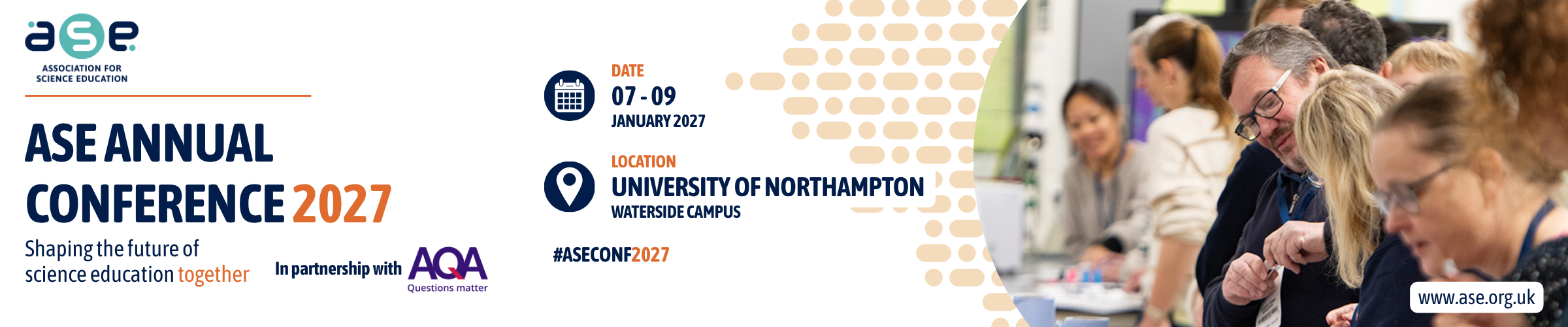
Outcomes:
Participants should gain:
- an understanding of how and why the current paradigm of behaviour management is not appropriate for a range of learners
An ability to challenge standard approaches to behaviour.
- knowledge of alternative approaches from AP settings and how these can be used to transform behaviour management and policy in mainstream settings

Background: This session is based on our experiences working in an alternative provision setting for the past 4 years...

- at the 2026 Conference, many people Matthew spoke to were interested in our setting’s unique approach to behaviour, specifically the lack of any sanctions or rewards system, and how we successfully educate pupils who have been unable to engage in mainstream, including those who have been permanently excluded.

- this session combines Matthew’s insight as a science teacher and Elijah’s MEd research. It will consider classroom approaches but will also address broader issues and themes in education and will hopefully be of interest to a range of audiences.

- those in leadership positions will have more opportunity to implement school-wide structural changes, but I hope that those in standard teaching roles will also gain from the session and be able to adapt their own practice within the confines of a wider school policy.
Speakers
avatar for Matthew Axbey (they/them)

Matthew Axbey (they/them)

Manager of ICT, Data, Exams, and Assessment Team, Malden Oaks School & Tuition Service
avatar for Elijah Wisken

Elijah Wisken

Teacher of SEN, Rivers Academy West London
Saturday January 9, 2027 15:55 - 16:50 GMT
LH127 (Learning Hub Level 1)

15:55 GMT

A framework for fostering scientific argumentation: Enhanced (CASE)
Saturday January 9, 2027 15:55 - 16:50 GMT
Participants will experience a series of short science-learning episodes designed to model how prediction and the five CASE pillars can foster effective scientific argumentation. Through carefully structured dialogic activities, participants will discuss scientific contexts, make and justify predictions, evaluate competing explanations and reflect on the pedagogical moves that support productive classroom talk.

The session will briefly introduce the theoretical foundations of CASE and the role of prediction in generating cognitive conflict and conceptual engagement. Participants will then work collaboratively through classroom examples that demonstrate how prediction tasks can stimulate reasoning, evidence-based discussion and metacognitive reflection.

Throughout the session, participants will analyse how teacher questioning, social interaction and task design contribute to an environment where scientific argumentation can flourish. Time will also be provided for reflection and action planning so participants can consider how these approaches could transfer to their own contexts.

Background:  Scientific argumentation is increasingly regaining recognition as central to high-quality science education, yet many classrooms still struggle to move beyond short-answer recall or teacher-led questioning. This workshop explores how prediction, when deliberately integrated within the CASE framework, can help create conditions in which students are more willing to articulate, defend and reconsider their thinking.
The conditions that researchers such as Osborne, Kuhn and Erduran have insisted are necessary for successful argumentation will be explored in relation to the CASE pedagogy.

The way that eliciting predictions and explanations creates a classroom culture for dialogic teaching to flourish will be demonstrated throughout the presentation. The presenter has developed and refined approaches that combine the established CASE pillars with explicit prediction routines to encourage deeper reasoning and richer pupil talk. The session is informed by research into cognitive conflict, social construction of understanding and the role of exploratory discussion in science education.
Speakers
avatar for Alex Black

Alex Black

Council Member, Lets Think Forum
avatar for Natasha Serret

Natasha Serret

Associate Professor of Science Education, Nottingham Trent University
I started my professional career as a classroom teacher and science lead in a London primary school. I was and remain passionate about classroom learning that promotes a scientific mindset alongside the development of an understanding of key scientific concepts.  This professional... Read More →
Saturday January 9, 2027 15:55 - 16:50 GMT
LH124 (Learning Hub Level 1)
 

Share Modal

Share this link via

Or copy link

Filter sessions
Apply filters to sessions.