Loading…
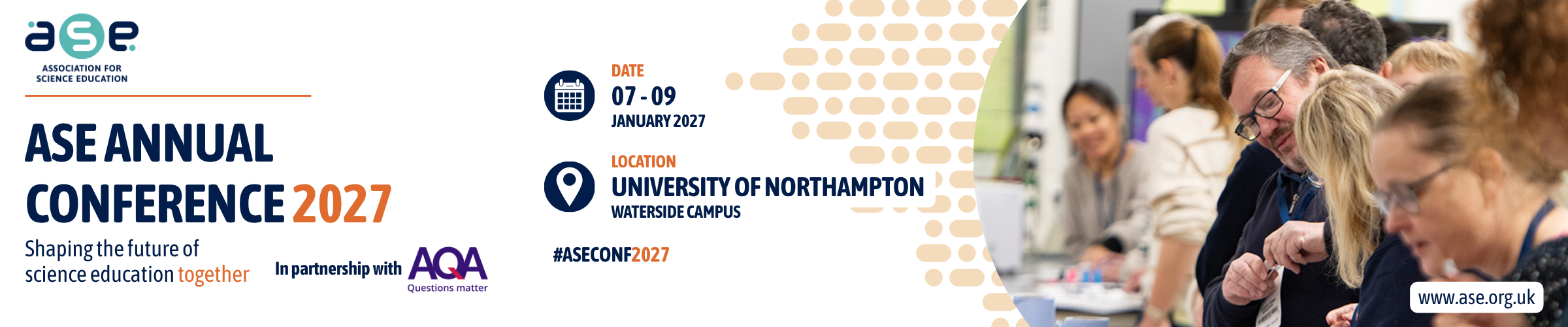
The ASE is delighted to be hosting its’ 2027 Annual Conference at the University of Northampton from 7th to 9th January.


Company: Assessment clear filter
arrow_back View All Dates
Saturday, January 9
 

08:45 GMT

Interrogating PISA datasets with an interactive dashboard
Saturday January 9, 2027 08:45 - 09:40 GMT
The project has taken a design research approach to explore how to facilitate and support statistically appropriate use of secondary data from International Large-Scale Assessments (ILSAs) by a range of stakeholders.  The breadth of the publicly available PISA datasets affords opportunities for school leaders, researchers and policy makers to examine variables beyond attainment data, providing information on a range of contextual factors that have the potential to be invaluable when seeking a deeper understanding of students’ experiences in schools. So, the aim of this project is to improve access to, understanding of, and engagement with PISA data among educational stakeholders through the co-development of an accessible, interactive online dashboard that can support evidence-informed discussion and decision-making.

The need for this platform has arisen as the OCED makes PISA data available, but expertise in both coding and statistics are needed to format the data so valid statistical analysis can be undertaken. For example, decisions regarding what and when comparisons are appropriate need to be made.

In the session, the tension involved in balancing the complexity and the interpretability of complex data when developing a range of visualisations will be explored. I will then discuss key priorities identified by a range of stakeholders and show how these affected the development of the dashboard. Workshop attendees will then have the opportunity to use the dashboard (including the PISA 2025 science specific data which will have been released by then), and to explore its potential benefits.
Speakers
avatar for Judith Hillier

Judith Hillier

Associate Professor of Science Education, University of Oxford

Saturday January 9, 2027 08:45 - 09:40 GMT
LH322 (Learning Hub Level 3)

08:45 GMT

I just went blank: the biology and psychology of exam anxiety
Saturday January 9, 2027 08:45 - 09:40 GMT
Crucially, biology and psychology feed each other. Cortisol impairs working memory, which worsens worry, which keeps the amygdala firing, which sustains the stress response. The loop runs until something interrupts it, which is why both physiological strategies (controlled breathing) and cognitive ones (reappraising arousal as challenge, not threat) work.

By the end, participants will:
> understand the biological and psychological mechanisms driving exam anxiety
> recognise the difference between knowing material and being able to show it under pressure
> have practical strategies to help students break the anxiety loop from both directions

Background and context: Exam anxiety is common, and for many students it actively undermines performance - the familiar experience of a capable student who "goes blank" despite knowing the material.
This isn't simply nerves. When the brain appraises an exam as a threat, the amygdala triggers two stress responses: a fast one (adrenaline, via the sympathetic nervous system) and a slower one (cortisol, via the HPA axis). Cortisol directly impairs the prefrontal cortex and hippocampus - the very structures handling working memory and retrieval.
This is the biological mechanism behind the blank mind.
Speakers
avatar for Amanda Clegg

Amanda Clegg

Science and Leadership Consultant, AKC Educational Consultancy
With over 30 years as a teacher and senior leader, I'm passionate about transforming science education through high-quality practical work, team leadership, bespoke cpd and coaching that makes a real difference.
I thrive on mentoring educators to reach their full potential—watch... Read More →
avatar for Karen Collins

Karen Collins

Educational Consultant, Apogee Education, Learning and Development
@kcoscience
Saturday January 9, 2027 08:45 - 09:40 GMT
LH321 (Learning Hub Level 3)

10:50 GMT

Chair Chat
Saturday January 9, 2027 10:50 - 11:15 GMT
Our dedicated Chair Trio invite you to drop-in to the “Chair-Chat” sessions on one of the days of Annual Conference 2027. The Chair is a vital role to the ASE, and the elected Chair provides an authoritative voice for the thousands of members that the ASE supports, along with those working within the wider science education community. Those elected remain part of our Chair Trio for 3 years.

Got a question? Ever wondered about what goes on behind the scenes? Ever thought about getting involved in Committee activities? Are you wanting to know more about Professional Registration or writing an article in one of the ASE journals? First time attending our flagship Conference?

If this is your first ASE Conference, then please come along and say Hello.

We look forward to hearing your questions and will endeavour to answer them or point you in a selection of possible right directions!
Speakers
avatar for David Allen

David Allen

Associate Professor Learning and Teaching / Outgoing Chair of the ASE 25/26, University of Hertfordshire & Creative Primary Science Education Consultancy
I worked in primary schools for over twenty years as a classteacher, senior leader and Deputy Headteacher. I taught across Key stages 1, 2 and 3 in UK and in Spain. During this time I developed a passion for science, art and design, improvised drama, assessment for learning, creativity... Read More →
avatar for Claire Seeley (MA CSciTeach)

Claire Seeley (MA CSciTeach)

Primary Science Education Consultant / Co-Chair of the ASE
Claire Seeley has been a teacher for over thirty years in a wide variety of contexts including both inner city and rural schools England. Claire is also a Primary Science Consultant, providing both continuing professional development and initial teacher training.  She has a passion... Read More →
EP

Emily Perry

Professor of Education, Manchester Metropolitan University
avatar for Natasha Serret

Natasha Serret

Associate Professor of Science Education, Nottingham Trent University
I started my professional career as a classroom teacher and science lead in a London primary school. I was and remain passionate about classroom learning that promotes a scientific mindset alongside the development of an understanding of key scientific concepts.  This professional... Read More →
Saturday January 9, 2027 10:50 - 11:15 GMT
Leathersellers Hide (Learning Hub Level 4)

11:15 GMT

Using research on children's misconceptions to develop primary science
Saturday January 9, 2027 11:15 - 12:10 GMT
This session explores why evidence-based approaches are essential for creating high-quality primary science lessons that are effective and meaningful for all learners.

It introduces research-informed approaches such as Best Evidence Science Teaching (BEST) for primary-aged children, demonstrating how evidence can be translated into practical strategies to diagnose misconceptions, sequence learning and use formative assessment to build secure scientific understanding.

The session also introduces BEST Bites, new CPD modules designed to support teachers in developing learners’ understanding of key scientific ideas and easing transition from primary to secondary science.
Speakers
avatar for Nicky Waller

Nicky Waller

Advisory Teacher for Primary Science, University of York

Saturday January 9, 2027 11:15 - 12:10 GMT
LH113 (Learning Hub Level 1)
  Primary

14:45 GMT

Using story probes to link primary science and literacy
Saturday January 9, 2027 14:45 - 15:40 GMT
This session draws on decades of research on formative assessment (including Paul Black and Dylan Wiliam’s work) focused on uncovering and using students’ ideas as the foundation for instruction. The approach has evolved through classroom practice that combines research on conceptual understanding, disciplinary literacy, and productive science discussion. Story probes were developed combine the engagement of narrative with the instructional power of formative assessment.

Stories naturally engage learners, spark curiosity, and invite discussion. In this interactive session, participants will explore how story probes can be used to connect science learning, literacy practices, and formative assessment. Through carefully crafted story scenarios, students encounter characters expressing different ideas about a scientific phenomenon or concept. These scenarios encourage learners to analyse characters’ perspectives, and share their own ideas in a low-risk and engaging context.

Participants will experience how story probes can be used to uncover children’s thinking about science while supporting close reading strategies by interpreting meaning from text. Attention will be given to how teachers can listen for children's ideas, use those ideas to inform instruction, and create classrooms where thinking, questioning, and sensemaking are valued. Participants will leave with practical strategies for developing and integrating story probes into science instruction in ways that strengthen both conceptual understanding and literacy skills. They will also be provided with a link to access and download sample story probes.

These story probes are based on extensive formative assessment research and practice from both the UK and the US. Page Keeley’s probes in the Uncovering Student Ideas series published in the U.S. are used extensively in schools throughout the U.S.; and, in collaboration with Ed Walsh, have been adapted by Millgate for a UK audience.

As a result of attending this session, participants will be able to:
1) Facilitate close reading and productive science talk around science scenarios.
2) Use a story scenario to identify and interpret students’ ideas revealed through story-based discussions
3) Apply formative assessment strategies that use student thinking to inform instruction.
4) Adapt or create story scenarios that integrate science content with literacy practices

Speakers
avatar for Page Keeley

Page Keeley

Past President/NSTA Press Author, National Science Teaching Association
Page Keeley is an American science education consultant and author of over 25 books linking research to practice, including several award-winning books in the Uncovering Student Ideas in Science formative assessment series. She is a co-author, with Ed Walsh, of the UK publication, Understanding Children's Ideas in Science. She works with school districts, universities, and organizations throughout the U.S. and internationally to build capacity for understanding student thinking through assessment... Read More →

avatar for Ed Walsh

Ed Walsh

Science Education Consultant, Ed Walsh Consulting
An author and CPD presenter, I was a teacher for 20 years, 12 of them as team leader.  I then worked as a consultant, supporting teachers and science teams, training teachers and developing curriculum materials.  I am now a Series Editor for Collins, CPD Trainer for AQA and Development... Read More →
Saturday January 9, 2027 14:45 - 15:40 GMT
LH113 (Learning Hub Level 1)
  Primary
 

Share Modal

Share this link via

Or copy link

Filter sessions
Apply filters to sessions.
Filtered by Date -