Loading…
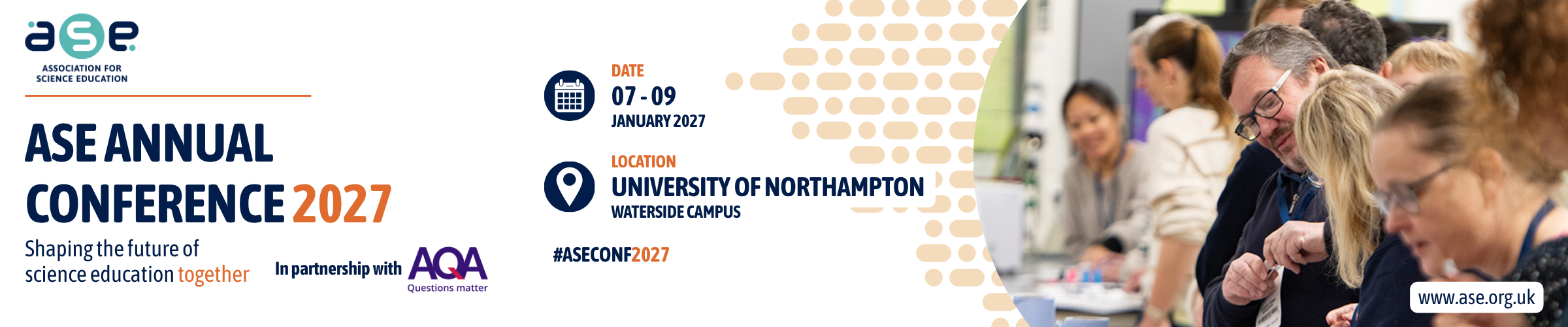
The ASE is delighted to be hosting its’ 2027 Annual Conference at the University of Northampton from 7th to 9th January.


Audience: Advisors/Consultants clear filter
arrow_back View All Dates
Saturday, January 9
 

08:45 GMT

Interrogating PISA datasets with an interactive dashboard
Saturday January 9, 2027 08:45 - 09:40 GMT
The project has taken a design research approach to explore how to facilitate and support statistically appropriate use of secondary data from International Large-Scale Assessments (ILSAs) by a range of stakeholders.  The breadth of the publicly available PISA datasets affords opportunities for school leaders, researchers and policy makers to examine variables beyond attainment data, providing information on a range of contextual factors that have the potential to be invaluable when seeking a deeper understanding of students’ experiences in schools. So, the aim of this project is to improve access to, understanding of, and engagement with PISA data among educational stakeholders through the co-development of an accessible, interactive online dashboard that can support evidence-informed discussion and decision-making.

The need for this platform has arisen as the OCED makes PISA data available, but expertise in both coding and statistics are needed to format the data so valid statistical analysis can be undertaken. For example, decisions regarding what and when comparisons are appropriate need to be made.

In the session, the tension involved in balancing the complexity and the interpretability of complex data when developing a range of visualisations will be explored. I will then discuss key priorities identified by a range of stakeholders and show how these affected the development of the dashboard. Workshop attendees will then have the opportunity to use the dashboard (including the PISA 2025 science specific data which will have been released by then), and to explore its potential benefits.
Speakers
avatar for Judith Hillier

Judith Hillier

Associate Professor of Science Education, University of Oxford

Saturday January 9, 2027 08:45 - 09:40 GMT
LH322 (Learning Hub Level 3)

08:45 GMT

The neuroscience of science lessons
Saturday January 9, 2027 08:45 - 09:40 GMT
Science lessons often ask pupils to process abstract ideas, unfamiliar vocabulary, diagrams, models and practical observations all at once. This session explores how teachers can use selected ideas from cognitive science and neuroscience-informed research to make that complexity more manageable without oversimplifying the science.

The session will focus on three classroom applications: using dual coding to improve explanations and support understanding; applying cognitive load theory to design clearer instruction; and using retrieval practice to strengthen long-term memory.

Along the way, participants will consider where these approaches are most useful in science, where they can be misapplied, and how to adapt them for different contexts and age groups. This is a practical, evidence-informed session designed for classroom teachers and subject leaders who want to refine their teaching.

Participants will leave with a clearer understanding of the research base, concrete examples from science teaching, and strategies they can use to improve pupils’ learning, recall and confidence.

By the end of the session, participants will be able to:
•identify key principles about memory and learning that are relevant to science teaching;
•select and adapt dual coding strategies to support pupils’ explanations of scientific concepts;
•apply cognitive load principles when planning explanations, modelling and tasks;
•use retrieval practice in ways that support durable learning in science;
•evaluate their own classroom practice for opportunities to improve clarity, retention and progression.

Background: When I started teaching, my training did not mention the brain - it was as if we'd forgotten that this is where learning happens! I have a degree in cognitive neuropsychology, so this seemed surprising. Happily, as my career progressed, the sector has moved on to a great understanding of the principles of cognitive science and I have been heartened to see the impact of this on students. Through classroom practice, collaboration with colleagues and engagement with research on memory and learning, I will share an approach that focuses on a small number of evidence-informed principles with clear relevance to science teaching. Rather than offering “quick fixes”, this session draws together practical strategies that have helped make explanations clearer, reduce unnecessary cognitive overload and strengthen long-term retention
Speakers
avatar for Jessica Wood

Jessica Wood

Head of Subject, Ark Curriculum Plus

Saturday January 9, 2027 08:45 - 09:40 GMT
LH115 (Learning Hub Level 1)

08:45 GMT

Frontier Science: How the physical sciences can empower biology - applications of single molecule fluorescence to the biosciences
Saturday January 9, 2027 08:45 - 09:40 GMT
The capability to image single molecules has revolutionised biology.

I will explain how these methods work and  how we are currently applying them to study the molecular basis of neurodegenerative disease.

Lastly I will describe how our early single molecule work on DNA polymerase led to the development of next generation DNA sequencing, now widely used, and the lessons that can be learnt from this experience.
Speakers
SD

Sir David Klenerman

University of Cambridge

Saturday January 9, 2027 08:45 - 09:40 GMT
LH323 (Learning Hub Level 3)

08:45 GMT

Research Meet (1)
Saturday January 9, 2027 08:45 - 09:40 GMT
Research provides a means for exploring teaching and learning in classrooms and other contexts, with some studies suggesting new ways of working. Every year many science education Masters, PhD and EdD students develop an expertise in a specific area of science education which can provide useful insights into how science works in the classroom. Come along to this session to hear a range of findings arising from a number of these studies and join in discussions for those that interest you.
Speakers
avatar for Alastair Gittner

Alastair Gittner

Teacher and Chair of ASE Research Committee, Hallam Teaching School Alliance
Saturday January 9, 2027 08:45 - 09:40 GMT
LH324 (Learning Hub Level 3 lab-type space)

09:55 GMT

Panel: Big Followings, Real Learning: A Q&A With Science Educators Who Reach Millions
Saturday January 9, 2027 09:55 - 10:50 GMT
We've all seen it: the student who can't focus for ten minutes in class will happily watch twenty or thirty science videos in a row on their phones.

Online science education has grown into a high-quality, mainstream part of how young people learn, sitting alongside the classroom rather than at its edges, and the best creators are now among the most influential science educators in the country. So what do they know that those in the classroom can borrow?

This session, chaired by Dave Allen, brings together some of the most successful science educators working on YouTube, TikTok and beyond for an open Q&A. Ask them how they grab and hold attention, turn a tricky topic into something memorable, and keep the science accurate under the pressure of the feed. It's a practical, honest conversation about the craft of engagement, the quality of learning that online education can deliver, and what genuinely transfers from a phone screen to a classroom.
Speakers
avatar for Stuart Naismith

Stuart Naismith

Primary Teacher / Advisor, STEM with Mr N
I am Teacher of Innovation at Kelvinside Academy, a STEM educator and creator of STEM with Mr N, through which I have created hundreds of freely available STEM education videos and resources for teachers, children and families. Having spent most of my career as a primary classroom... Read More →
avatar for David Allen

David Allen

Associate Professor Learning and Teaching / Outgoing Chair of the ASE 25/26, University of Hertfordshire & Creative Primary Science Education Consultancy
I worked in primary schools for over twenty years as a classteacher, senior leader and Deputy Headteacher. I taught across Key stages 1, 2 and 3 in UK and in Spain. During this time I developed a passion for science, art and design, improvised drama, assessment for learning, creativity... Read More →
Saturday January 9, 2027 09:55 - 10:50 GMT
Leathersellers Hide (Learning Hub Level 4)

09:55 GMT

Research Meet (2)
Saturday January 9, 2027 09:55 - 10:50 GMT
Research provides a means for exploring teaching and learning in classrooms and other contexts, with some studies suggesting new ways of working. Every year many science education Masters, PhD and EdD students develop an expertise in a specific area of science education which can provide useful insights into how science works in the classroom. Come along to this session to hear a range of findings arising from a number of these studies and join in discussions for those that interest you.
Speakers
avatar for Alastair Gittner

Alastair Gittner

Teacher and Chair of ASE Research Committee, Hallam Teaching School Alliance
Saturday January 9, 2027 09:55 - 10:50 GMT
LH324 (Learning Hub Level 3 lab-type space)

10:50 GMT

Chair Chat
Saturday January 9, 2027 10:50 - 11:15 GMT
Our dedicated Chair Trio invite you to drop-in to the “Chair-Chat” sessions on one of the days of Annual Conference 2027. The Chair is a vital role to the ASE, and the elected Chair provides an authoritative voice for the thousands of members that the ASE supports, along with those working within the wider science education community. Those elected remain part of our Chair Trio for 3 years.

Got a question? Ever wondered about what goes on behind the scenes? Ever thought about getting involved in Committee activities? Are you wanting to know more about Professional Registration or writing an article in one of the ASE journals? First time attending our flagship Conference?

If this is your first ASE Conference, then please come along and say Hello.

We look forward to hearing your questions and will endeavour to answer them or point you in a selection of possible right directions!
Speakers
avatar for David Allen

David Allen

Associate Professor Learning and Teaching / Outgoing Chair of the ASE 25/26, University of Hertfordshire & Creative Primary Science Education Consultancy
I worked in primary schools for over twenty years as a classteacher, senior leader and Deputy Headteacher. I taught across Key stages 1, 2 and 3 in UK and in Spain. During this time I developed a passion for science, art and design, improvised drama, assessment for learning, creativity... Read More →
avatar for Claire Seeley (MA CSciTeach)

Claire Seeley (MA CSciTeach)

Primary Science Education Consultant / Co-Chair of the ASE
Claire Seeley has been a teacher for over thirty years in a wide variety of contexts including both inner city and rural schools England. Claire is also a Primary Science Consultant, providing both continuing professional development and initial teacher training.  She has a passion... Read More →
EP

Emily Perry

Professor of Education, Manchester Metropolitan University
avatar for Natasha Serret

Natasha Serret

Associate Professor of Science Education, Nottingham Trent University
I started my professional career as a classroom teacher and science lead in a London primary school. I was and remain passionate about classroom learning that promotes a scientific mindset alongside the development of an understanding of key scientific concepts.  This professional... Read More →
Saturday January 9, 2027 10:50 - 11:15 GMT
Leathersellers Hide (Learning Hub Level 4)

11:15 GMT

From recruitment to retention - supporting international physics teachers in England
Saturday January 9, 2027 11:15 - 12:10 GMT
This session focuses on the latest findings and recommendations from ASE’s International Science Teachers project, supported by the Gatsby Foundation
Speakers
avatar for Marianne Cutler

Marianne Cutler

Director of Curriculum Innovation, Association for Science Education
avatar for Rob Butler

Rob Butler

Registrar, Association for Science Education
I'm a Chartered Science teacher, the registrar and Project Officer for the ASE (running the Keeping Science Practical project).
I'm a senior professional development leader for the Science Learning Partnership network and I help the Science Council promote their professional registers. I'm an ex-special school senior leader, an ex-science teacher and an OUP author. I jointly run the ASE's Inclusive Science Educati... Read More →
Saturday January 9, 2027 11:15 - 12:10 GMT
LH321 (Learning Hub Level 3)

11:15 GMT

Making practical science memorable: A cognitive-science informed approach
Saturday January 9, 2027 11:15 - 12:10 GMT
This session aims to help science teachers and leaders to:

> understand how the model of memory can inform decisions about practical science teaching;
> recognise when practical work may overload working memory, limiting learning;
> evaluate the strengths and limitations of different approaches to practical work;
? apply evidence-informed principles to design practical lessons that maximise learning.

Practical work can motivate students and bring science to life—but practical lessons can also place heavy demands on students’ attention, leaving them focused on following instructions or handling equipment rather than learning the intended science.

In this session, we will explore how the model of memory can help teachers make better decisions about practical science teaching. By considering the limitations of working memory and the importance of attention for encoding into long-term memory, we will examine why some practical activities lead to strong learning and others do not.

Participants will compare different approaches to practical work, and discuss when each is most likely to be effective. We will also consider how the purpose of the practical—whether to teach disciplinary knowledge, substantive knowledge, or practical skills—should shape the chosen approach.

Attendees will leave with a better understanding of how to plan and adapt practical lessons so that students think hard, remember more, and learn better.

As a result of attending this session, participants will be able to:

> identify potential sources of cognitive overload in practical science lessons;
> select appropriate practical approaches based on lesson goals and student needs;
> adapt existing practical activities to better support attention, memory, and learning;

Background: Practical work is often seen as central to science education, yet students do not always learn what teachers intend from these experiences. My interest in this area has developed through classroom practice, curriculum design, and engagement with cognitive science research on memory, attention, and cognitive load. Through reflecting on when practical lessons have been most and least effective, and drawing on research-informed approaches such as explicit instruction and the “model of memory,” I have developed a framework for making more deliberate choices about how practical work is organised and delivered. This session brings together classroom experience and evidence-informed thinking to help teachers move beyond “doing” practical work towards securing lasting learning.
Speakers
avatar for Euan Douglas

Euan Douglas

Assistant Head Teacher, St George's Catholic College
I am an Senior Assistant Headteacher responsible for Teaching & Learning and the curriculum at Saint George Catholic College, an Outstanding comprehensive school in Southampton. My involvement with the ASE includes being a member of both my regional committee and previously the 11-19... Read More →
Saturday January 9, 2027 11:15 - 12:10 GMT
LH127 (Learning Hub Level 1)

11:15 GMT

Keynote: Authentic scientific inquiry in school science: Learning from the history and philosophy of science
Saturday January 9, 2027 11:15 - 12:10 GMT
Inquiry-based learning is difficult to put into practice when we are teaching scientific content that is well-known and indisputable. If teachers already have the correct answers, why should students bother trying to find them out for themselves? Drawing from the history of science can help us find interesting questions that today’s mainstream science does not address and does not have ready answers to. I will illustrate this through examples taken from my previous and current work, including the anomalous boiling of water and the puzzle over the workings of the Voltaic battery. Taking inspiration from John Dewey, I focus on the experience of student. How can we help students have a true experience of science, both in experiencing natural phenomena and experiencing scientific inquiry? Dealing with phenomena that deviate from textbook descriptions can allow students to experience nature truly for themselves. Puzzling over how to make sense of such phenomena can give them the experience of actual scientific inquiry.

My discussion in this talk is part of a general attempt to enhance the interaction between science education and the history and philosophy of science (HPS). Despite great efforts by Michael Matthews, Douglas Allchin and others, HPS remains on the fringes of science education, and science education is not a major concern in mainstream HPS. This is a lamentable situation. On the side of philosophy of science, there is obvious potential for engagement with the teaching of the nature of science. From the history of science, I think the most promising contribution is to help students (and teachers) realise that respected past scientists have investigated nature in different ways from what we are now accustomed to, and that there is value in revisiting these alternative approaches.
Speakers
avatar for Hasok Chang

Hasok Chang

Professor, Dept of History and Philosophy of Science, University of Cambridge
Hasok Chang is the Hans Rausing Professor of History and Philosophy of Science at the University of Cambridge. He received his degrees from Caltech and Stanford, and has taught at University College London.

He is the author of Inventing Temperature: Measurement and Scientific Pro... Read More →
Saturday January 9, 2027 11:15 - 12:10 GMT
Leathersellers Hide (Learning Hub Level 4)

11:15 GMT

Using AI effectively to reduce workload - A realistic perspective
Saturday January 9, 2027 11:15 - 12:10 GMT
This interactive workshop will give you a grounded, practical exploration of how AI can support workload reduction without creating additional stress, unrealistic expectations, or dependence on technology.

You will explore real examples of where AI can save time, including planning support, summarising information, drafting routine communications, adapting content for different audiences, generating starting points for resources, and reducing repetitive administrative tasks. Through discussion and short practical activities, you will consider how to evaluate when AI is genuinely useful, when it may be inefficient, and where caution is needed.

A key focus will be on critical use rather than blind adoption. You will consider issues such as accuracy, bias, safeguarding, privacy, and the importance of maintaining professional oversight.

Designed for educators and professionals who are curious about AI but want realistic, manageable approaches rather than technical deep dives or exaggerated claims, this session will leave you with practical ideas, increased confidence, and a clearer understanding of how AI can support, but not replace professional expertise.

Following this session, participants hopefully will be able to:

* Identify appropriate tasks where AI may reduce workload effectively.
* Critically evaluate whether AI is the right tool for a specific task.
* Apply simple AI-supported strategies to improve efficiency in planning, communication, and organisation.
* Recognise common risks and limitations when using AI in professional settings.
* Use AI more intentionally, ethically, and with clearer professional boundaries.
* Trial at least one realistic AI workflow within their own practice.
Speakers
avatar for Joanna Pellereau

Joanna Pellereau

PGCE Course Science Lead, Warwick University Centre for Teacher Education
Having been a physics teacher and Head of Department for over a decade, I am now Physics PGCE lead and a teaching fellow at the Centre for Teacher Education at the University of Warwick. I also take on freelance work and have supported OUP with the Kerboodle resources for the new... Read More →
Saturday January 9, 2027 11:15 - 12:10 GMT
LH322 (Learning Hub Level 3)

12:25 GMT

Decolonising primary science: examples, research and next steps
Saturday January 9, 2027 12:25 - 13:20 GMT
The aim of this session is to support teachers in applying a decolonial lens to their primary science teaching practice. It will encourage participants to explore parallel ways of knowing and to acknowledge how colonial legacies continue to shape our current education systems. We will demonstrate how to link historical and indigenous epistemologies to Western understanding and applications of science and suggest how these ideas can be taught concurrently.  

Concrete classroom and whole‑school examples of this approach will be shared, alongside discussion of their impact on children’s attitudes, beliefs and engagement with science. In addition, the session will disseminate evidence from our research into the use of generative artificial intelligence in identifying and producing resources to support teaching through a decolonial lens.

We will start with an introduction for the need to decolonise the primary science curriculum and an overview of what this entails, and discuss tried and tested classroom and whole‑school examples. We will also include a review of research into how GenAI can be used to source specific materials for this approach and offer delegates an opportunity to trial GenAI prompts to source materials, ending with a brief Q&A.

Speakers
DO

Danielle Oudomvilay

Classroom Teacher and Science Subject Lead, Bevington Primary School

avatar for Alex Sinclair

Alex Sinclair

Associate Professor; Primary Science Course Lead; Ex Co-Chair of ASE (23/24), St Mary's University, Twickenham
I am Associate Professor and Primary Science Lead for the Initial Teacher Education programmes at St Mary’s University, Twickenham. As a member of the Primary Science Curriculum Advisory Group (PCAG) I was involved in producing the Framework for a Future Primary Science Curriculum... Read More →
Saturday January 9, 2027 12:25 - 13:20 GMT
LH113 (Learning Hub Level 1)

12:25 GMT

Rich retrieval: consolidating and elaborating scientific concepts
Saturday January 9, 2027 12:25 - 13:20 GMT
We are proposing ‘Rich Retrieval’ as a teaching and learning strategy. Retrieval practice in primary science is often limited to the retrieval of discrete 'facts' using low-stakes quizzes. This may contribute to pupils having knowledge as lots of separate bits of information without understanding how they relate to each other. The retrieval of memories is ‘reconstructive’ - connections in the brain are reformed in the process of bringing a memory to mind - there is the possibility of not just strengthening those connections, but also extending them. We also know that dialogic talk in science lessons can improve conceptual understanding. So, we are exploring the premise that a richer form of retrieval can both consolidate and elaborate conceptual knowledge.  

This session is based on our ongoing research into designing and evaluating retrieval activities for both consolidating and elaborating conceptual (substantive) knowledge in primary science. A team at Bath Spa University has been collaborating with teachers to develop and trial activities that use our Rich Retrieval strategies (known as 5Cs and a Q) to support the learning of key concepts for 7-11 year olds. A bank of 5-10 minute activities has been developed to match the current Key Stage 2 science curriculum for England, and we suggest that the Rich Retrieval strategies have a broader application. Our programme introducing this to primary teachers is currently being independently evaluated by the Education Endowment Foundation.

We see this research as an important example of how to bring together three different kinds of knowledge: science education research, educational neuroscience and teacher professional wisdom.

The workshop aims to:
> Explain the rationale for the Rich Retrieval strategies in terms of cognitive neuroscience and science education research
> Provide examples of Rich Retrieval activities and how to use them
> Share insights from our research to date
> Give participants the opportunity to share their experience of using retrieval in science lessons
> Participants will leave the session with:
> A deeper understanding of the potential of retrieval practice to support learning
> Practical ideas about how to make retrieval practice richer
> Questions about how to make the most of retrieval practice in their own context
Speakers
avatar for Kendra McMahon

Kendra McMahon

Professor in Science Education, The Curriculum Foundation & Bath Spa University
avatar for Kerry-Anne Barber

Kerry-Anne Barber

Senior Lecturer Primary PGCE, Bath Spa University
Saturday January 9, 2027 12:25 - 13:20 GMT
LH127 (Learning Hub Level 1)

12:25 GMT

Frontier Science: Exploring Mars
Saturday January 9, 2027 12:25 - 13:20 GMT
I have explored Mars with the Curiosity Rover, orbiters and Martian meteorites.

This talks summarises how we have reached a new understanding about the evolution of Mars and its Habitable, ‘Warm and Wet’ ancient past, and how we plan to continue exploring Mars with new missions – robotic and human.
Speakers
JC

John C Bridges SFHEA

Professor / Planetary Scientist, University of Leicester School of Physics and Astronomy

Saturday January 9, 2027 12:25 - 13:20 GMT
LH323 (Learning Hub Level 3)

12:25 GMT

Relax and unwind with 3 short films on nature
Saturday January 9, 2027 12:25 - 13:20 GMT
Join us to relax and unwind during lunchtime at the ASE Annual Conference. Enjoy three stunning short films showcasing fascinating wildlife and their ecosystems.

‘The Caretakers’ is a journey into the weird, wonderful and truly astonishing lives of the small yet mighty creatures who keep the world turning – beetles. They have been successful for millions of years, but they’re in serious trouble; what does the future hold for these incredibly important animals, and for us if they disappear? 21 minutes. Director – Tom Hanner

‘Creatures of the Kaleidoscope’ Explore one of natures most magical creatures, the Cuttlefish. Embark on a mesmerising journey of nature’s living kaleidoscopes. Follow these elusive creatures as this documentary delves deep into the extraordinary lives of these remarkable cephalopods, see their unique abilities as they morph into a stunning array of colours and shapes in a blink of an eye. Witness the incredible transformation from vulnerable prey to cunning predators, navigating the vast oceans ever changing surroundings and dangers. 18 minutes. Director – Hannah Jodie Alexander

‘Fascinating World of Wood Ants’ This film visualizes the lifecycle of Wood Ants and emphasizes their vital ecological role in the ecosystem. It showcases their journey, social dynamics, and ecological contributions, highlighting the importance of preserving their habitats in the face of environmental challenges. 11 minutes. Director – Siddique Salim Khan

These short films are kindly made available for viewing at ASE’s Annual Conference through ASE’s long-standing collaboration with the Museo de Ciencias of the Universidad de Navarra.
Speakers
avatar for Marie Ann Reynell

Marie Ann Reynell

Director of Development, Museo de Ciencias, Universidad de Navarra (Science Museum, University of Navarra)

Saturday January 9, 2027 12:25 - 13:20 GMT
Leathersellers Hide (Learning Hub Level 4)

12:25 GMT

Talking and thinking at Science on Stage: using simple stimuli and strategies to build a culture of rich scientific talk
Saturday January 9, 2027 12:25 - 13:20 GMT
 Are your students working in groups but not truly thinking together?

In this session, we will explore how strategies such as purposeful oracy games can transform the quality of talk and argumentation in your science classroom. You will be introduced to a simple, repeatable structure that moves students beyond mere prediction to explaining their reasoning, observing with purpose, and reconciling their ideas with evidence. Rather than seeing/dialogue/  as an "extra," you will learn how to weave it into the fabric of your lessons, creating rich, productive environments where good talk becomes a habit.

We will discuss the small, manageable changes you can make to your everyday practice; from a short starter activity to a more extended investigation, that can have a transformative impact on student thinking, engagement, and scientific literacy.

We will also provide practical examples and a framework for designing these sequences, so they are easy to implement and highly effective.
Speakers
avatar for Peter Munroe

Peter Munroe

Head of Chemistry, Uckfield College

avatar for Alex Black

Alex Black

Council Member, Lets Think Forum
Saturday January 9, 2027 12:25 - 13:20 GMT
LH124 (Learning Hub Level 1)

12:25 GMT

Future green engineering jobs in the KS3 curriculum.
Saturday January 9, 2027 12:25 - 13:30 GMT
The Office for National Statistics published estimates of green jobs in July 2025. 61% of these were STEM-based, especially in engineering and tech and only 3% were nature-based. The Intergovernmental Panel on Climate Change has estimated up to 725,000 new roles could be created in low-carbon sectors like renewable energy generation and electric vehicle manufacture.

EngineeringUK has developed a set of curriculum resources, the Climate Schools Programme, in several Key Stage 3 subjects and a simple model for how to use the subject of environmental sustainability to engage students in thinking about engineering and tech careers.  

The resources and model are based on solutions to environmental problems, rather than the problems themselves, and naturally extends to the current and future careers associated with those solutions. Attendees will have a chance to explore how they might put these ideas into practice in their setting.
Speakers
KB

Kim Biddulph

Head of Engagement Projects, Engineering UK

MH

Michael Hardisty

Head of Environmental Sustainability, Engineering UK
Saturday January 9, 2027 12:25 - 13:30 GMT
LH125 (Learning Hub Level 1)

13:35 GMT

Student agency to use AI tools when learning in science
Saturday January 9, 2027 13:35 - 14:30 GMT
AS students increasingly turn to tools like ChatGPT and Gemini, we introduce a student-agency framework to help learners use AI more critically rather than over-relying on it.

In this workshop computer science education researchers will work with science educators to begin adapting the agency framework for use in the science classroom.
Speakers
VC

Veronica Cucuiat

Raspberry Pi Foundation

JW

Jane Waite

Senior Research Scientist, Raspberry Pi Foundation

Saturday January 9, 2027 13:35 - 14:30 GMT
LH324 (Learning Hub Level 3 lab-type space)

13:35 GMT

The impact of policy on curriculum design: A Policy Group perspective
Saturday January 9, 2027 13:35 - 14:30 GMT
With the recent changes to the National Curriculum following the Curriculum and Assessment Review, schools and subject leads are under pressure to redevelop their local curricula. However, what sort of autonomy do we have over the curriculum that we produce and is it developed with the local context in mind.

This session will provide some insights for teachers or subject leaders across any phase of school about how policy can influence the way we develop our local curriculum.

Additionally, we will aim to provoke discussions around how to avoid "policy pitfalls". Finally, as co-chairs of the policy group we would welcome your thoughts around how the Policy Group should develop work around curriculum to advocate for ASE members.
Speakers
avatar for Helen Darlington

Helen Darlington

Co Chair of ASE Policy Group, South Wirral High School

GB

Gareth Bates

Senior Lecturer in Education / Co-Chair of ASE Policy Group, Anglia Ruskin University

avatar for Marianne Cutler

Marianne Cutler

Director of Curriculum Innovation, Association for Science Education
Saturday January 9, 2027 13:35 - 14:30 GMT
LH322 (Learning Hub Level 3)
  Suitable for All key stages

13:35 GMT

What if the next climate solution is in your classroom? Project Earth - empowering young people to build a better world.
Saturday January 9, 2027 13:35 - 14:30 GMT
Young people have extraordinary ideas for tackling climate change and biodiversity loss. Too often, those ideas never get beyond the classroom.  Project Earth is changing that.

This talk explores how teachers can help young people move from learning science to using science to solve real problems — connecting their ideas with experts, opportunities and the support to take them further.

Don't just teach young people about the future. Give them the tools to help shape it.

Young people have extraordinary potential. Project Earth helps turn it into impact — now..

Speakers
avatar for Becky Parker MBE

Becky Parker MBE

Director (Project Earth) / Physics Teacher / Visiting Professor (School of Physics and Astronomy), Queen Mary University of London
Saturday January 9, 2027 13:35 - 14:30 GMT
LH124 (Learning Hub Level 1)

14:45 GMT

(Pearson) Future-ready science: Connecting climate, media literacy and green pathways
Saturday January 9, 2027 14:45 - 15:40 GMT
This workshop will bring together two urgent agendas in science education: helping students make sense of climate and media-based claims, and ensuring they can see clear, meaningful progression into green and vocational futures. It will explore how science curriculum and qualification design can better connect scientific knowledge, evidence evaluation, real-world relevance and future pathways.

Participants will explore how science education can connect disciplinary knowledge with climate literacy, media literacy and green skills; consider how qualification design can make science more relevant and future-facing; and think about how curriculum, assessment and pathways can work together to support informed, motivated and aspirational learners.

Participants will leave with practical ideas for linking science teaching to climate and media literacy, a clearer understanding of how green skills and progression routes can be surfaced within KS4 science, and a stronger framework for thinking about relevance, engagement and future-facing qualification design.
Speakers
avatar for Tosin Oliyide

Tosin Oliyide

Senior Qualifications Manager - Science, Pearson

BT

Becky Thorne

Senior Qualifications Manager, Pearson

Saturday January 9, 2027 14:45 - 15:40 GMT
LH125 (Learning Hub Level 1)

14:45 GMT

Using story probes to link primary science and literacy
Saturday January 9, 2027 14:45 - 15:40 GMT
This session draws on decades of research on formative assessment (including Paul Black and Dylan Wiliam’s work) focused on uncovering and using students’ ideas as the foundation for instruction. The approach has evolved through classroom practice that combines research on conceptual understanding, disciplinary literacy, and productive science discussion. Story probes were developed combine the engagement of narrative with the instructional power of formative assessment.

Stories naturally engage learners, spark curiosity, and invite discussion. In this interactive session, participants will explore how story probes can be used to connect science learning, literacy practices, and formative assessment. Through carefully crafted story scenarios, students encounter characters expressing different ideas about a scientific phenomenon or concept. These scenarios encourage learners to analyse characters’ perspectives, and share their own ideas in a low-risk and engaging context.

Participants will experience how story probes can be used to uncover children’s thinking about science while supporting close reading strategies by interpreting meaning from text. Attention will be given to how teachers can listen for children's ideas, use those ideas to inform instruction, and create classrooms where thinking, questioning, and sensemaking are valued. Participants will leave with practical strategies for developing and integrating story probes into science instruction in ways that strengthen both conceptual understanding and literacy skills. They will also be provided with a link to access and download sample story probes.

These story probes are based on extensive formative assessment research and practice from both the UK and the US. Page Keeley’s probes in the Uncovering Student Ideas series published in the U.S. are used extensively in schools throughout the U.S.; and, in collaboration with Ed Walsh, have been adapted by Millgate for a UK audience.

As a result of attending this session, participants will be able to:
1) Facilitate close reading and productive science talk around science scenarios.
2) Use a story scenario to identify and interpret students’ ideas revealed through story-based discussions
3) Apply formative assessment strategies that use student thinking to inform instruction.
4) Adapt or create story scenarios that integrate science content with literacy practices

Speakers
avatar for Page Keeley

Page Keeley

Past President/NSTA Press Author, National Science Teaching Association
Page Keeley is an American science education consultant and author of over 25 books linking research to practice, including several award-winning books in the Uncovering Student Ideas in Science formative assessment series. She is a co-author, with Ed Walsh, of the UK publication, Understanding Children's Ideas in Science. She works with school districts, universities, and organizations throughout the U.S. and internationally to build capacity for understanding student thinking through assessment... Read More →
avatar for Ed Walsh

Ed Walsh

Science Education Consultant, Ed Walsh Consulting
An author and CPD presenter, I was a teacher for 20 years, 12 of them as team leader.  I then worked as a consultant, supporting teachers and science teams, training teachers and developing curriculum materials.  I am now a Series Editor for Collins, CPD Trainer for AQA and Development... Read More →
Saturday January 9, 2027 14:45 - 15:40 GMT
LH113 (Learning Hub Level 1)
  Primary

14:45 GMT

Curriculum Change in England for KS1 to KS4
Saturday January 9, 2027 14:45 - 15:40 GMT
Join the team working with the Department for Education to develop the reformed Science Programmes of Study in England and GCSEs subject content as we outline the priorities and evidence underpinning the drafting process. This session focuses on KS3 and KS4 plus transition from KS2 and KS1.

Please note the other sessions in the conference programme, on KS1 and KS2, and on biology, chemistry and physics at KS3 and KS4.
Speakers
avatar for Marianne Cutler

Marianne Cutler

Director of Curriculum Innovation, Association for Science Education
avatar for Lauren McLeod

Lauren McLeod

Head of Education Policy, Royal Society of Biology
Lauren joined the Royal Society of Biology as Head of Education Policy in July 2017. Previously she has worked on gender projects, including Opening Doors, and higher education projects as part of the education team at the Institute of Physics, and as a science teacher in North L... Read More →
avatar for Rachel Hartley

Rachel Hartley

Pedagogy and Professional Practice Strategic Lead, Institute of Physics
avatar for Laura Daly

Laura Daly

Programme Manager, Education Policy, Royal Society of Chemistry

Saturday January 9, 2027 14:45 - 15:40 GMT
LH013 & LH014 (Learning Hub Ground Floor)

14:45 GMT

The best of Science on Stage 2026
Saturday January 9, 2027 14:45 - 15:40 GMT
The biennial Science on Stage Festival took place in Klaipeda, Lithuania in May 2026.  

The Science on Stage Festival brings together hundreds of teachers from across Europe and beyond to share and innovate strategies for teaching science at all levels, from early years through primary to secondary.  In this session, members of the Science on Stage delegation which represented the UK at the Festival will describe and demonstrate some of the best bits from Klaipeda.

This session is being co-ordinated and chaired by Stuart Farmer, Chair of the Science on Stage UK National Steering Committee, along with some of those representing the UK in Klaipeda.
Speakers
avatar for Stuart Farmer

Stuart Farmer

Learning and Skills Manager, IOP and Perimeter Institute
I was a teacher of physics in Scotland for over 30 years before becoming the Scottish Education Manager for IOP in February 2019. Throughout this time I have been active in curriculum and assessment development and providing professional learning for teachers. I am a former Chair... Read More →
avatar for Becky Parker MBE

Becky Parker MBE

Director (Project Earth) / Physics Teacher / Visiting Professor (School of Physics and Astronomy), Queen Mary University of London
MK

Maren Kelly

Head of STEM, St Catherine's Prep School

avatar for Peter Munroe

Peter Munroe

Head of Chemistry, Uckfield College

avatar for Simon Poliakoff

Simon Poliakoff

Physics teacher and Lead Practitioner Teaching and Learning, The Priory School Hitchin
Over the last few years whilst working as a physics teacher Simon has created sets of ideas for teaching physics organised by topic area which are shared freely on a Creative Commons non-commercial licence via the www.teachphysics.org website. The aim has been to bring together practical... Read More →
avatar for Rose Edmondson

Rose Edmondson

Teacher of science and geography, Falinge Park School

avatar for Alex Black

Alex Black

Council Member, Lets Think Forum
Saturday January 9, 2027 14:45 - 15:40 GMT
LH323 (Learning Hub Level 3)

15:55 GMT

There is another way: Learning lessons on behaviour from AP
Saturday January 9, 2027 15:55 - 16:50 GMT

This session will explore alternatives to mainstream behaviour management policies, by drawing from examples in an alternative provision setting. The session will challenge the traditional rewards and sanctions system and the use of detentions by showing how these systems fail to engage pupils in education in a meaningful way and ultimately leads to harm to all students, but particularly those from disadvantaged backgrounds and those with SEND. It will then explore an alternative approach, using genuinely trauma-informed practice and instilling an intrinsic engagement in learning. We will cover our approach and what can and cannot be easily applied in a mainstream setting.

Outcomes:
Participants should gain:
- an understanding of how and why the current paradigm of behaviour management is not appropriate for a range of learners
An ability to challenge standard approaches to behaviour.
- knowledge of alternative approaches from AP settings and how these can be used to transform behaviour management and policy in mainstream settings

Background: This session is based on our experiences working in an alternative provision setting for the past 4 years...

- at the 2026 Conference, many people Matthew spoke to were interested in our setting’s unique approach to behaviour, specifically the lack of any sanctions or rewards system, and how we successfully educate pupils who have been unable to engage in mainstream, including those who have been permanently excluded.

- this session combines Matthew’s insight as a science teacher and Elijah’s MEd research. It will consider classroom approaches but will also address broader issues and themes in education and will hopefully be of interest to a range of audiences.

- those in leadership positions will have more opportunity to implement school-wide structural changes, but I hope that those in standard teaching roles will also gain from the session and be able to adapt their own practice within the confines of a wider school policy.
Speakers
avatar for Matthew Axbey (they/them)

Matthew Axbey (they/them)

Manager of ICT, Data, Exams, and Assessment Team, Malden Oaks School & Tuition Service
avatar for Elijah Wisken

Elijah Wisken

Teacher of SEN, Rivers Academy West London
Saturday January 9, 2027 15:55 - 16:50 GMT
LH127 (Learning Hub Level 1)
 

Share Modal

Share this link via

Or copy link

Filter sessions
Apply filters to sessions.
Filtered by Date -